U.S. Policy Shifts: Decentralized News Adoption by January 2025

Anticipated U.S. policy shifts by January 2025 present a critical, time-sensitive opportunity to significantly boost decentralized news adoption, reshaping the media landscape and fostering more resilient information ecosystems.
The landscape of information dissemination is on the cusp of a profound transformation, with a time-sensitive opportunity: U.S. policy shifts expected by January 2025 to boost decentralized news adoption. As traditional media models face increasing scrutiny and challenges, the promise of decentralized news, powered by blockchain and Web3 technologies, offers a compelling alternative. This pivotal moment could redefine how Americans consume and trust their news.
Understanding Decentralized News and its Potential
Decentralized news represents a paradigm shift from centralized media corporations, offering a more transparent, censorship-resistant, and community-driven approach to journalism. Unlike traditional models where a few entities control content creation and distribution, decentralized platforms leverage blockchain technology to distribute power, verify information, and reward contributors.
The core concept revolves around removing single points of failure and control, making it significantly harder for external forces to manipulate or suppress information. This resilience is particularly attractive in an era marked by concerns over misinformation and media bias. By empowering individual journalists and readers, decentralized news fosters a more democratic and verifiable information ecosystem.
Key Principles of Decentralized Journalism
- Transparency: Content provenance and editorial decisions can be recorded on an immutable ledger.
- Censorship Resistance: No central authority can easily take down or alter published material.
- Community Governance: Users often have a say in content moderation and platform development.
- Fair Compensation: Journalists and content creators can be directly rewarded for their work through tokenized models.
The potential for decentralized news extends beyond mere technical innovation; it offers a philosophical realignment with the foundational principles of a free press. It envisions a future where information flows freely, unencumbered by corporate interests or political pressures, empowering citizens with reliable and diverse perspectives.
The Current State of U.S. Media and the Need for Change
The American media landscape is grappling with significant challenges, including declining public trust, economic instability for news organizations, and the pervasive spread of misinformation. These issues undermine the very fabric of informed public discourse, creating a fertile ground for alternative models to emerge.
Public trust in media has reached historic lows, fueled by perceptions of bias, sensationalism, and the proliferation of ‘fake news.’ This erosion of trust makes it difficult for citizens to distinguish credible information from propaganda, impacting democratic processes and social cohesion. Traditional revenue models, heavily reliant on advertising, are also failing, leading to newsroom closures and reduced journalistic capacity.
Challenges Facing Traditional Media
- Erosion of Trust: Widespread skepticism regarding media objectivity and accuracy.
- Economic Pressures: Declining advertising revenue and subscription fatigue.
- Misinformation Epidemic: The rapid spread of false or misleading information, often amplified by social media.
- Centralized Control: Concerns over corporate or governmental influence on editorial content.
In this challenging environment, decentralized news offers a compelling solution by addressing many of these fundamental flaws. Its inherent design promotes transparency and resistance to manipulation, potentially restoring public confidence in journalistic endeavors and providing sustainable economic models for content creators.
Anticipated U.S. Policy Shifts by January 2025
The period leading up to January 2025 is expected to be crucial for policy developments that could significantly impact the adoption of decentralized technologies, including those underpinning decentralized news. As the regulatory environment for blockchain, cryptocurrencies, and digital assets matures, clearer guidelines and supportive frameworks could emerge.
Policymakers are increasingly recognizing the transformative potential of Web3 technologies, alongside the need to mitigate associated risks. We could see legislative efforts aimed at clarifying legal statuses, establishing consumer protections, and even encouraging innovation in sectors like digital media. These shifts are not merely theoretical; they represent tangible opportunities for the decentralized news ecosystem.
Potential Policy Areas of Impact
- Regulatory Clarity for Digital Assets: Clearer definitions and classifications for tokens used in decentralized news platforms.
- Data Privacy Legislation: New laws that might inadvertently support decentralized models by emphasizing user control over data.
- Funding and Grants for Innovation: Government initiatives to support emerging technologies, including blockchain-based applications.
- Antitrust and Media Concentration: Policies aimed at breaking up media monopolies could indirectly favor decentralized alternatives.
The political climate, particularly after the 2024 elections, could also play a significant role. A new administration or shift in congressional priorities might accelerate or decelerate these policy changes. Therefore, staying informed about these developments is paramount for anyone involved in decentralized news.
How Policy Shifts Could Boost Decentralized News Adoption
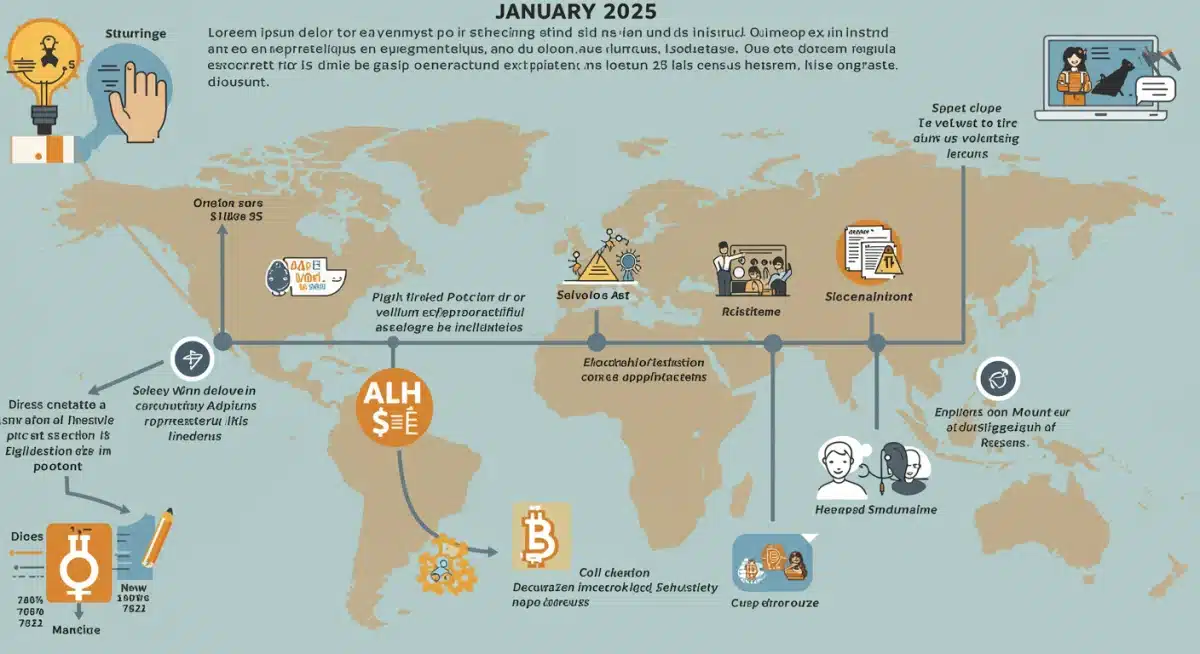
The anticipated policy shifts have the potential to act as powerful catalysts for the widespread adoption of decentralized news. Clear regulatory frameworks, for instance, can reduce uncertainty for developers, investors, and users, making these platforms more attractive and accessible. Without such clarity, the nascent industry often struggles with legal ambiguities and compliance challenges.
Furthermore, supportive government initiatives, such as grants for blockchain innovation or public-private partnerships, could provide much-needed funding and resources to accelerate the development and scaling of decentralized news projects. This institutional backing could legitimize the sector, encouraging broader public and journalistic engagement.
Mechanisms of Policy-Driven Growth
- Reduced Regulatory Risk: Clear rules encourage investment and enterprise in decentralized media.
- Increased Consumer Confidence: Government recognition can signal legitimacy and safety to the general public.
- Technological Advancement: Policy support can foster research and development in underlying blockchain technologies.
- Market Access: Policies promoting open internet and digital freedom could create more favorable conditions for decentralized platforms to thrive.
Ultimately, a favorable policy environment can lower barriers to entry, foster competition, and stimulate innovation within the decentralized news space. This could lead to a virtuous cycle where policy support drives adoption, which in turn encourages further policy refinement and broader societal impact.
Navigating the Time-Sensitive Opportunity
The window between now and January 2025 represents a critical period for stakeholders in the decentralized news ecosystem. Proactive engagement with policymakers, industry collaboration, and public education are essential to capitalize on this time-sensitive opportunity. Waiting for policies to be fully formed without input risks missing the chance to shape them favorably.
Journalists, technologists, and advocacy groups must articulate the benefits of decentralized news in clear, compelling terms to those in power. Demonstrating real-world applications and addressing potential concerns, such as scalability and content moderation, will be crucial. This period calls for strategic advocacy and a unified vision for the future of information.
Strategies for Engagement
- Policy Advocacy: Engaging with legislative bodies to inform and influence regulatory discussions.
- Public Awareness Campaigns: Educating the general public about the benefits and workings of decentralized news.
- Innovation Acceleration: Developing robust, user-friendly decentralized news platforms to showcase potential.
- Cross-Industry Collaboration: Forming alliances with other Web3 projects and traditional media entities for mutual growth.
By actively participating in the ongoing dialogue, the decentralized news community can help ensure that emerging policies are conducive to innovation, freedom of the press, and the development of resilient information systems for all Americans.
The Long-Term Impact on Journalism and Society
Should the anticipated U.S. policy shifts indeed boost decentralized news adoption, the long-term implications for journalism and society could be profound. We could witness a revitalization of investigative reporting, a more diverse media landscape, and a significant increase in public trust in the news. The shift away from centralized control could empower citizens with more accurate and unfiltered information.
Economically, decentralized models offer new avenues for journalists to monetize their work directly, fostering greater independence and reducing reliance on traditional advertising or corporate funding. This could lead to a renaissance in quality journalism, as creators are incentivized to produce high-value content rather than chasing clicks or sensational headlines. Socially, it could lead to a more informed populace, better equipped to participate in democratic processes and make critical decisions.
Societal Benefits of Widespread Adoption
- Enhanced Media Pluralism: A greater variety of voices and perspectives in the news.
- Increased Trust: Transparency and immutability of information could rebuild public confidence.
- Empowered Journalists: New economic models offer greater creative freedom and financial stability.
- Resilient Information Ecosystems: Systems less susceptible to censorship or single points of failure.
The vision is not just about new technology, but about a healthier information environment that serves the public good. The policy decisions made in the coming months will largely determine whether this vision becomes a widespread reality, marking a pivotal chapter in the evolution of media.
| Key Point | Brief Description |
|---|---|
| Policy Window | U.S. policy shifts by January 2025 offer a critical chance for decentralized news growth. |
| Decentralized Potential | Offers transparency, censorship resistance, and community-driven journalism. |
| Current Media Crisis | Traditional media faces trust issues, economic instability, and misinformation. |
| Strategic Engagement | Proactive advocacy and education are crucial to shape favorable policies. |
Frequently Asked Questions About Decentralized News and U.S. Policy
Decentralized news refers to journalistic content created and distributed on blockchain-based platforms, removing central authorities. This model enhances transparency, resists censorship, and often provides direct compensation to content creators, aiming to rebuild trust and foster a more open information ecosystem.
U.S. policy shifts can provide regulatory clarity, reduce legal uncertainties, and potentially offer funding or incentives for blockchain innovations. A supportive regulatory environment legitimizes the technology, encouraging investment, development, and wider public acceptance, which are crucial for mainstream adoption of decentralized news platforms.
Policies related to digital asset classification, data privacy, internet freedom, and antitrust regulations in media could all play a role. Clear guidelines on tokenomics, intellectual property rights on blockchain, and even government support for Web3 research can significantly influence the growth trajectory of decentralized journalism.
Individuals can contribute by engaging with decentralized news platforms, supporting independent journalists, and advocating for policies that promote open and transparent information ecosystems. Educating others about the benefits of decentralized media and participating in community governance within these platforms also helps drive adoption.
Key challenges include user accessibility and education, scalability of blockchain technology, effective content moderation without centralization, and overcoming established media habits. Building intuitive platforms and demonstrating clear value propositions are essential to overcome these hurdles and achieve widespread public acceptance.
Conclusion
The period leading up to January 2025 presents an unparalleled, time-sensitive opportunity for the United States to significantly shape the future of news. Anticipated policy shifts hold the potential to either catalyze or hinder the widespread adoption of decentralized news models. By embracing thoughtful regulation and fostering innovation, policymakers can pave the way for a more transparent, resilient, and trustworthy information ecosystem, ultimately benefiting American democracy and its citizens. The onus is now on stakeholders to engage proactively to ensure this transformative potential is fully realized.