DAOs in Journalism: Financial Impact & Governance Outlook 2026 US
Anúncios
Decentralized Autonomous Organizations (DAOs) for Journalism: A 2026 Outlook on Their Financial Impact and Governance Models in the US.
The landscape of journalism in the United States is in a constant state of flux, grappling with challenges ranging from declining trust to unsustainable business models. Traditional media organizations often face immense pressure from advertisers, corporate owners, and political agendas, which can compromise editorial independence and financial stability. In this evolving environment, a new paradigm is emerging from the depths of Web3 technology: Decentralized Autonomous Organizations (DAOs). These blockchain-powered entities promise a radical rethinking of how journalistic endeavors are funded, governed, and sustained. This comprehensive article delves into the projected financial impact and evolving governance models of DAOs in US journalism by 2026, offering a detailed outlook on their transformative potential and the challenges they must overcome.
Anúncios
Understanding DAOs: The Foundation for a New Journalistic Era
Before we explore the future, it’s crucial to grasp the fundamental nature of DAOs. A Decentralized Autonomous Organization is an entity that is not governed by a central authority but by a community of members, often token holders, who collectively make decisions through a set of transparent, self-executing rules encoded on a blockchain. These rules typically define everything from funding allocation to project proposals and content moderation. The core tenets of DAOs – transparency, immutability, and community governance – make them particularly appealing for an industry like journalism, which often struggles with issues of trust and centralized control.
In the context of journalism, DAOs could represent a fundamental shift away from corporate-owned media outlets and towards community-owned and operated news platforms. This model could empower journalists, content creators, and the audience itself to have a direct say in editorial direction, funding priorities, and the overall mission of the journalistic enterprise. The implications for editorial independence, financial sustainability, and public trust are profound, setting the stage for a truly democratic and resilient media ecosystem.
The Current State of Journalism Finance in the US
To fully appreciate the potential of DAOs journalism financial models, it’s essential to understand the current financial plight of US journalism. Over the past two decades, traditional revenue streams, primarily advertising and subscriptions, have been severely disrupted by the internet and the rise of tech giants. Local newspapers have been particularly hard hit, leading to news deserts and a decline in critical local reporting. Philanthropic funding and non-profit models have offered some relief, but they often come with their own limitations and dependencies. The search for sustainable and independent funding mechanisms remains a paramount concern for the industry.
The existing financial structures often create perverse incentives. Reliance on advertising revenue can lead to a focus on clickbait and sensationalism over in-depth, investigative reporting. Corporate ownership can introduce conflicts of interest, where editorial decisions might be influenced by business objectives or political affiliations. These systemic issues underscore the urgent need for innovative financial models that prioritize journalistic integrity and public service over profit margins and corporate agendas. DAOs offer a compelling alternative that could address many of these deeply rooted problems.
Projected Financial Impact of DAOs in US Journalism by 2026
By 2026, we anticipate that DAOs journalism financial structures will begin to carve out a significant niche, offering alternative funding and operational models that challenge traditional paradigms. The financial impact will likely manifest in several key areas:
1. Diversified and Community-Driven Funding
One of the most significant financial impacts of DAOs will be the diversification of funding sources. Instead of relying heavily on advertising or a few large donors, journalism DAOs can raise capital through token sales, NFTs, and direct cryptocurrency contributions from a global community. These tokens can grant governance rights, access to exclusive content, or even a share in future profits, aligning the financial interests of the community with the journalistic mission.
Imagine a scenario where a community-focused investigative journalism DAO issues governance tokens. Supporters purchase these tokens, not just as an investment, but as a commitment to the DAO’s mission. These tokens allow them to vote on which investigations to pursue, how funds are allocated, and even how profits, if any, are distributed. This direct financial stake fosters a deeper sense of ownership and commitment among the audience, transforming passive consumers into active participants and financial contributors. The transparency inherent in blockchain transactions means that every dollar received and spent can be publicly verified, building unprecedented trust.
2. Reduced Operational Costs and Increased Efficiency
The decentralized nature of DAOs can lead to significant reductions in operational overhead. By leveraging smart contracts for automated tasks such as payroll, content distribution, and royalty payments, DAOs can minimize administrative costs associated with traditional corporate structures. This leaner operational model means more resources can be directed towards actual reporting and content creation.
Furthermore, the global and permissionless nature of blockchain allows for a more efficient and borderless talent pool. Journalists from anywhere in the world can contribute to a DAO, and contributors can be compensated automatically and transparently through cryptocurrency. This eliminates the need for complex international payment systems and reduces friction in collaboration. The absence of hierarchical management layers also streamlines decision-making processes, leading to greater agility and responsiveness, particularly important in the fast-paced news cycle.
3. Innovative Compensation Models for Journalists
DAOs can introduce novel compensation models for journalists, moving beyond traditional salaries. Journalists could be paid in a combination of stablecoins and governance tokens, incentivizing long-term commitment and aligning their interests with the success of the DAO. Performance-based incentives, tied to reader engagement or impact, could also be implemented through smart contracts, rewarding high-quality, impactful journalism directly.
For instance, a DAO might allocate a portion of its treasury to reward journalists whose stories achieve significant reach, generate substantial community discussion, or lead to tangible societal change. This direct link between impact and compensation could attract top talent and encourage a focus on meaningful journalism. Moreover, journalists could retain more ownership over their work, potentially earning royalties from content distribution or syndication through smart contracts, a stark contrast to traditional employment models where intellectual property often defaults to the employer.
4. Enhanced Transparency and Accountability
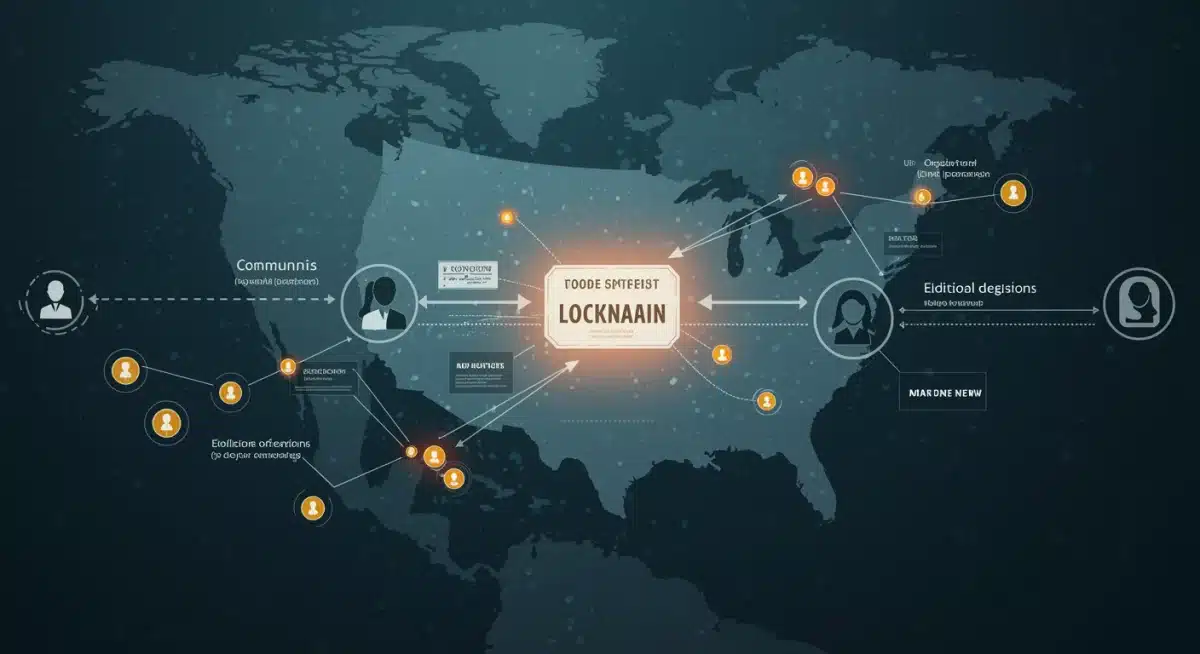
The financial dealings of a journalism DAO are inherently transparent and auditable on the blockchain. Every transaction, from funding received to payments made, is publicly recorded and immutable. This level of transparency fosters greater trust with the audience and stakeholders, addressing a critical issue facing the media industry today.
This transparency extends beyond mere financial transactions. The entire governance process, including proposals, debates, and voting results, is also recorded on-chain. This makes it virtually impossible for hidden agendas or backroom deals to influence editorial decisions, a common criticism leveled against traditional media. Such radical transparency can significantly enhance the credibility and public perception of journalistic endeavors operating under a DAO model, thereby attracting more funding and community support.
Evolving Governance Models: Democracy in Action
Beyond financial implications, the governance models offered by DAOs journalism financial structures are equally revolutionary. By 2026, we anticipate a diverse array of governance frameworks emerging, each tailored to the specific needs and mission of individual journalistic DAOs.
1. Token-Based Voting and Community Referendums
The most common governance model involves token holders voting on proposals. The weight of each vote can be proportional to the number of tokens held, or a more nuanced system can be implemented to prevent whale dominance. This allows the community to collectively decide on editorial priorities, budget allocations, ethical guidelines, and even the hiring or firing of key personnel.
Consider a DAO dedicated to environmental reporting. Token holders, comprising environmental experts, concerned citizens, and journalists, could vote on which ecological crises to investigate, which scientific studies to highlight, and how to allocate funds for fieldwork. This direct democratic participation ensures that the journalistic output truly reflects the interests and concerns of its dedicated community, rather than being dictated by a few executives or advertisers. This model provides an unprecedented level of democratic control over the editorial process, fostering a truly public-centric journalism.
2. Delegated Democracy and Expertise-Based Governance
While direct democracy is appealing, it can become unwieldy for large DAOs or complex decisions. Therefore, many journalism DAOs will likely adopt delegated democracy models, where token holders elect representatives or delegates to vote on their behalf. These delegates could be chosen based on their journalistic expertise, community standing, or specific domain knowledge.
For example, a DAO focusing on political analysis might have delegates specializing in economics, foreign policy, and domestic politics. These experts would be elected by the broader community to make informed decisions on complex editorial strategies. This hybrid model combines the benefits of decentralized participation with the efficiency and informed decision-making of expert representation, ensuring that journalistic quality and integrity are maintained while still upholding democratic principles. The selection of delegates could also be dynamic, with performance reviews and recall mechanisms built into smart contracts.
3. Reputation-Based and Quadratic Voting Systems
To mitigate the risk of plutocracy (where wealthy token holders dominate decisions), DAOs are experimenting with more sophisticated voting mechanisms. Reputation-based systems, where influence is earned through contributions and positive engagement rather than just token holdings, could become prominent. Quadratic voting, which makes it progressively more expensive to cast additional votes for a single option, is another method to ensure broader participation and prevent concentrated power.
In a reputation-based system, a journalist who consistently produces high-quality, well-researched articles for the DAO would accumulate more ‘reputation points,’ granting them greater influence in editorial decisions, regardless of their financial stake. This incentivizes meritocracy and active contribution. Quadratic voting would allow smaller token holders to have a more meaningful say, as the cost of a vote increases quadratically, making it harder for a single entity to control outcomes by simply buying more tokens. These innovative governance structures aim to create a more equitable and resilient decision-making process.

Challenges and Roadblocks for DAOs in US Journalism by 2026
While the potential of DAOs journalism financial and governance models is immense, several significant challenges must be addressed for widespread adoption and success by 2026:
1. Regulatory Uncertainty and Legal Frameworks
The regulatory landscape for DAOs in the US is still evolving. Ambiguity around legal classifications (e.g., whether DAO tokens are securities), tax implications, and liability for decentralized entities poses significant hurdles. Clearer legal frameworks are crucial for DAOs to operate confidently and attract mainstream participation.
Without clear guidelines, DAOs risk facing legal challenges that could stifle innovation and adoption. The decentralized nature of DAOs makes them difficult to regulate under existing centralized legal structures. Efforts are underway in some states to provide legal recognition for DAOs, but a comprehensive federal approach is still lacking. Navigating this legal minefield will require significant legal expertise and advocacy from the Web3 community.
2. User Adoption and Technical Literacy
For DAOs to thrive, there needs to be a significant increase in public understanding and adoption of blockchain technology and cryptocurrency. The current learning curve for interacting with Web3 tools can be steep for the average user, limiting broader participation in DAO governance and funding.
Journalism, by its nature, aims to reach a wide audience. If the mechanisms for engaging with and supporting a journalism DAO are too complex, it will alienate a large segment of the potential audience and contributor base. Simplification of user interfaces, improved onboarding processes, and educational initiatives will be vital to bridge this technical gap and make DAO participation accessible to a broader demographic.
3. Scalability and Efficiency of Blockchain Networks
Current blockchain networks can face scalability issues, leading to high transaction fees and slow processing times during periods of high demand. For a journalism DAO requiring frequent micro-transactions (e.g., journalist payments, content royalties) and numerous governance votes, these technical limitations could prove problematic.
While layer-2 solutions and newer, more efficient blockchains are emerging, these technologies are still maturing. The ability of the underlying blockchain infrastructure to handle the volume and speed required by active journalistic operations will be a critical factor in the success of these DAOs. Without robust and scalable infrastructure, the promise of efficient and transparent financial operations could be undermined.
4. Preventing Centralization and Sybil Attacks
The very essence of DAOs is decentralization, yet there’s always a risk of power concentrating in the hands of a few large token holders (whales) or through Sybil attacks (where a single entity controls multiple identities to manipulate votes). Designing robust governance mechanisms that prevent these forms of centralization is paramount.
Implementing effective anti-Sybil measures, experimenting with diverse voting mechanisms like quadratic voting, and fostering a culture of active and informed participation are crucial. The community must remain vigilant against attempts to subvert the decentralized nature of the organization. The success of a journalism DAO ultimately hinges on its ability to maintain true decentralization and resist pressures that could lead to a re-centralization of power.
5. Maintaining Editorial Independence and Quality
While community governance offers many advantages, it also presents challenges for maintaining editorial independence and journalistic quality. How does a DAO ensure that editorial decisions are based on journalistic ethics and factual accuracy, rather than simply popular opinion or the loudest voices in the community?
Clear editorial charters, robust content moderation policies, and the establishment of independent editorial review boards (perhaps themselves governed by a sub-DAO or elected by the community) will be essential. The balance between democratic participation and professional journalistic standards will be a continuous negotiation. The design of the governance model must explicitly consider safeguards to protect journalistic integrity from potential populism or special interest groups within the community.
Case Studies and Emerging Models
While still nascent, several projects are already experimenting with DAOs journalism financial and governance structures, offering early insights into their potential. Projects like Decentralized News Network (DNN), Civil, and others, though some have faced challenges, have laid foundational groundwork. Newer initiatives are learning from these early attempts, focusing on niche reporting, local news, or specific investigative areas where community engagement can be most impactful.
For instance, some DAOs are forming around specific journalistic beats, such as climate change reporting or local government accountability. These focused approaches allow for the cultivation of highly engaged communities with shared interests and expertise. By 2026, we expect to see more specialized journalism DAOs, each with unique governance models and funding strategies tailored to their specific missions. The success of these early adopters will be crucial in demonstrating the viability and scalability of the DAO model for journalism.
The Future Outlook: 2026 and Beyond
By 2026, DAOs will likely not have replaced traditional media entirely, but they will have established themselves as a viable and increasingly influential alternative within the US journalistic landscape. Their impact will be most pronounced in areas where traditional media struggles: local news, investigative journalism requiring long-term funding, and specialized reporting that caters to niche but highly engaged communities.
The financial models will have matured, with clearer pathways for token utility, sustainable treasury management, and innovative incentive structures for contributors. Governance models will have become more sophisticated, balancing direct democracy with expert delegation and reputation-based systems to ensure both participation and quality. The regulatory environment, while still evolving, will hopefully offer greater clarity, allowing for more confident development and expansion of these entities.
Moreover, DAOs could foster a new generation of journalists who are not beholden to corporate hierarchies but are empowered by community ownership and direct engagement with their audience. This shift could lead to a resurgence of public trust in media, as transparency and accountability become baked into the very structure of news organizations. The collaborative and open-source nature of DAOs could also facilitate greater knowledge sharing and collective problem-solving within the journalistic community, leading to more impactful and relevant reporting.
The journey towards widespread DAO adoption in journalism will undoubtedly be fraught with technical, legal, and social challenges. However, the promise of a more transparent, equitable, and financially sustainable future for journalism is a powerful motivator. As Web3 technologies continue to mature and public understanding grows, DAOs journalism financial and governance innovations will play a pivotal role in shaping a more resilient and trustworthy media ecosystem for the United States and beyond.