Decentralized Media Trust: Key Metrics for US Audiences 2026

Anúncios
Building Trust in Decentralized Media: Key Metrics for US Audiences in 2026
Anúncios
The media landscape is undergoing a profound transformation. As traditional media outlets grapple with declining public confidence, the promise of decentralized media emerges as a beacon of hope for a more transparent, equitable, and trustworthy information ecosystem. For US audiences, the shift towards decentralized platforms by 2026 hinges critically on the ability of these new models to foster and sustain trust. But what exactly does ‘trust’ mean in this nascent domain, and how can we effectively measure it? This extensive exploration delves into the key metrics that will define and drive decentralized media trust among US audiences in the coming years, offering a roadmap for platforms striving for legitimacy and widespread adoption.
The concept of decentralized media is not merely a technological upgrade; it represents a fundamental paradigm shift. Unlike traditional centralized models where a single entity controls content creation, distribution, and monetization, decentralized media leverages blockchain technology and peer-to-peer networks to distribute power, enhance transparency, and empower users. This inherent structure addresses many of the criticisms leveled against legacy media, such as biased reporting, opaque editorial processes, and concerns over data privacy. However, the mere existence of decentralization does not automatically equate to trust. Trust, especially in the context of information consumption, is a complex, multifaceted construct built on consistent performance, ethical practices, and clear communication.
By 2026, US audiences will have a more nuanced understanding of decentralized media. Early adopters will have paved the way, and the challenges and successes of initial platforms will have shaped public perception. Therefore, identifying and prioritizing the right metrics for decentralized media trust is paramount. These metrics must go beyond simple engagement numbers to capture the deeper psychological and social factors that underpin audience confidence.
The Erosion of Traditional Media Trust and the Rise of Decentralized Alternatives
To appreciate the significance of decentralized media trust, it’s crucial to understand the context of declining confidence in traditional media. Numerous studies consistently show a significant portion of the US population harbors skepticism towards mainstream news sources. Factors contributing to this erosion include perceived political bias, sensationalism, the spread of misinformation, and a lack of transparency in funding and editorial decisions. This environment creates a fertile ground for decentralized alternatives, which inherently promise solutions to these very problems.
Decentralized media platforms aim to restore faith by offering:
- Immutability and Verifiability: Content published on a blockchain is often immutable and timestamped, providing a clear audit trail and making it harder to alter or delete information retroactively.
- Censorship Resistance: By distributing content across a network of nodes, decentralized platforms are less susceptible to single points of failure or centralized censorship.
- User Ownership and Control: Users often have more control over their data and content, moving away from models where platforms own user-generated information.
- Transparent Governance: Many decentralized platforms implement community-driven governance models, allowing token holders or active participants to influence platform rules and content moderation.
However, these promises are not guarantees. The success of decentralized media trust hinges on how effectively these inherent advantages are translated into tangible, measurable benefits for the end-user. As we approach 2026, the metrics will need to reflect not just the technological capabilities but also the human experience of interacting with these platforms.
Core Pillars of Decentralized Media Trust for US Audiences
Building decentralized media trust is a multi-faceted endeavor that can be broken down into several core pillars. Each pillar contributes to the overall perception of reliability and integrity. By 2026, US audiences will be looking for clear evidence of these pillars in action.
1. Transparency and Verifiability of Content
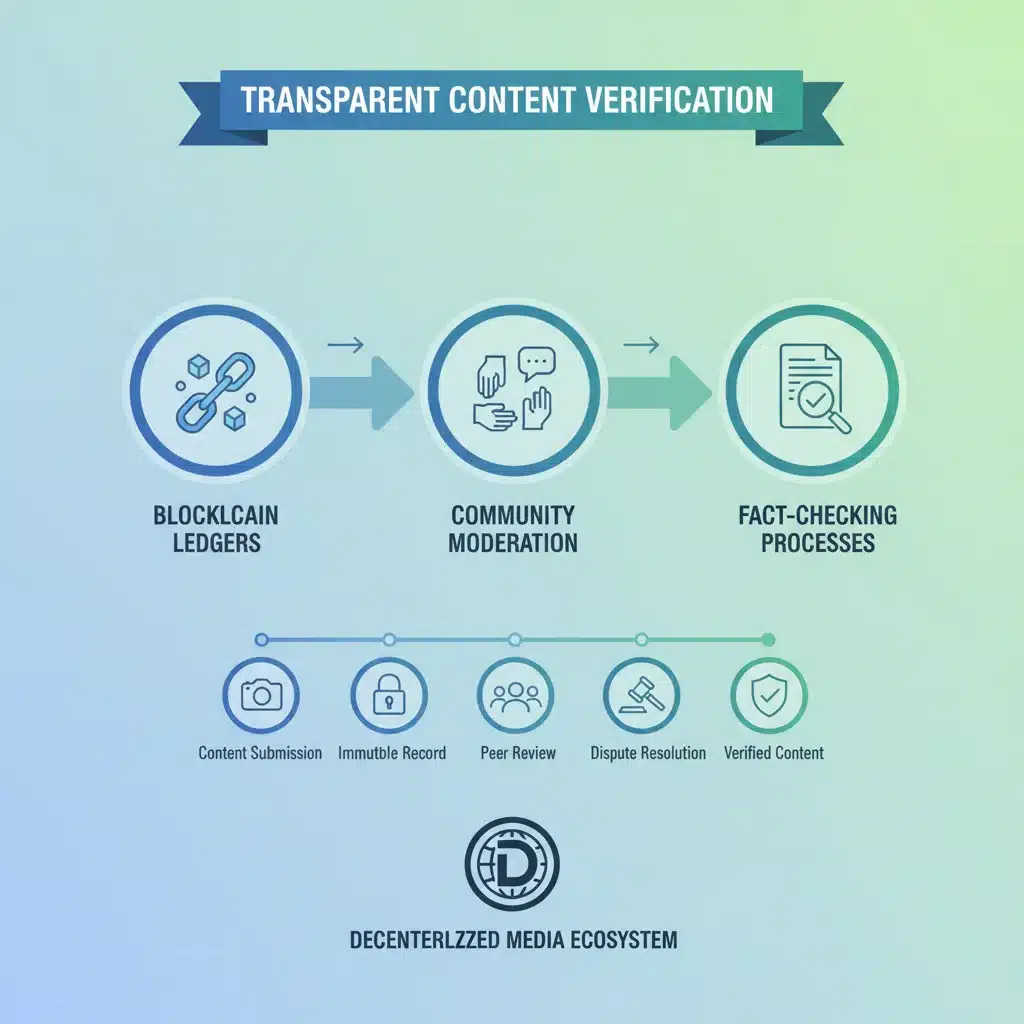
At the heart of decentralized media’s appeal is transparency. For US audiences, this translates into the ability to easily verify the origin, integrity, and editorial process of content. Key metrics here include:
- Content Provenance Score: A quantifiable measure indicating how easily a user can trace the original source of a piece of content, including author identity (if disclosed), creation date, and any subsequent edits or modifications recorded on the blockchain. A higher score signifies greater transparency.
- Fact-Checking Integration Rate: The percentage of content on a platform that has undergone independent fact-checking or community-driven verification processes, with easily accessible results.
- Editorial Process Transparency Rating: A metric reflecting the clarity and accessibility of a platform’s editorial guidelines, moderation policies, and dispute resolution mechanisms. This could involve user ratings of policy clarity.
- Attribution Accuracy: The degree to which sources are correctly and clearly attributed, minimizing plagiarism and ensuring proper credit is given.
Platforms that excel in these areas will demonstrate a commitment to open information flows, directly tackling the opaque nature of much traditional media. The ability for a user to quickly and confidently verify information will be a cornerstone of decentralized media trust.
2. Data Privacy and Security
With increasing concerns over data breaches and surveillance, robust data privacy and security measures are non-negotiable for building trust. Decentralized platforms inherently offer advantages here, but their implementation must be flawless. Metrics to consider by 2026 include:
- User Data Control Index: A score reflecting the level of control users have over their personal data, including the ability to opt-out of data collection, choose what data is shared, and easily delete their information. This goes beyond simple GDPR compliance to truly empower users.
- Encryption Adoption Rate: The percentage of user communications and data storage that utilizes end-to-end encryption or other advanced security protocols.
- Auditability of Security Measures: Regular, independent security audits with publicly available reports demonstrating the platform’s commitment to protecting user data.
- Anonymity/Pseudonymity Options: The availability and effectiveness of features allowing users to contribute or consume content without revealing their real-world identity, appealing to those concerned about digital footprints.
US audiences, having witnessed numerous data privacy scandals, will place a high premium on platforms that demonstrate an unwavering commitment to protecting their digital sovereignty. This will be a critical differentiator for decentralized media trust.
3. Community Governance and Moderation
Decentralization implies a shift in power from centralized entities to the community. How this power is exercised, particularly in content moderation and platform evolution, will significantly impact trust. By 2026, effective community governance will be a hallmark of a trusted decentralized media platform. Key metrics include:
- Active Governance Participation Rate: The percentage of eligible community members (e.g., token holders, active users) who actively participate in voting on proposals, content moderation decisions, or platform development initiatives.
- Fairness of Moderation Decisions: A metric derived from user feedback and independent audits, assessing the perceived fairness and consistency of community-led content moderation decisions, minimizing bias and ensuring due process.
- Dispute Resolution Effectiveness: The speed and perceived fairness of mechanisms for resolving content disputes or user conflicts within the community. This could be measured by user satisfaction with resolutions.
- Diversity of Governance Voices: A measure of how representative the active governance participants are of the broader user base, ensuring that decisions are not dominated by a small, unrepresentative group.
The ability of a decentralized platform to foster a constructive, fair, and representative community will be crucial for establishing decentralized media trust. Audiences want to feel that their voices matter and that the platform operates on principles they can endorse.
Operational Metrics for Sustained Decentralized Media Trust
Beyond the core pillars, several operational metrics will contribute to the ongoing establishment of decentralized media trust. These metrics speak to the reliability, usability, and ethical posture of the platforms.
4. Reliability and Performance
No matter how transparent or private a platform is, if it’s slow, buggy, or frequently offline, trust will erode. US audiences expect seamless digital experiences. Metrics include:
- Uptime Percentage: The standard measure of system availability, indicating how often the platform is accessible to users.
- Content Loading Speed: The average time it takes for content to load, impacting user experience and satisfaction.
- Bug Report Resolution Rate: The speed and effectiveness with which reported technical issues are addressed and resolved.
- Network Latency: For platforms relying on peer-to-peer content delivery, the speed of data transfer between nodes.
A reliable and high-performing platform builds foundational trust, demonstrating competence and respect for the user’s time. This operational excellence is a silent but powerful contributor to decentralized media trust.
5. Accessibility and User Experience (UX)
Decentralized media, while technologically advanced, must not be overly complex for the average user. A steep learning curve can deter adoption and breed frustration, undermining trust. Metrics here include:
- User Onboarding Completion Rate: The percentage of new users who successfully navigate the initial setup process and begin actively using the platform.
- Feature Adoption Rate: The percentage of users utilizing key decentralized features, indicating their understanding and value perception.
- User Satisfaction Scores (UX): Regular surveys or feedback mechanisms to gauge user satisfaction with the platform’s interface, ease of use, and overall experience.
- Accessibility Compliance: Adherence to web accessibility standards (e.g., WCAG) to ensure the platform is usable by individuals with disabilities.
A user-friendly interface that demystifies complex decentralized technologies will be crucial for widespread adoption and building decentralized media trust beyond tech-savvy early adopters.
6. Ethical AI and Algorithmic Transparency
As AI becomes more integrated into content recommendation and moderation, its ethical application will be a key trust factor. By 2026, audiences will demand transparency in algorithms. Metrics include:
- Algorithmic Bias Audit Score: Regular, independent audits to detect and mitigate biases in content recommendation algorithms, ensuring fairness and preventing echo chambers.
- Explainability of Recommendations: The degree to which users can understand why certain content is recommended to them, offering transparency into the algorithmic black box.
- User Control over Algorithms: Features allowing users to customize their content feeds, adjust recommendation parameters, or opt-out of algorithmic curation entirely.
- AI Moderation Accuracy and Fairness: Metrics assessing the accuracy of AI in identifying problematic content, coupled with a transparent review process for AI-flagged content.
The ethical deployment of AI and transparent algorithms will be a significant differentiator for decentralized media trust, allowing platforms to avoid the pitfalls that have plagued centralized social media giants.
Advanced Metrics and Future Considerations for 2026
As decentralized media matures, more sophisticated metrics will emerge to capture the nuances of trust. These will go beyond direct platform interactions to encompass broader societal impact.
7. Economic Fairness and Creator Compensation
A core promise of Web3 and decentralized platforms is fairer compensation for creators. How this promise is delivered will directly impact their trust. Metrics include:
- Creator Revenue Share: The percentage of generated revenue that directly goes to content creators, compared to platform fees.
- Micro-payment Adoption Rate: The frequency and volume of direct peer-to-peer payments or micro-donations to creators, indicating audience willingness to directly support content.
- Token Value Stability (if applicable): For platforms with native tokens, the stability and utility of the token, reflecting economic health and investor/user confidence.
- Transparent Royalty Distribution: Clear and verifiable mechanisms for distributing royalties or earnings to all contributors in a collaborative content piece.
Fair economic models foster a loyal and productive creator community, which in turn attracts and retains audiences, bolstering overall decentralized media trust.
8. Resilience Against Misinformation and Disinformation
The ability of decentralized platforms to effectively combat misinformation will be a critical trust metric. While censorship resistance is a feature, it also presents challenges in managing harmful content. Metrics include:
- Misinformation Detection Rate: The effectiveness of community or AI-driven systems in identifying and flagging false or misleading information.
- Harmful Content Removal/Labeling Rate: The speed and consistency with which demonstrably harmful content is addressed, either through removal (if policy allows) or clear labeling.
- User-Reported Misinformation Resolution: The success rate and timeliness of addressing user reports of misinformation.
- Educational Resource Engagement: The usage rate of platform-provided tools or resources designed to help users identify and understand misinformation.
Successfully navigating the delicate balance between free speech and responsible content moderation will be a defining characteristic of trusted decentralized media platforms by 2026. This will be a significant factor in decentralized media trust for US audiences concerned about information integrity.
9. Interoperability and Open Standards
While often overlooked, the ability of decentralized platforms to integrate with other services and adhere to open standards will foster a more robust and trustworthy ecosystem. Metrics include:

- API Availability and Usage: The presence and adoption of open APIs allowing third-party developers to build on or integrate with the platform.
- Standard Compliance: Adherence to industry-wide open standards for content formats, identity verification, and data exchange.
- Cross-Platform Content Portability: The ease with which users can port their content and data from one decentralized platform to another, reducing vendor lock-in.
An open and interconnected decentralized media landscape will signal maturity and a commitment to user choice, enhancing decentralized media trust by demonstrating a lack of monopolistic tendencies.
The Role of US Audiences in Shaping Trust Metrics
It’s crucial to remember that trust is ultimately subjective and audience-driven. While the metrics outlined above provide a framework, the actual weight and interpretation of these metrics will be determined by US audiences themselves. As decentralized media evolves, ongoing research into audience perceptions, preferences, and pain points will be essential. Surveys, focus groups, and sentiment analysis of public discourse will provide valuable qualitative data to complement the quantitative metrics.
Furthermore, the educational component cannot be overstated. For decentralized media trust to flourish, platforms must actively educate their users about the underlying technologies, the benefits of decentralization, and how the various trust mechanisms function. A well-informed user base is more likely to engage meaningfully and to place their trust in systems they understand.
Challenges and Opportunities for Decentralized Media Trust
While the opportunities for building decentralized media trust are immense, significant challenges remain. Scalability, user experience complexities, regulatory uncertainty, and the inherent difficulty in combating sophisticated misinformation campaigns without centralized authority are all hurdles that must be overcome. However, each challenge also presents an opportunity for innovative solutions that can further solidify trust.
For instance, addressing scalability issues through Layer 2 solutions or alternative consensus mechanisms will improve reliability and performance. Simplifying user interfaces and integrating Web2-like usability will lower the barrier to entry. Proactive engagement with policymakers can help shape a regulatory environment that fosters innovation while protecting users. And the development of robust, community-driven fact-checking and content verification protocols can create a more resilient information ecosystem.
Conclusion: The Future of Trust in a Distributed World
By 2026, decentralized media trust will no longer be a theoretical concept but a measurable reality for US audiences. The platforms that succeed will be those that prioritize transparency, safeguard data privacy, empower their communities, and deliver reliable, accessible experiences. The metrics discussed – from content provenance and data control to community participation and ethical AI – will serve as the benchmarks against which the integrity and legitimacy of decentralized media will be judged.
The journey towards a truly trusted decentralized media landscape is complex and ongoing. It requires continuous innovation, a deep understanding of user needs, and an unwavering commitment to the principles of transparency and fairness. As US audiences increasingly seek credible and unbiased sources of information, decentralized media platforms have a unique opportunity to fill that void. By focusing on these key trust metrics, they can not only build a robust alternative to traditional media but also redefine what it means to be a trustworthy source in the digital age.