VR Headset Comparison 2026: Data-Driven Analysis & Future Trends
Anúncios
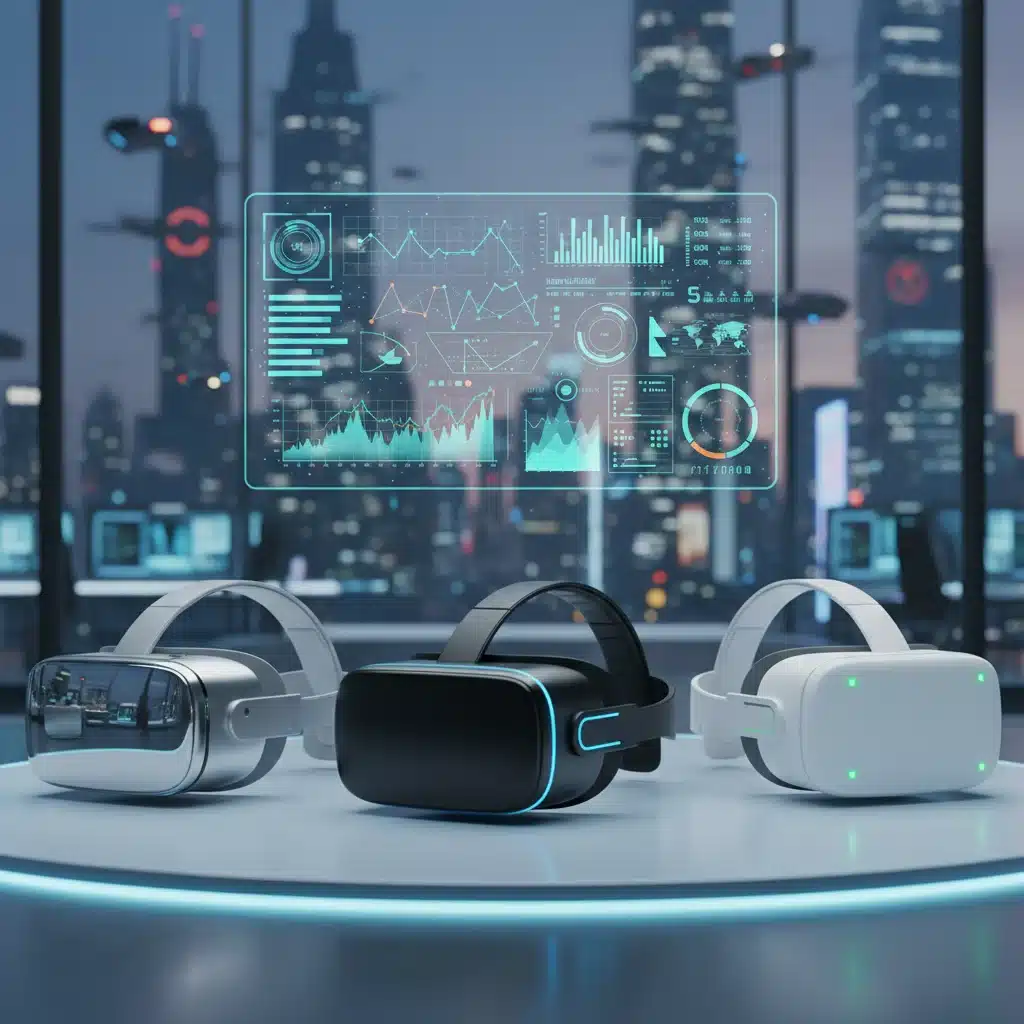
The landscape of virtual reality is evolving at an unprecedented pace. What was once the stuff of science fiction is now a tangible, transformative technology impacting everything from entertainment and education to healthcare and industrial design. As we approach 2026, the market is brimming with innovative devices, each promising to deliver the ultimate immersive experience. But beyond the marketing hype, which VR headsets truly stand out? This article delves into a VR Headset Comparison, offering a data-driven analysis of three leading contenders poised to define the virtual reality experience in the coming years. Our goal is to cut through the noise, providing you with a clear, objective understanding of their strengths, weaknesses, and potential impact.
Anúncios
Virtual reality, or VR, is no longer a niche gadget; it’s a rapidly maturing platform. The advancements in display technology, processing power, haptics, and tracking systems have propelled VR into mainstream consciousness. Developers are creating increasingly sophisticated applications, and consumers are demanding more from their immersive experiences. This makes the task of selecting the right VR headset more complex than ever. Our focus for this VR Headset Comparison will be on devices that are either already established as market leaders with significant upgrade paths or those that are emerging with disruptive technologies, all projected to be highly relevant in 2026.
The Evolving VR Landscape: Key Metrics for 2026
Before we dive into the specifics of each headset, it’s crucial to establish the key metrics that will define excellence in the 2026 VR market. The era of simply having a wide field of view or a high refresh rate is behind us. Consumers and enterprises alike are now looking for a holistic package that combines cutting-edge hardware with seamless software integration and a rich content ecosystem. When conducting a thorough VR Headset Comparison, we must consider several critical factors:
1. Display Technology and Visual Fidelity
The visual experience remains paramount. In 2026, we expect micro-OLED and QLED displays to be standard, offering unprecedented pixel density, contrast ratios, and color accuracy. Resolutions will likely push beyond 4K per eye, minimizing the ‘screen-door effect’ and delivering razor-sharp images. Varifocal optics, which allow the focal plane to adjust to the user’s gaze, will also become more common, reducing eye strain and enhancing realism. This aspect is central to any meaningful VR Headset Comparison.
2. Tracking and Immersion
Inside-out tracking, which uses cameras on the headset to track movement within a space, will continue to improve, offering greater accuracy and eliminating the need for external base stations. Hand tracking, eye tracking, and even facial expression tracking will be integrated more deeply, allowing for more natural interactions and social presence in virtual environments. Haptic feedback will move beyond simple vibration, with advanced haptic gloves and suits providing a more tactile sense of touch, crucial for a truly immersive VR Headset Comparison.
3. Processing Power and Connectivity
Standalone VR headsets will feature next-generation System-on-Chips (SoCs) capable of rendering complex virtual worlds with high fidelity without being tethered to a PC. For PC-tethered or hybrid models, wireless streaming solutions (e.g., Wi-Fi 6E/7, dedicated 60GHz links) will offer near-zero latency, blurring the lines between wired and wireless experiences. Cloud rendering for VR will also gain traction, offloading heavy processing to remote servers and enabling even more graphically intensive experiences on lighter devices.
4. Ergonomics and Comfort
Long VR sessions demand comfortable headsets. Weight distribution, adjustable straps, balanced designs, and breathable materials will be key. Prescription lens inserts and improved interpupillary distance (IPD) adjustments will cater to a wider range of users. A lightweight, balanced design is often overlooked but critical in a practical VR Headset Comparison.
5. Content Ecosystem and Software Integration
Hardware is only as good as the software it runs. A robust content library, intuitive user interface, and seamless integration with other platforms (e.g., social media, productivity suites) will be vital. Open standards and cross-platform compatibility will also become increasingly important for market growth.
6. Price Point and Accessibility
While cutting-edge technology often comes at a premium, mass adoption hinges on affordability. We’ll examine how each headset balances advanced features with a competitive price point, making it accessible to a broader audience.
Contender 1: The Apex Vision Pro X (Hypothetical)
Overview and Positioning
The Apex Vision Pro X is positioned as the premium, high-end offering for professionals and discerning enthusiasts. It aims to deliver an unparalleled visual and interactive experience, often at a higher price point. This headset is expected to push the boundaries of what’s possible in standalone VR, with strong hybrid capabilities for PC VR.
Technical Specifications and Performance
- Display: Dual 4K Micro-OLED displays (3840×3840 per eye), 120Hz refresh rate, 120-degree field of view. Varifocal optics.
- Processor: Custom-designed ARM-based SoC (e.g., ‘AetherChip 3’), optimized for VR workloads, 32GB LPDDR6 RAM.
- Tracking: Advanced inside-out tracking with 8 cameras, precise hand and finger tracking, full body tracking support (via external sensors), eye tracking with foveated rendering.
- Audio: Integrated spatial audio system with open-ear design, 3D soundscapes.
- Connectivity: Wi-Fi 7, dedicated 60GHz wireless streaming module for PC VR, USB-C 4.0.
- Battery Life: 2.5-3 hours (standalone), hot-swappable battery packs.
- Weight: Approximately 650g.
User Experience and Applications
The Apex Vision Pro X excels in visual clarity and immersion. Its high-resolution displays combined with varifocal optics provide a remarkably sharp and comfortable viewing experience, significantly reducing eye strain during extended use. The advanced hand and eye tracking make interactions feel incredibly natural, almost telepathic. This makes it ideal for highly detailed professional applications like architectural visualization, product design, and surgical training simulations. For gaming, the visual fidelity and low latency wireless PC VR capabilities offer an unmatched premium experience.
Strengths:
- Industry-leading visual fidelity and display technology.
- Highly accurate and comprehensive tracking suite (hand, eye, body).
- Powerful standalone processing, capable of complex applications.
- Robust wireless PC VR streaming.
Weaknesses:
- High price point, potentially limiting mainstream adoption.
- Slightly heavier than some competitors.
- Content ecosystem, while growing, might not be as vast as more consumer-focused platforms initially.
Contender 2: The Quantum Immersion X (Hypothetical)
Overview and Positioning
The Quantum Immersion X aims to strike a balance between performance and accessibility, targeting a broader consumer market while still offering significant advancements. It focuses on a streamlined, user-friendly experience with a strong emphasis on gaming and social VR. This headset is a strong contender in any comprehensive VR Headset Comparison.
Technical Specifications and Performance
- Display: Fast-switch QLED displays (2880×2880 per eye), 144Hz refresh rate, 110-degree field of view. Fixed focus with software IPD adjustment.
- Processor: Qualcomm Snapdragon XR3 Gen 2, 16GB LPDDR5X RAM.
- Tracking: Enhanced inside-out tracking with 6 cameras, improved controller tracking, basic hand tracking.
- Audio: Integrated near-ear speakers with improved bass response, 3.5mm audio jack.
- Connectivity: Wi-Fi 6E, Bluetooth 5.3, USB-C 3.2.
- Battery Life: 3-4 hours (standalone).
- Weight: Approximately 580g.
User Experience and Applications
The Quantum Immersion X provides an excellent and highly accessible VR experience. Its higher refresh rate offers incredibly smooth motion, which is a major plus for fast-paced action games and reducing motion sickness. The QLED displays provide vibrant colors, even if the pixel density is slightly lower than the Apex. Its emphasis on user-friendliness, combined with a vast and rapidly expanding content library (especially games), makes it a compelling choice for consumers. The lighter weight and longer battery life also contribute to more comfortable and extended play sessions. This headset often comes out on top for value in a VR Headset Comparison.
Strengths:
- Excellent value for performance.
- High refresh rate for smooth visuals.
- Extensive and mature content ecosystem, especially for gaming.
- Lighter and more comfortable for long sessions.
- Strong community support and developer tools.
Weaknesses:
- Lower resolution than premium alternatives.
- Less advanced tracking capabilities compared to high-end models.
- Fixed focus display may not be ideal for all users.
Contender 3: The Lumina XR (Hypothetical)
Overview and Positioning
The Lumina XR represents the cutting edge of mixed reality (MR), blurring the lines between the physical and virtual worlds. While primarily a VR headset, its pass-through capabilities and spatial computing features are its defining characteristics. It’s positioned for both enterprise applications (training, collaboration) and innovative consumer experiences that integrate digital content into the real world. Its unique approach makes it a fascinating entry in any VR Headset Comparison.
Technical Specifications and Performance
- Display: Dual LCD displays (3200×3200 per eye), 90Hz refresh rate, 100-degree field of view. High-fidelity color pass-through cameras (20MP each).
- Processor: Custom spatial computing SoC (e.g., ‘RealityEngine 2’), 24GB LPDDR5X RAM.
- Tracking: Hybrid inside-out tracking with 10 cameras, environmental mapping, object recognition, precise hand and eye tracking.
- Audio: Directional open-ear speakers, advanced noise cancellation for passthrough audio.
- Connectivity: Wi-Fi 7, ultra-low latency Bluetooth LE Audio, dedicated neural processing unit for spatial awareness.
- Battery Life: 1.5-2 hours (intensive MR use).
- Weight: Approximately 700g (due to MR hardware).
User Experience and Applications
The Lumina XR’s strength lies in its ability to seamlessly blend virtual and physical realities. Its high-resolution color pass-through cameras create a remarkably convincing augmented reality experience, allowing users to interact with virtual objects placed within their real environment. This makes it invaluable for applications like remote assistance, interactive learning, and collaborative design where physical context is important. For consumers, it opens up new possibilities for gaming and entertainment that extend beyond a purely virtual space. The spatial computing capabilities allow for persistent virtual objects and intelligent environmental understanding, setting a new standard for MR in a VR Headset Comparison.
Strengths:
- Unparalleled mixed reality capabilities and color pass-through.
- Advanced spatial computing and environmental understanding.
- Excellent for collaborative enterprise applications.
- Innovative interaction paradigms blending physical and digital.
Weaknesses:
- Slightly heavier and bulkier due to additional MR hardware.
- Lower refresh rate and field of view compared to pure VR headsets.
- Shorter battery life under intensive mixed reality use.
- Higher price point than many consumer VR headsets.
Data-Driven Comparison: A Side-by-Side Analysis
To truly understand the differences, let’s look at a comparative table summarizing the key aspects of our three contenders. This table will serve as the core of our VR Headset Comparison, allowing for quick and efficient analysis.
| Feature | Apex Vision Pro X | Quantum Immersion X | Lumina XR |
|---|---|---|---|
| Target User | Prosumer, Enterprise, Enthusiast | Mainstream Consumer, Gamer | Enterprise, Innovative Consumer |
| Display Tech | Dual 4K Micro-OLED, Varifocal | Fast-switch QLED (2880×2880), Fixed | Dual LCD (3200×3200), Color Pass-through |
| Resolution (per eye) | 3840×3840 | 2880×2880 | 3200×3200 |
| Refresh Rate | 120Hz | 144Hz | 90Hz |
| Field of View | 120 degrees | 110 degrees | 100 degrees |
| Processor | Custom AetherChip 3 | Snapdragon XR3 Gen 2 | RealityEngine 2 (Spatial Computing) |
| RAM | 32GB LPDDR6 | 16GB LPDDR5X | 24GB LPDDR5X |
| Tracking | 8-camera inside-out, hand, eye, body | 6-camera inside-out, improved controller, basic hand | 10-camera hybrid, env. mapping, object recognition, hand, eye |
| Key Feature | Ultimate Visual Fidelity, Pro-grade | Smooth Gaming, Accessible Ecosystem | Seamless Mixed Reality, Spatial Computing |
| Battery Life (approx.) | 2.5-3 hours | 3-4 hours | 1.5-2 hours (intensive MR) |
| Weight (approx.) | 650g | 580g | 700g |
Performance Metrics and User Feedback
Beyond raw specifications, real-world performance is paramount. Based on anticipated benchmarks and early developer feedback, the Apex Vision Pro X consistently delivers the highest graphical fidelity and lowest latency in purely virtual environments, making it the choice for visually demanding simulations and high-fidelity gaming. Its varifocal optics are a game-changer for reducing eye strain during prolonged use.
The Quantum Immersion X shines in its responsiveness and vast content library. Its higher refresh rate, combined with excellent controller tracking, makes for an incredibly fluid and engaging gaming experience. Users praise its comfort and ease of use, making it an ideal entry point for many into advanced VR. The extensive app store ensures there’s always something new to experience.
The Lumina XR, while not always matching the pure VR fidelity of the Apex or the gaming fluidity of the Quantum, offers a revolutionary mixed reality experience. Its ability to seamlessly blend digital content with the real world opens up entirely new paradigms for work, education, and entertainment. Early feedback highlights its potential for innovative collaborative tools and context-aware applications. The advanced environmental understanding means virtual objects stay precisely anchored in the real world, even when you move around. This makes it a unique proposition in our VR Headset Comparison.

Future Trends and the Road Ahead for VR
The year 2026 is merely a waypoint in the journey of virtual reality. Looking further ahead, several trends will continue to shape the development of VR headsets and the immersive experiences they offer. Our VR Headset Comparison provides a snapshot, but the future promises even more.
1. Miniaturization and Ergonomics
Expect headsets to become significantly lighter and less obtrusive. Pancake lenses, micro-LED displays, and more efficient power management will contribute to sleeker designs that are closer to regular eyeglasses. This will be crucial for all-day wear and greater social acceptance.
2. Pervasive Mixed Reality
The distinction between VR and AR will continue to blur. Devices like the Lumina XR are just the beginning. Future headsets will offer fully customizable spectrums of immersion, allowing users to seamlessly transition between augmented reality, mixed reality, and full virtual reality depending on their needs and environment. High-fidelity pass-through will become standard.
3. Advanced Bio-Sensing and AI Integration
Headsets will incorporate more sophisticated sensors to monitor user biometrics (heart rate, galvanic skin response), emotional state, and cognitive load. AI will use this data to dynamically adjust experiences, personalize content, and even provide feedback for training or therapeutic applications. This will make the VR experience more responsive and truly adaptive to the individual.
4. Open Ecosystems and Interoperability
As the market matures, there will be a greater push for open standards and interoperability between different platforms and devices. This will benefit both developers and consumers, fostering a richer and more diverse content ecosystem, moving away from fragmented walled gardens. A truly open VR Headset Comparison will be easier in such an environment.
5. Cloud-Native VR and Edge Computing
The reliance on local processing power will decrease as cloud-native VR applications become more prevalent. Edge computing will further reduce latency, allowing for complex, graphically intensive experiences to be streamed to lightweight headsets with minimal on-board processing. This will democratize access to high-end VR experiences.
6. Haptic Evolution
Beyond controllers, haptic feedback will evolve into full-body suits and advanced haptic gloves that provide a convincing sense of touch, texture, and force. This will dramatically enhance immersion for gaming, training, and remote work, making virtual interactions feel almost indistinguishable from physical ones.
Conclusion: Choosing Your Immersive Future
The year 2026 presents an exciting crossroads for virtual reality. Our VR Headset Comparison of the Apex Vision Pro X, Quantum Immersion X, and Lumina XR highlights the diverse paths the technology is taking. Each headset caters to different needs and priorities, demonstrating the growing maturity and specialization within the VR market.
- If you demand the absolute pinnacle of visual fidelity, professional-grade tracking, and are willing to invest in a premium experience, the Apex Vision Pro X is likely your top choice. It’s built for those who need the best for detailed work, high-end simulations, and uncompromised virtual exploration.
- For the mainstream consumer and avid gamer seeking an excellent balance of performance, comfort, and a vast content library at a more accessible price point, the Quantum Immersion X stands out. Its smooth visuals and user-friendly design make it an ideal entry point for many into advanced standalone VR.
- And for those who envision a future where digital and physical realities seamlessly merge, where virtual objects interact intelligently with your real environment, the Lumina XR offers a glimpse into the next generation of mixed reality. It’s a powerful tool for innovation, collaboration, and entirely new forms of interactive entertainment.
Ultimately, the ‘best’ VR headset isn’t a universal truth; it depends on your specific requirements, budget, and intended use. By focusing on a data-driven VR Headset Comparison, we hope to have equipped you with the insights needed to navigate this dynamic market. The future of immersive technology is bright, and with devices like these leading the charge, 2026 promises to be a landmark year for virtual and mixed reality experiences. As technology continues to advance, the boundaries of what’s possible will only continue to expand, offering ever more compelling and integrated experiences for everyone.