Affordable Home EV Charging: Best Chargers Under $500 in 2026
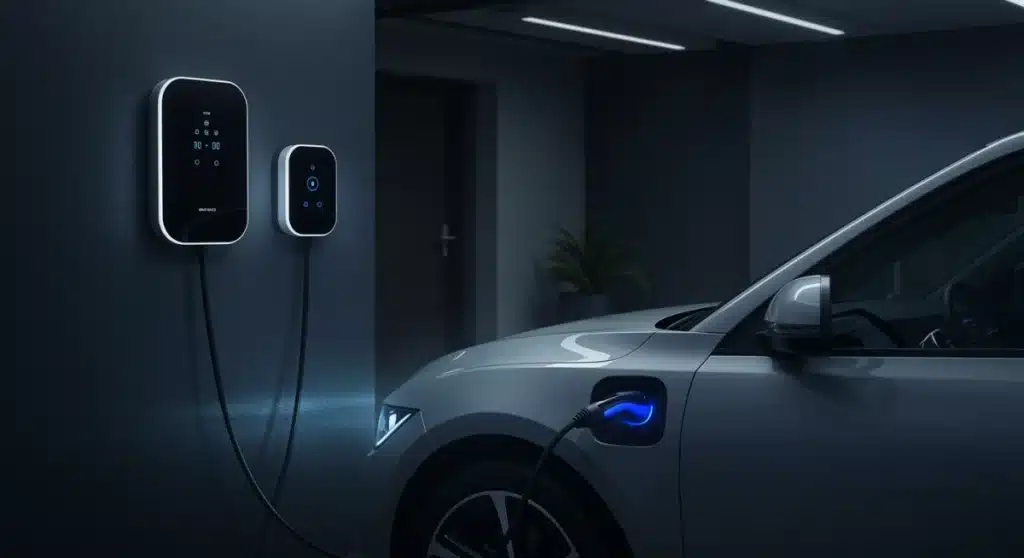
Navigating the 2026 EV Charger Market: A Practical Guide to Selecting Home Charging Solutions for Under $500
The electric vehicle (EV) revolution is in full swing, and with more EVs hitting the roads, the demand for convenient and efficient home charging solutions is skyrocketing. While the thought of owning an EV often conjures images of high-tech gadgets and premium costs, the reality is that many essential accessories, including home chargers, are becoming increasingly accessible and affordable. For many prospective and current EV owners, the sweet spot for a home charging solution lies firmly under the $500 mark. This comprehensive guide will delve into the exciting world of affordable home EV chargers, helping you navigate the 2026 market to find the perfect device that balances cost, performance, and features.
Choosing the right affordable home EV charger is more than just picking the cheapest option; it’s about understanding your needs, your vehicle’s requirements, and your home’s electrical infrastructure. The market is evolving rapidly, with new technologies and competitive pricing making high-quality charging accessible to a broader audience. Our focus today is on Level 2 chargers, which offer a significant upgrade from standard Level 1 (120V) outlets, providing faster charging speeds that are practical for daily use without requiring the commercial-grade power of Level 3 fast chargers.
Why an Affordable Home EV Charger is a Game-Changer
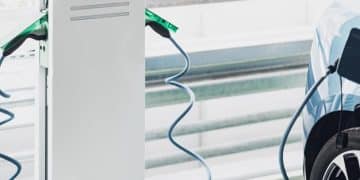
For most EV owners, the majority of charging happens at home, overnight. Having a dedicated home charging station offers unparalleled convenience, ensuring your vehicle is always topped up and ready for your next journey. While public charging networks are expanding, relying solely on them can be less cost-effective and more time-consuming. An affordable home EV charger transforms your garage or driveway into your personal fueling station, saving you time and money in the long run.
The benefits extend beyond mere convenience. Charging at home often means taking advantage of off-peak electricity rates, further reducing your operational costs. Furthermore, a Level 2 charger, typically operating at 240 volts, can fully charge most EVs overnight, a stark contrast to the sluggish pace of a Level 1 charger which might take days. This speed difference is crucial for daily commuters or those with variable driving habits.
In 2026, the market for these devices is more mature and competitive than ever. Manufacturers have refined their offerings, focusing on user-friendly designs, smart features, and, crucially, more attractive price points. This means that an affordable home EV charger no longer implies a compromise on quality or functionality. Instead, it signifies smart engineering and economies of scale working in the consumer’s favor.
Understanding EV Charger Levels: Why Level 2 is Key for Home Use
Before diving into specific models, it’s essential to understand the different levels of EV charging:
- Level 1 Charging: Uses a standard 120V household outlet. It’s the slowest option, typically adding only 2-5 miles of range per hour. While it works, it’s generally only suitable for plug-in hybrids or EVs with very low daily mileage requirements.
- Level 2 Charging: Operates on a 240V circuit, similar to a clothes dryer or electric oven. This is the sweet spot for home charging, adding 12-80 miles of range per hour, depending on the charger and vehicle. Most affordable home EV charger options fall into this category.
- Level 3 Charging (DC Fast Charging): Utilizes direct current (DC) and is primarily found at public charging stations. It offers the fastest charging speeds, often adding hundreds of miles of range in under an hour. However, these units are prohibitively expensive for residential installation and require specialized electrical infrastructure.
For the purpose of finding an affordable home EV charger under $500, we are exclusively focusing on Level 2 chargers. These devices strike the perfect balance between charging speed, installation complexity, and cost-effectiveness for residential settings.
Key Features to Look for in an Affordable Home EV Charger
Even with a budget of under $500, you can expect a robust set of features from modern EV chargers. Knowing what to prioritize will help you make the best decision.
1. Charging Speed (Amperage)
The amperage of a Level 2 charger directly correlates to its charging speed. Most residential Level 2 chargers range from 16 amps to 48 amps. While higher amperage means faster charging, it also requires a more robust electrical circuit. For an affordable home EV charger, you’ll commonly find models in the 16-amp to 40-amp range that can still provide excellent charging times for overnight top-ups.
- 16-20 Amps: Good for smaller batteries or if you only drive short distances daily. Requires a 20-25 amp circuit.
- 24-32 Amps: A very common and practical choice, offering a good balance of speed and electrical requirements. Typically needs a 30-40 amp circuit. Most EVs will charge fully overnight with a 32-amp charger.
- 40 Amps: Offers faster charging, great for larger batteries or if you need quicker turnaround times. Requires a 50-amp circuit.
Always ensure your home’s electrical panel can support the desired amperage. Consulting with a licensed electrician is crucial before purchasing and installing any charger.
2. Cord Length and Connector Type
The standard connector for North American EVs is the J1772 plug. Ensure your chosen charger uses this connector unless you drive a Tesla, which comes with its own proprietary connector but typically includes a J1772 adapter. Cord length is also paramount. A longer cord (usually 18-25 feet) offers more flexibility in parking your car, especially if your garage or driveway layout isn’t ideal.
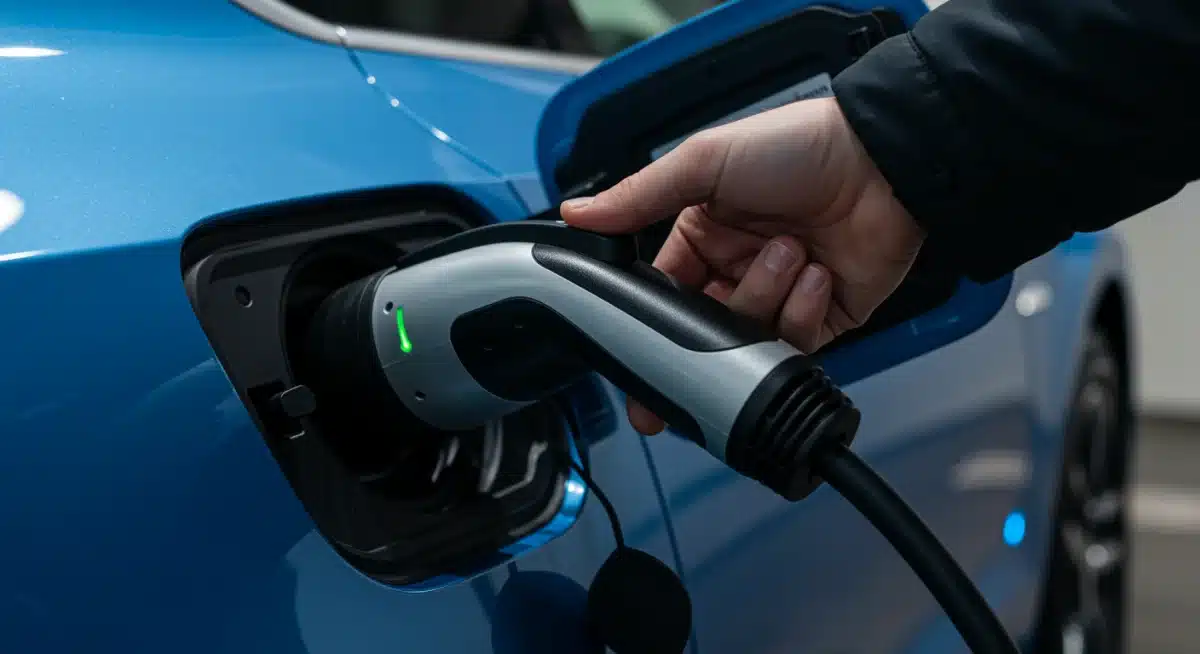
3. Installation Type: Plug-in vs. Hardwired
This is a critical consideration for an affordable home EV charger, especially concerning overall cost. Most chargers can be either:
- Plug-in: These chargers connect to a NEMA 14-50 or 6-50 outlet (similar to an RV outlet or a large appliance outlet). If you already have such an outlet or can easily install one, this is often the most cost-effective installation method.
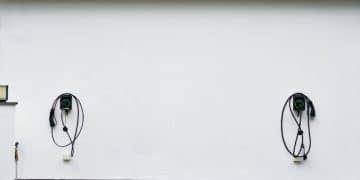
- Hardwired: These chargers are directly wired into your home’s electrical system by an electrician. While potentially more expensive for initial installation, hardwired units can sometimes offer slightly higher amperage ratings and a cleaner, more permanent look. Many hardwired units are also weather-rated for outdoor installation.
For chargers under $500, plug-in models are often more prevalent as they reduce installation complexity and cost. However, always factor in the cost of an electrician for outlet installation if you don’t have one.
4. Smart Features and Connectivity
Many modern affordable home EV charger units now come with smart features, even within the budget range. Look for:
- Wi-Fi Connectivity: Allows you to control and monitor your charging sessions via a smartphone app.
- Scheduling: Essential for taking advantage of off-peak electricity rates. You can set your charger to only operate during specific hours.
- Usage Tracking: Helps you monitor your electricity consumption and costs.
- Voice Assistant Integration: Some chargers can connect with Amazon Alexa or Google Assistant for hands-free control.
While not strictly necessary for charging, these smart features add significant convenience and can help optimize your energy usage, potentially leading to further savings.
5. Safety and Certifications
Safety is paramount. Ensure any affordable home EV charger you consider is UL listed or certified by another recognized testing laboratory (e.g., ETL). This guarantees the product meets stringent safety standards for electrical equipment. Also, check for features like overcurrent protection, ground fault protection, and temperature monitoring.
Top Affordable Home EV Chargers Under $500 for 2026
The market is dynamic, but several brands consistently offer reliable and feature-rich Level 2 chargers at competitive price points. Here are some categories and examples of what to look for:
Budget-Friendly Workhorses (Typically 24-32 Amps)
These chargers focus on core functionality, providing reliable Level 2 charging without too many extra frills. They are often plug-in models, making installation simpler if you have the correct NEMA outlet.
- Lectron NEMA 14-50 Level 2 EV Charger: Often found well under $500, Lectron offers a range of chargers, typically around 32 amps. They are known for their straightforward design, robust build quality, and good value. Many models are portable, making them versatile.
- Grizzl-E Classic EV Charger: While some models might slightly exceed $500, the Grizzl-E Classic is renowned for its extreme durability and reliability, often available in the budget range during sales. It’s a no-nonsense, hardwired or plug-in (NEMA 14-50 or 6-50) unit built to withstand harsh weather, making it excellent for outdoor installation.
- ChargePoint Home Flex (Refurbished/Older Models): While new ChargePoint Home Flex units typically exceed $500, it’s worth keeping an eye out for refurbished units or slightly older models that might drop into this price bracket. ChargePoint is a leader in EV charging, and even their more basic models offer excellent smart features and reliability.
Smart and Connected Options (Often 32-40 Amps)
For those who value smart features and connectivity, several brands offer excellent value within the sub-$500 category. These often provide app control, scheduling, and usage tracking.
- Emporia Vue EV Charger: Emporia is known for its energy monitoring solutions, and their EV charger integrates seamlessly with their energy management ecosystem. It often comes in at competitive price points, offering 40 amps of power and robust smart features via its app.
- Wallbox Pulsar Plus (Entry-Level Models or Sales): Similar to ChargePoint, the Pulsar Plus is a premium charger, but entry-level 32A models or promotional sales can sometimes bring it under $500. It’s compact, smart, and offers advanced features like power sharing.
- Enel X Way JuiceBox 32 (Refurbished/Sales): Another top-tier brand, the JuiceBox 32 offers 32 amps of power with comprehensive smart features. Like others, keep an eye out for discounts or refurbished options to snag one within budget.
When looking at these options, always check the current pricing and specifications, as the market is dynamic. Online retailers, manufacturer websites, and even certified refurbished programs are good places to search for an affordable home EV charger.
Installation Considerations and Costs
While this guide focuses on the cost of the charger itself, it’s crucial to factor in installation costs, which can vary significantly based on your home’s existing electrical infrastructure and local labor rates. An affordable home EV charger can quickly become less affordable if installation is complex.
DIY vs. Professional Installation
DIY (Do-It-Yourself): If you are comfortable with basic electrical work and are installing a plug-in charger into an existing, correctly wired NEMA 14-50 outlet, you might be able to install the charger yourself. However, it is strongly recommended to consult with or hire a licensed electrician for any electrical work involving 240V circuits to ensure safety and compliance with local codes.
Professional Installation: For most homeowners, hiring a licensed electrician is the safest and most reliable option. They will assess your electrical panel, determine if an upgrade is needed, and install the dedicated 240V circuit and outlet (or hardwire the charger) correctly. Installation costs can range from a few hundred dollars to over a thousand, depending on the complexity (e.g., distance from the panel to the charging location, panel upgrades required).
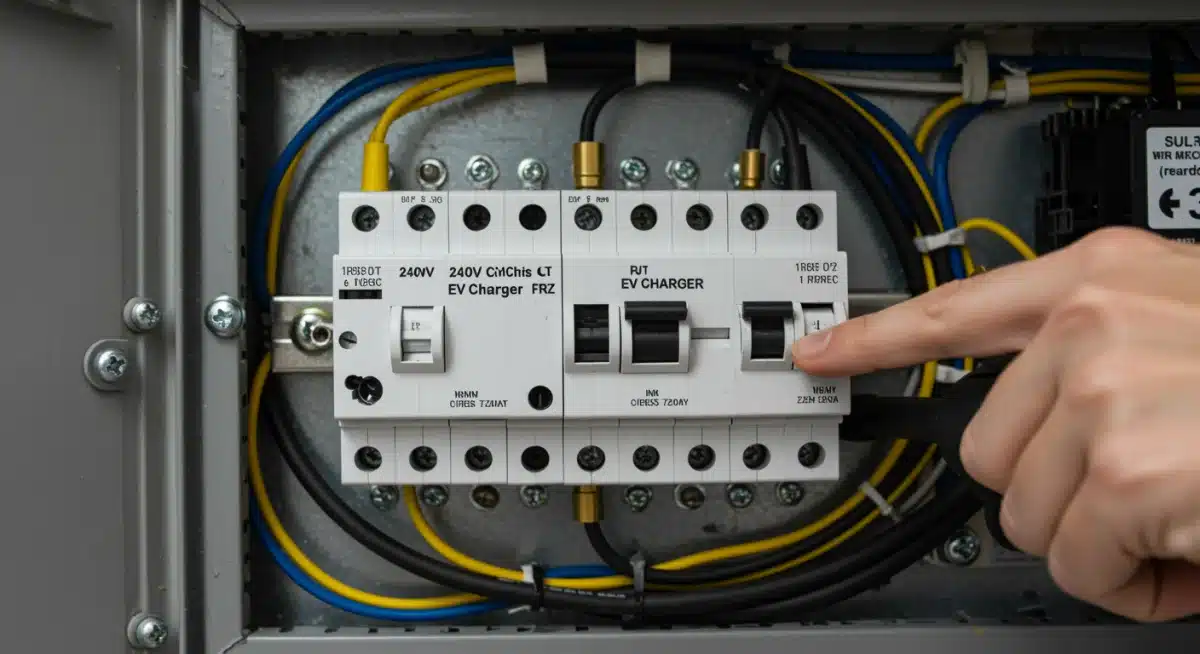
Potential Electrical Upgrades
Your home electrical panel might need an upgrade if it doesn’t have enough spare capacity for a new 240V circuit. This can add significantly to the overall cost. However, many homes built in recent decades have sufficient capacity. An electrician can perform a load calculation to determine this.
Rebates and Incentives
Don’t forget to research local, state, and federal incentives! Many governments and utility companies offer rebates or tax credits for purchasing and installing EV charging equipment. These can significantly offset the total cost, making an affordable home EV charger even more economical.
Maximizing the Value of Your Affordable Home EV Charger
Once you’ve selected and installed your affordable home EV charger, there are several ways to maximize its value and efficiency:
- Charge During Off-Peak Hours: Utilize your charger’s scheduling features (or your EV’s built-in scheduling) to charge when electricity rates are lowest. This can lead to substantial savings over time.
- Monitor Your Usage: Use the charger’s accompanying app or a separate energy monitor to track your charging habits and costs. This data can help you optimize your charging strategy.
- Maintain Your Equipment: While EV chargers require minimal maintenance, ensuring the cord and connector are stored properly and kept clean can extend the life of your unit.
- Consider Renewable Energy: If you have solar panels or are considering them, integrating your EV charging with a home energy management system can further reduce your carbon footprint and electricity bills.
Future-Proofing Your Home Charging Setup
While focusing on an affordable home EV charger for 2026, it’s wise to consider future needs. Most EVs today use the J1772 connector, but the North American Charging Standard (NACS), popularized by Tesla, is gaining traction. Many new EVs will feature NACS ports, and some J1772 chargers may come with NACS adapters, or dedicated NACS chargers will become more widespread. For now, a J1772 charger paired with an adapter for Tesla vehicles (if applicable) remains the most versatile option.
Also, consider the maximum charging rate your current and potential future EVs can accept. While a 32-amp charger is sufficient for most, if you anticipate owning an EV with a very large battery that can accept higher charging rates, investing in a 40-amp or even 48-amp charger (if your budget and electrical panel allow) might be a wise long-term decision, even if it slightly pushes the upper limit of the "affordable" category.
Common Misconceptions About Affordable EV Chargers
It’s important to dispel some common myths about budget-friendly EV charging solutions:
- "Affordable means low quality." Not true! Thanks to increased competition and technological advancements, many chargers under $500 are robust, reliable, and come from reputable brands.
- "I need the fastest charger possible." While faster is often better, for overnight home charging, a 32-amp Level 2 charger is typically more than sufficient for most EV batteries. Overpaying for a higher amperage charger that your car can’t fully utilize is an unnecessary expense.
- "All installation costs are included in the charger price." This is a major misconception. The charger unit itself is only one part of the equation. Always budget separately for professional electrical installation.
Conclusion: Powering Your EV Economically in 2026
The journey to electric vehicle ownership is becoming increasingly accessible, and finding an affordable home EV charger under $500 is a testament to this trend. By understanding your charging needs, prioritizing key features like amperage and safety, and factoring in installation costs and potential incentives, you can confidently select a high-quality charging solution that fits your budget.
In 2026, the market offers a diverse range of reliable and smart Level 2 chargers that will efficiently power your EV from the comfort of your home. With careful research and a clear understanding of what you need, you can enjoy the convenience and cost savings of home charging without breaking the bank. Embrace the future of transportation with a smart, budget-friendly charging setup that keeps you moving forward.