Augmented Reality in News: Transforming U.S. Journalism by 2026

Anúncios
The landscape of news reporting is in a perpetual state of evolution, driven by technological advancements and shifting audience expectations. Among the most transformative technologies emerging is Augmented Reality (AR), a game-changer poised to redefine how U.S. journalists gather, present, and disseminate information. By Q3 2026, AR will no longer be a futuristic concept but a practical, indispensable tool in the journalistic arsenal, offering unprecedented opportunities for immersive storytelling and deeper audience engagement.
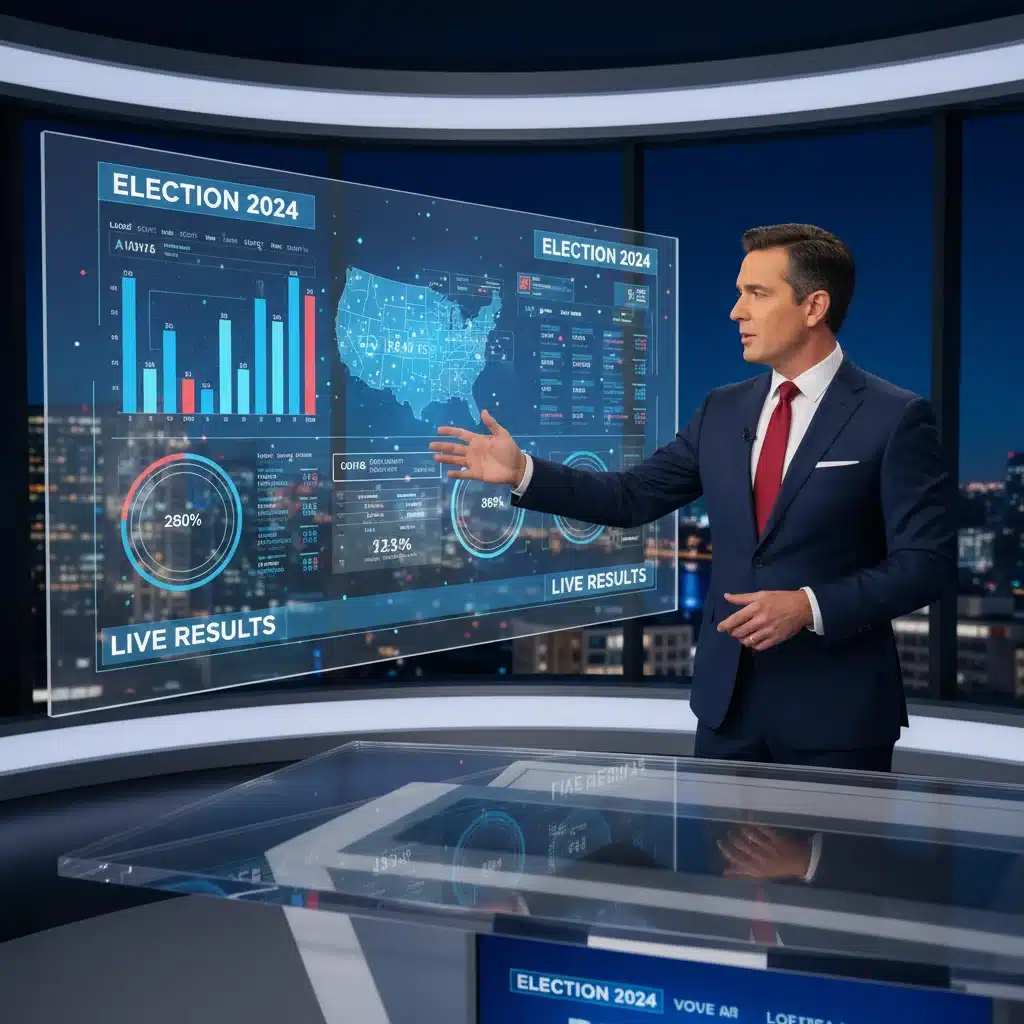
Augmented Reality Journalism, at its core, overlays digital information onto the real world, enhancing our perception of reality. For news, this translates into dynamic, interactive experiences that bring stories to life in ways traditional media cannot. Imagine a weather report where a virtual hurricane swirls realistically above a city map on your coffee table, or an election analysis where demographic data pops out in 3D right in your living room. This isn’t science fiction; it’s the near future of news, and U.S. journalists are already beginning to harness its power.
Anúncios
This comprehensive guide will delve into the practical applications of Augmented Reality Journalism, exploring how U.S. journalists can integrate AR into their workflows, enhance their reporting, and captivate audiences. We will examine the current state of AR technology, forecast its trajectory by Q3 2026, and provide actionable insights for newsrooms looking to stay ahead of the curve. From breaking news to in-depth investigations, AR offers a new dimension to reporting, making stories more tangible, understandable, and memorable.
The Evolution of News: Why Augmented Reality is the Next Frontier
For decades, news consumption has largely been a passive experience. Readers consumed text, viewers watched video, and listeners heard audio. While these formats remain vital, the digital age has ushered in an era of interactivity and personalization. Audiences no longer just want to be informed; they want to be immersed, to understand the ‘why’ and the ‘how’ in a more profound way. This is where Augmented Reality Journalism steps in, offering a bridge between passive consumption and active engagement.
The rise of mobile AR, facilitated by widespread smartphone adoption and powerful AR toolkits like Apple’s ARKit and Google’s ARCore, has democratized access to AR experiences. This ubiquity means that news organizations don’t necessarily need specialized hardware for initial AR deployments; they can reach millions through existing mobile devices. However, dedicated AR glasses and headsets are rapidly improving, promising even more seamless and immersive experiences in the coming years. By Q3 2026, these devices are expected to be more common, further expanding the possibilities for news delivery.
Beyond mere novelty, AR addresses fundamental challenges in journalism, such as conveying complex data, visualizing abstract concepts, and transporting audiences to remote locations. It transforms static images and flat videos into dynamic, explorable environments. This capability is particularly crucial in an era of information overload, where cutting through the noise requires innovative approaches to storytelling. Augmented Reality Journalism offers a powerful mechanism to capture attention and deliver information with unparalleled clarity and impact.
Practical Applications of Augmented Reality in News Reporting for U.S. Journalists
The potential applications of Augmented Reality Journalism are vast and varied, touching almost every facet of news reporting. Here, we explore some of the most impactful ways U.S. journalists can leverage AR by Q3 2026.
Immersive Breaking News and Live Events
Imagine covering a natural disaster. Instead of simply showing footage, AR can project a 3D model of the affected area onto a viewer’s living room floor, illustrating flood levels, damage zones, and evacuation routes with startling realism. For live events like protests, parades, or political rallies, AR can overlay real-time data, participant counts, or historical context directly onto the live video feed, enriching the viewer’s understanding without requiring them to navigate away.
News organizations like The New York Times and The Washington Post have already experimented with AR to bring breaking news to life. For instance, creating AR models of significant structures or displaying interactive timelines of events. By 2026, these will become standard practice, with journalists able to rapidly deploy AR overlays for major incidents, offering immediate, context-rich information.
Enhanced Data Visualization and Infographics
Complex data sets, such as economic trends, climate change statistics, or public health crises, can be challenging to convey effectively through traditional charts and graphs. Augmented Reality Journalism transforms these into interactive, explorable 3D visualizations. A journalist could present a report on rising sea levels, and viewers could project a 3D map of their coastline, seeing exactly which areas would be submerged at different projection levels.
This level of personalization and tangibility makes abstract data profoundly more relatable and understandable. Journalists can use AR to break down intricate financial reports into easily digestible 3D models of company performance or illustrate demographic shifts with interactive population density maps that viewers can walk around and explore. The ability to manipulate and interact with data in a spatial environment fosters deeper comprehension and retention.
Investigative Journalism and Crime Scene Reconstruction
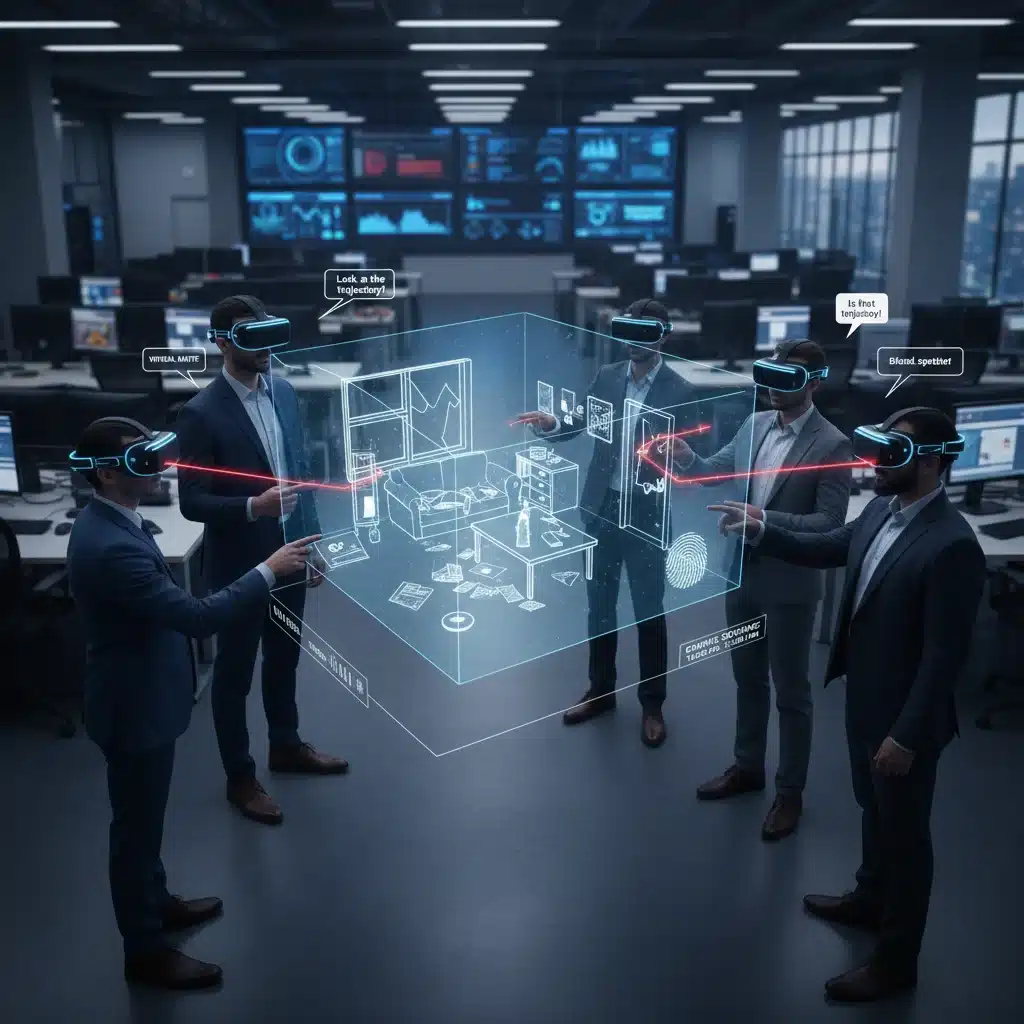
For investigative reporting, AR offers revolutionary tools. Journalists could reconstruct crime scenes in 3D, allowing audiences to ‘walk through’ the scene and understand the spatial relationships of evidence, witness viewpoints, and perpetrator movements. This can be invaluable for cold cases or complex narratives, making abstract details concrete and helping to clarify sequences of events.
Similarly, for historical investigations, AR can bring ancient sites or lost cities back to life, allowing viewers to explore them as they once were. Imagine an AR experience where a journalist guides you through a digital reconstruction of a historical event, pointing out key figures and explaining their significance in a virtual environment overlaid onto your physical space. This immersive approach can reveal nuances and perspectives often lost in two-dimensional storytelling.
Behind-the-Scenes Access and Reporter Immersion
AR can also provide audiences with a unique ‘reporter’s eye’ view. Imagine a journalist reporting from a war zone or a remote research station. Through AR, viewers could experience snippets of the environment as if they were there, seeing the reporter’s notes, contextual information, or even 3D models of equipment used in the field, all overlaid onto their real surroundings. This creates a stronger sense of presence and connection with the reporter and the story.
This application extends to cultural reporting, allowing audiences to virtually ‘visit’ art installations, historical landmarks, or even international festivals, experiencing elements of these events from their homes. It breaks down geographical barriers and offers unprecedented access, enhancing the feeling of being part of the story rather than just observing it.
Education and Explanatory Journalism
Explaining complex scientific concepts, historical events, or intricate political processes can be significantly enhanced with AR. Imagine an AR experience explaining how a combustion engine works, with a 3D model appearing on your table that you can rotate, disassemble, and see in action. Or an AR overlay that illustrates the journey of a bill through Congress, showing its path, amendments, and key players in an interactive flow chart.
This form of educational journalism makes learning engaging and intuitive, catering to different learning styles and allowing users to explore at their own pace. It transforms abstract knowledge into concrete, interactive experiences, fostering a deeper, more lasting understanding of critical issues.
The Technology Behind Augmented Reality Journalism
For U.S. journalists looking to embrace Augmented Reality Journalism by Q3 2026, understanding the underlying technology is crucial. While advanced coding skills aren’t always necessary, familiarity with the ecosystem will empower better decision-making and collaboration with developers.
Hardware: Smartphones, Tablets, and Headsets
The primary entry point for AR is currently mobile devices. Smartphones and tablets, equipped with advanced cameras, powerful processors, and motion sensors, can render sophisticated AR experiences. This broad accessibility is a key driver for AR adoption in news. However, the future lies in dedicated AR headsets, such as Microsoft HoloLens, Magic Leap, and potentially Apple’s upcoming devices. These offer hands-free, more immersive experiences, often with wider fields of view and more natural interaction methods. By 2026, we anticipate these headsets to become more consumer-friendly and affordable, opening new avenues for AR news delivery.
Software and Development Kits
Key software development kits (SDKs) like Apple’s ARKit and Google’s ARCore have made AR development more accessible. These platforms provide tools for tracking motion, understanding environments, and rendering 3D content, allowing developers to create robust AR applications. Unity and Unreal Engine are powerful game engines widely used for creating 3D content and AR experiences, offering sophisticated tools for graphics, animation, and interaction.
For journalists, this means that creating AR content might involve collaborating with 3D artists and developers proficient in these tools. However, simpler AR creation platforms and templates are also emerging, potentially allowing journalists with less technical expertise to produce basic AR elements, such as annotations or simple overlays, directly.
Content Creation: 3D Models, Animations, and Spatial Audio
The quality of an AR experience heavily relies on the digital content it overlays. This includes realistic 3D models, fluid animations, and spatial audio that makes virtual objects sound as if they are truly in your environment. News organizations will need to invest in or outsource the creation of high-quality 3D assets. This could range from detailed architectural models for urban development stories to animated representations of biological processes for health reporting.
Photogrammetry and Lidar scanning are also becoming increasingly relevant. These technologies allow for the creation of 3D models of real-world objects and environments from photographs or laser scans, offering a quick way to digitize physical spaces or artifacts for AR narratives. Imagine a journalist scanning a historical artifact and instantly creating an AR model for viewers to examine from all angles.
Challenges and Considerations for U.S. Newsrooms by Q3 2026
While the potential of Augmented Reality Journalism is immense, its adoption by U.S. newsrooms also presents several challenges that need to be addressed by Q3 2026.
Cost and Resource Investment
Developing high-quality AR experiences requires significant investment in technology, talent, and time. Newsrooms will need to acquire specialized software, potentially hardware, and most importantly, hire or train staff with skills in 3D modeling, AR development, and spatial storytelling. This can be a barrier for smaller news organizations with limited budgets.
However, the cost of AR development is decreasing, and as the technology matures, more accessible tools and platforms are emerging. Strategic partnerships with tech companies or universities could also provide pathways for newsrooms to experiment with AR without prohibitive upfront costs.
Technical Expertise and Workflow Integration
Integrating AR into existing newsroom workflows requires a shift in mindset and skill sets. Journalists will need to think spatially and visually, not just textually or audiovisually. Training programs will be essential to equip reporters, editors, and producers with the knowledge to conceptualize, produce, and deploy AR content effectively. This includes understanding the technical limitations and possibilities of AR.
Developing new workflows that seamlessly incorporate AR content creation into daily news cycles will be critical. This might involve dedicated AR teams or cross-functional teams that bring together journalistic expertise with AR development skills.
Ethical Considerations and Responsible Reporting
As with any powerful new technology, Augmented Reality Journalism raises important ethical questions. The ability to manipulate reality, even by overlaying digital information, carries the risk of misrepresentation or even disinformation. Newsrooms must establish clear ethical guidelines for AR content, ensuring accuracy, transparency, and avoiding sensationalism or manipulation that could erode public trust.
For example, when reconstructing a crime scene, how much artistic license is permissible? How do we ensure that AR visualizations of data are not misleading? Journalists must be transparent about what is real and what is augmented, clearly labeling AR content and maintaining journalistic integrity at all times.
Audience Adoption and Accessibility
While mobile AR is widespread, the adoption of dedicated AR headsets is still nascent. News organizations need to consider their audience’s access to AR technology and design experiences that are inclusive. This might mean offering multiple versions of a story, with AR as an enhanced option, rather than making it the sole delivery method.
Furthermore, designing intuitive and user-friendly AR experiences is paramount. If the interface is clunky or difficult to navigate, audiences will quickly disengage. Journalists and developers must prioritize user experience, ensuring that AR enhances, rather than detracts from, the news consumption process.
The Future of Augmented Reality Journalism: Beyond 2026
Looking beyond Q3 2026, the trajectory of Augmented Reality Journalism is towards even greater integration and sophistication. We can anticipate several key developments that will further entrench AR as a core component of news delivery.
Hyper-Personalized News Experiences
As AR technology advances, news experiences will become hyper-personalized. Imagine an AR news feed that understands your interests and overlays relevant information on your surroundings. For instance, walking past a landmark could trigger an AR overlay with historical facts reported by a local journalist, or seeing a product could bring up an AR review from a consumer reporter.
This level of contextual awareness, powered by AI and sophisticated AR sensors, will transform news from something you seek out to something that seamlessly integrates into your daily life, making information more relevant and immediate.
Interactive and Collaborative Storytelling
Future AR news experiences will likely move beyond individual consumption to collaborative storytelling. Imagine multiple people in the same physical space, wearing AR glasses, collectively exploring a 3D news visualization, discussing its elements, and even contributing to the narrative. This could foster a new form of community engagement around news, transforming passive viewers into active participants.
Journalists could host live AR sessions, guiding audiences through virtual reconstructions or interactive data sets, answering questions in real-time, and fostering a shared, immersive experience of news.
Integration with Artificial Intelligence
The synergy between AR and Artificial Intelligence (AI) will unlock even more powerful applications. AI could assist journalists in generating 3D models from text descriptions, automatically identifying key elements in live footage for AR overlays, or even personalizing AR news delivery based on individual user preferences and cognitive styles.
AI-powered AR could also enable more sophisticated data analysis and visualization, automatically identifying patterns and presenting them in intuitive 3D formats, making complex stories more accessible and digestible for a wider audience.
New Revenue Models and Monetization Opportunities
As Augmented Reality Journalism matures, it will inevitably open up new revenue models for news organizations. Premium AR content, interactive advertisements embedded within AR news experiences, or even subscription services for exclusive AR reporting could become viable monetization strategies. This could provide a much-needed financial boost to the struggling news industry, enabling further investment in innovative storytelling.
The unique, engaging nature of AR experiences could also attract new audiences and advertisers, willing to pay for innovative and impactful ways to reach consumers. This shift could help secure the financial future of quality journalism in an increasingly competitive media landscape.
Conclusion: Embracing Augmented Reality for a Richer News Future
The integration of Augmented Reality into news reporting is not merely a technological upgrade; it represents a fundamental shift in how stories are told and consumed. By Q3 2026, U.S. journalists who embrace Augmented Reality Journalism will be at the forefront of this transformation, delivering richer, more immersive, and more impactful news experiences.
From bringing complex data to life in 3D to reconstructing historical events or crime scenes, AR offers unparalleled opportunities to engage audiences and foster a deeper understanding of the world. While challenges related to cost, technical expertise, and ethical considerations remain, the benefits of AR in enhancing journalistic storytelling are undeniable.
For newsrooms across the United States, the time to explore and invest in AR is now. By strategically adopting this technology, training their staff, and prioritizing ethical implementation, journalists can not only adapt to the evolving media landscape but also actively shape its future, ensuring that news remains relevant, engaging, and indispensable in the digital age. Augmented Reality Journalism is not just about technology; it’s about empowering journalists to tell better stories, connect more deeply with their audiences, and fulfill the vital civic role of informing the public in ways previously unimaginable.