DAOs for News: A 2026 US Operational Blueprint
DAOs for News: A 2026 US Operational Blueprint
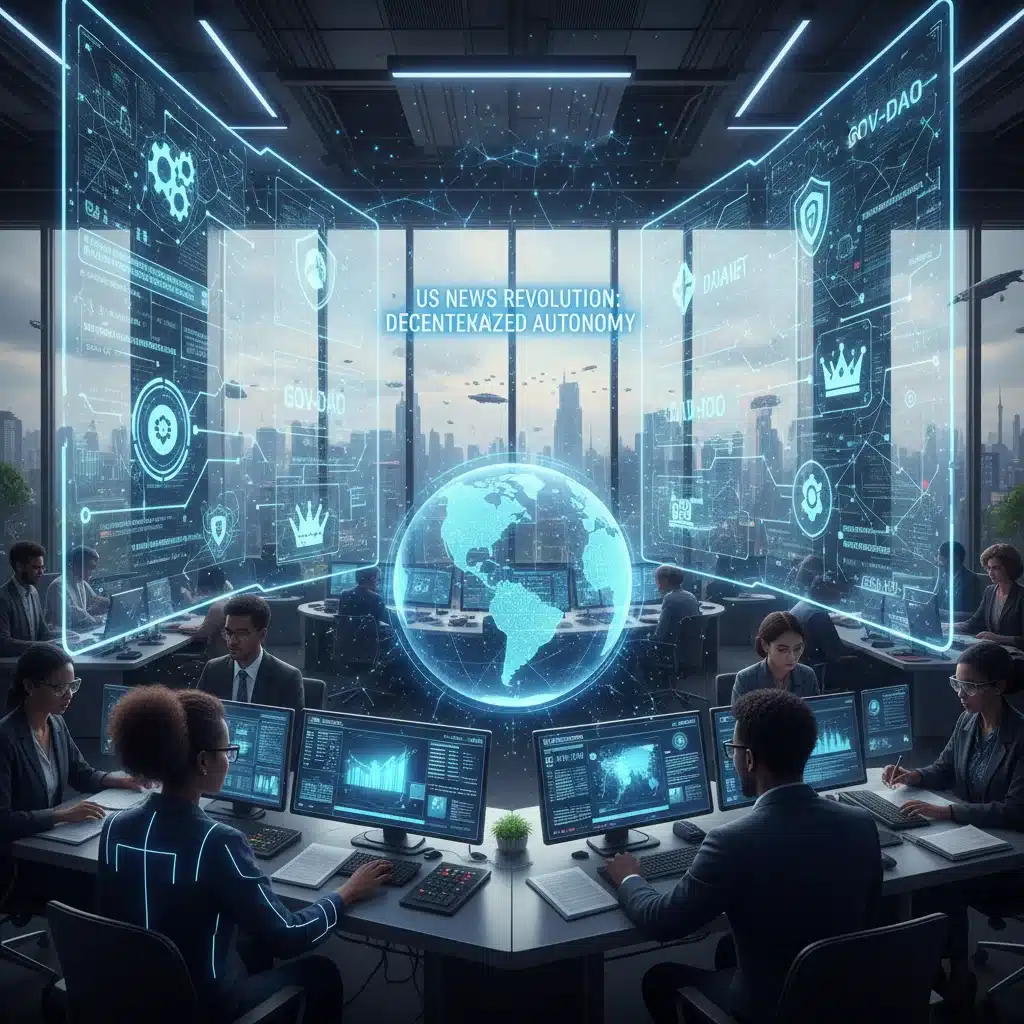
The media landscape is in constant flux, grappling with issues of trust, funding, and centralized control. As we look towards 2026, the concept of Decentralized Autonomous Organizations (DAOs) emerges as a powerful paradigm shift, offering a compelling vision for the future of news. This article delves into a comprehensive operational blueprint for establishing and scaling DAOs for news in the United States by 2026, exploring the intricate layers of technology, governance, ethics, and community building required to usher in a new era of journalism. The rise of blockchain technology and Web3 principles presents an unprecedented opportunity to reimagine how news is produced, distributed, and consumed, fostering greater transparency, accountability, and community ownership.
The traditional news model, often plagued by declining advertising revenues, consolidation of power, and public distrust, is ripe for disruption. DAOs, with their inherent decentralized nature, offer a compelling alternative. By leveraging smart contracts and blockchain technology, DAOs can create a more equitable and resilient ecosystem for journalism, empowering journalists, readers, and contributors alike. Our focus here is on a practical, actionable blueprint that considers the regulatory, technological, and societal nuances of the US market, ensuring that the vision for DAOs News 2026 is not merely theoretical but achievable.
This blueprint will address key areas including initial setup, governance structures, funding mechanisms, content creation and curation, technological infrastructure, community engagement, and the critical ethical and legal considerations that will shape the success of these decentralized news entities. We aim to paint a vivid picture of how a robust network of DAOs for news could operate just a few short years from now, fundamentally altering the way information flows and trust is built in the digital age. The goal is to move beyond the current limitations and embrace a future where journalism is truly by the people, for the people, and powered by transparent, immutable technology.
Understanding the DAO Landscape for News in 2026
Before diving into the operational specifics, it’s crucial to understand the fundamental principles that underpin DAOs and how they apply to the unique challenges and opportunities within the news industry. A DAO is an organization represented by rules encoded as a transparent computer program, controlled by the organization’s members, and not influenced by a central government. In the context of news, this means a shift from hierarchical corporate structures to a community-driven model where decisions are made collectively through token-based voting.
By 2026, the technological infrastructure supporting DAOs will have matured significantly. We anticipate greater interoperability between different blockchain networks, more user-friendly interfaces for DAO participation, and enhanced scalability solutions. These advancements will make it feasible for a broader audience, including journalists and readers, to engage with and contribute to news DAOs without needing deep technical expertise. The US regulatory environment, while still evolving, is expected to provide clearer guidelines for blockchain-based entities, fostering a more stable operational landscape for DAOs news 2026 initiatives.
The core value proposition of news DAOs lies in their ability to foster trust and transparency. Every decision, from editorial policy to funding allocation, can be recorded on an immutable ledger, verifiable by anyone. This inherent transparency directly addresses the erosion of public trust in traditional media, offering a powerful antidote to misinformation and bias. Furthermore, the token-gated access and reward mechanisms within DAOs can incentivize high-quality journalism and community participation, creating a virtuous cycle of engagement and value creation. The decentralized nature also makes these organizations more resilient to external pressures, such as censorship or corporate influence, which often compromise journalistic integrity.
Consider the current challenges: a shrinking pool of investigative journalists, the dominance of a few media conglomerates, and the difficulty of monetizing quality content without resorting to paywalls that exclude large segments of the population. DAOs for news can offer solutions to these problems by pooling resources from a global community, rewarding contributors directly, and creating a more democratic process for content selection and verification. This shift towards a more participatory and transparent model is not just an incremental improvement; it represents a fundamental re-architecture of the news industry, promising a future where information is a public good, governed by its stakeholders.
Phase 1: Foundation and Initial Setup (Q1-Q2 2026)
1.1 Defining Mission and Scope
The first critical step for any news DAO is to clearly articulate its mission, values, and scope. Will it focus on local investigative journalism, global environmental reporting, or a specific niche? A well-defined mission attracts like-minded contributors and readers. This foundational stage involves extensive community input, potentially through initial online forums or early-stage token-holder polls if a preliminary token exists. The clearer the mission, the more effectively the DAO can align its resources and community efforts.
1.2 Legal and Regulatory Framework
Operating a DAO in the US requires navigating a complex legal landscape. By 2026, we anticipate more clarity, but early engagement with legal counsel specializing in blockchain and corporate law will be paramount. This includes determining the appropriate legal wrapper (e.g., a Wyoming DAO LLC, or a non-profit foundation), understanding tax implications, and ensuring compliance with securities laws if tokens are involved. The goal is to establish a robust legal structure that protects contributors and the DAO itself, while also ensuring legitimacy in the traditional legal system.
1.3 Core Team and Initial Community Building
Even a decentralized organization needs a core team to kickstart operations. This initial group will be responsible for setting up the technical infrastructure, drafting initial governance proposals, and catalyzing community engagement. This team should ideally comprise individuals with expertise in journalism, blockchain development, community management, and legal affairs. Early community building involves identifying and engaging with potential contributors, readers, and subject matter experts who resonate with the DAO’s mission. This can be done through social media, dedicated Web3 platforms, and targeted outreach to existing journalistic networks. The initial community forms the bedrock upon which the DAO’s future success will be built, making their early involvement and feedback invaluable.
1.4 Blockchain and Smart Contract Selection
Choosing the right blockchain and developing secure smart contracts are fundamental. Considerations include scalability, transaction costs, security, and developer ecosystem. Ethereum, with its robust ecosystem, or layer-2 solutions like Polygon or Arbitrum, offering lower fees, are strong contenders. The smart contracts will define the DAO’s governance rules, tokenomics, treasury management, and content contribution mechanisms. Auditing these contracts thoroughly by independent third parties is non-negotiable to prevent vulnerabilities and build trust. This technical foundation is what truly enables the decentralized and autonomous nature of the DAOs for news.
Phase 2: Governance and Tokenomics (Q2-Q3 2026)
2.1 Designing the Governance Model
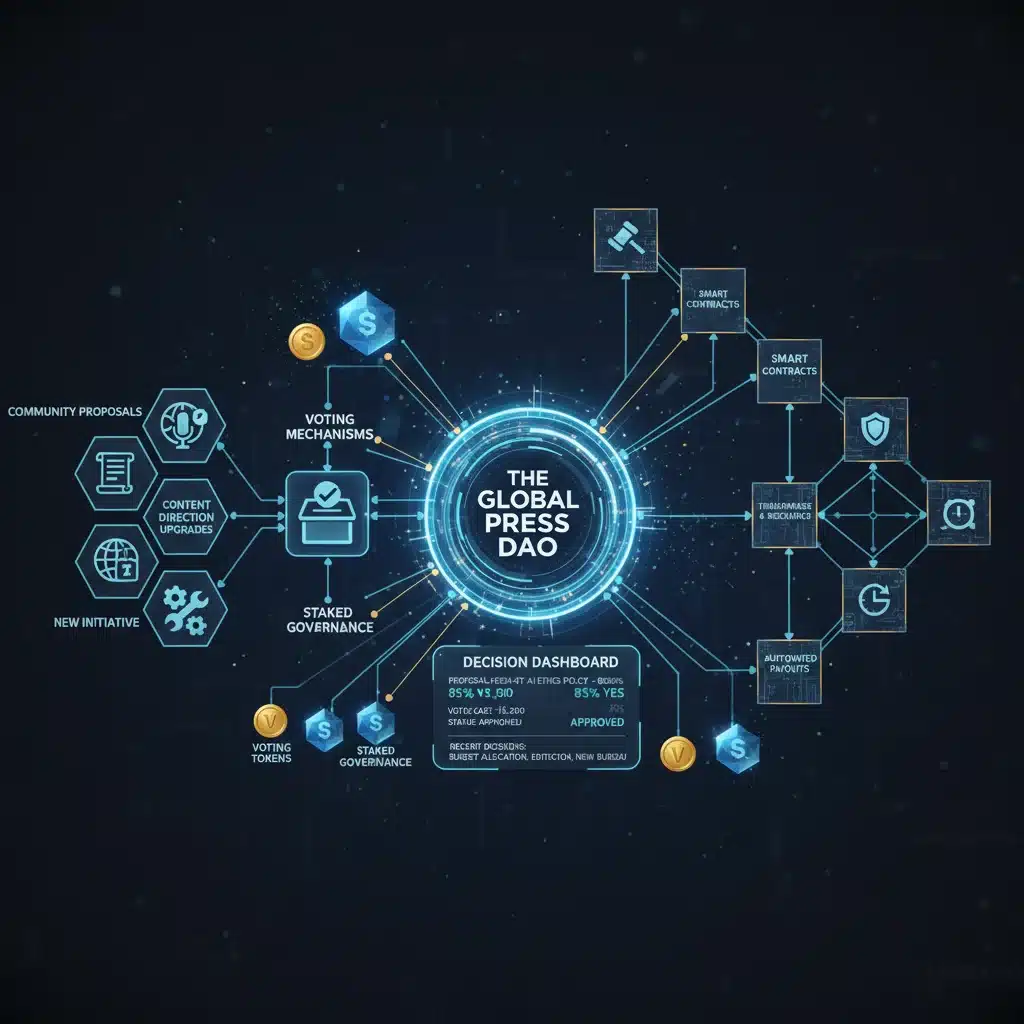
Effective governance is the heart of any successful DAO. This phase involves defining how decisions are made, from editorial guidelines to treasury expenditure. Common models include:
– Direct Democracy: Every token holder votes on every proposal.
– Delegated Democracy (Liquid Democracy): Token holders delegate their voting power to elected representatives.
– Council-based Governance: A small elected council makes executive decisions, subject to community oversight.
A hybrid model often works best for news DAOs, balancing efficiency with broad participation. The governance structure must be transparent, accessible, and designed to prevent centralization of power, a critical concern for any truly decentralized news organization.
2.2 Tokenomics and Incentive Mechanisms
The utility token is central to a news DAO’s ecosystem. It grants voting rights, incentivizes participation, and can be used to reward quality content. The tokenomics model must be carefully designed to:
– Reward Journalists and Editors: For producing high-quality, verified content.
– Incentivize Readers: For curating, fact-checking, and contributing to discussions.
– Fund the Treasury: Through token sales, grants, or protocol fees.
– Prevent Malicious Actors: Mechanisms like ‘skin in the game’ (requiring a stake to propose or vote) or reputation systems can deter bad behavior.
A sustainable tokenomics model ensures the long-term viability and growth of the DAOs news 2026 ecosystem, aligning the incentives of all stakeholders.
2.3 Proposal and Voting Systems
Implementing user-friendly proposal and voting systems is crucial for broad participation. Platforms like Snapshot or Aragon provide robust tools for on-chain and off-chain voting. Proposals should be clearly articulated, with defined parameters for discussion and voting periods. The system should also allow for ‘temperature checks’ or preliminary polls to gauge community sentiment before formal on-chain votes, fostering a more deliberative and inclusive decision-making process. The easier it is for community members to understand and participate in governance, the stronger the DAO becomes.
Phase 3: Content Creation and Curation (Q3-Q4 2026)
3.1 Decentralized Content Submission and Review
Journalists and content creators should be able to submit articles, reports, and multimedia content directly to the DAO. This submission process can be facilitated through decentralized storage solutions like IPFS or Arweave, ensuring content immutability and censorship resistance. A decentralized peer-review or editorial board, composed of token holders with journalistic expertise, can then evaluate submissions based on established editorial guidelines and journalistic standards. This process replaces traditional gatekeepers with a community-driven vetting system, ensuring quality and accuracy.
3.2 Fact-Checking and Verification Protocols
In an era of rampant misinformation, robust fact-checking is paramount. News DAOs can implement innovative verification protocols:
– Community Fact-Checking: Token holders can stake tokens on the accuracy of claims, with rewards for correct assessments and penalties for incorrect ones.
– Reputation Systems: Journalists and fact-checkers can build a verifiable on-chain reputation based on the accuracy and quality of their past work.
– Integration with AI: AI tools can assist in identifying potential misinformation or verifying sources, augmenting human efforts.
These decentralized mechanisms aim to build a highly credible news source that stands apart from traditional media, where trust can be easily eroded. The transparency of these processes further reinforces the credibility of DAOs for news.
3.3 Content Distribution and Archiving
Decentralized content distribution ensures accessibility and resilience. Beyond traditional websites, news DAOs can leverage decentralized applications (dApps) for content delivery, potentially integrating with Web3 social media platforms. All content should be permanently archived on decentralized storage networks, ensuring its longevity and resistance to censorship or deletion. This creates an immutable public record, a cornerstone of transparent and trustworthy journalism, and a key advantage for DAOs news 2026.
Phase 4: Funding and Sustainability (Q4 2026 Onwards)
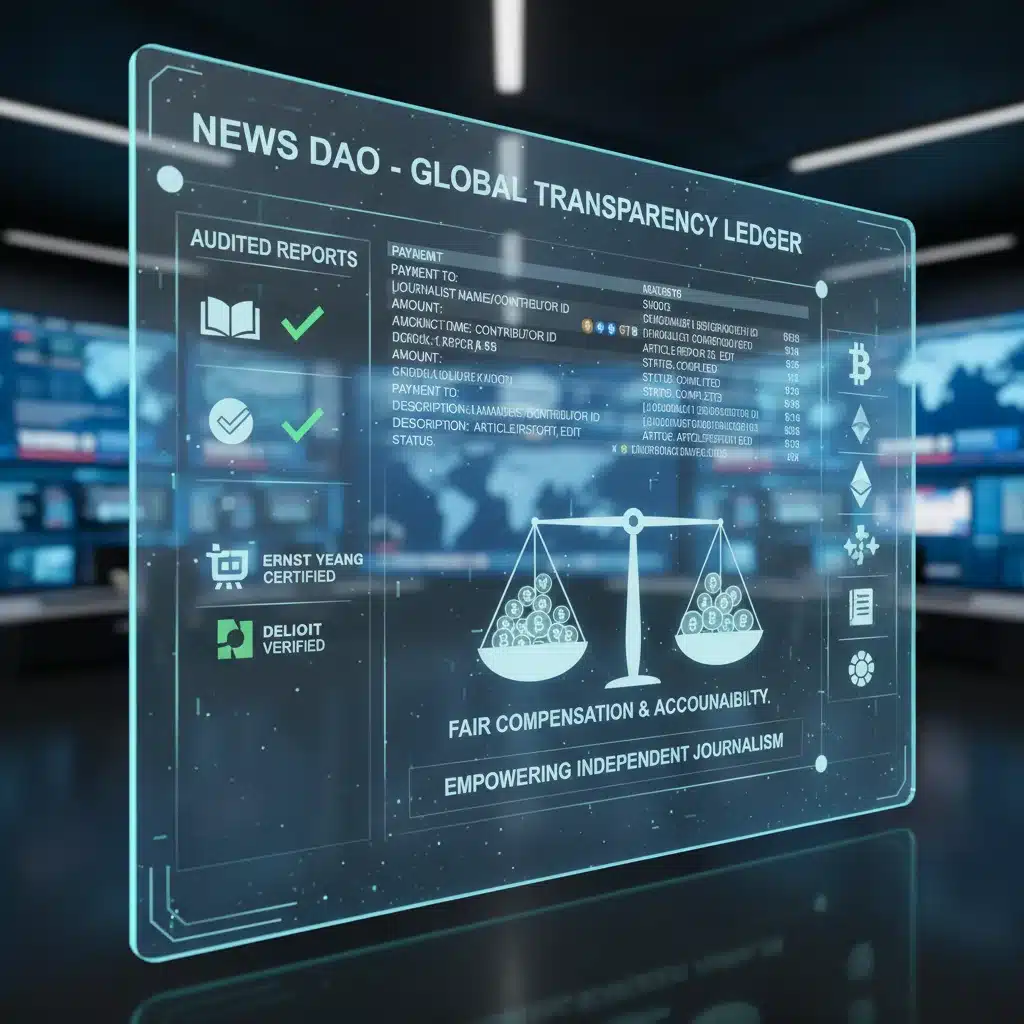
4.1 Treasury Management and Allocation
The DAO’s treasury, funded through token sales, grants, and community contributions, is managed transparently through smart contracts. Proposals for fund allocation – whether for journalist salaries, development costs, or marketing – are voted upon by token holders. This ensures that financial decisions align with the community’s priorities and the DAO’s mission, fostering accountability and preventing misuse of funds. The transparency of these financial operations is a direct counterpoint to the often-opaque financial dealings of traditional media organizations.
4.2 Diverse Revenue Streams
To ensure long-term sustainability, news DAOs should explore diverse revenue streams beyond initial token sales:
– Subscription NFTs: Offering exclusive content or benefits through non-fungible tokens.
– Grant Programs: Securing funding from philanthropic organizations or Web3 foundations.
– Advertising (Decentralized): Exploring privacy-preserving, community-governed advertising models that respect user data.
– Premium Content Access: Tiered access to in-depth reports or investigative series, potentially paid in the DAO’s native token.
– Data Syndication: Licensing verified news data to other platforms, with revenue flowing back to the treasury.
These diversified approaches reduce reliance on any single revenue source, making the DAO more resilient to market fluctuations and external pressures. This financial independence is crucial for maintaining journalistic integrity and enabling the DAOs for news to truly flourish.
4.3 Community-Driven Philanthropy and Grants
A strong community can also drive philanthropic efforts. Token holders might vote to allocate a portion of the treasury to support specific investigative projects, emerging journalists, or public interest initiatives. This model allows the community to directly fund the journalism they believe is most important, fostering a sense of collective ownership and responsibility for the news ecosystem. This direct funding mechanism bypasses traditional advertising models, which often create conflicts of interest and compromise editorial independence.
Ethical and Societal Considerations for DAOs in News
While DAOs offer immense potential, their implementation in news is not without ethical and societal challenges. Addressing these proactively is vital for widespread adoption and trust. The inherent transparency of DAOs, while a strength, also requires careful consideration regarding journalist safety and source protection. Mechanisms for anonymous submission and secure communication must be integrated to safeguard whistleblowers and sensitive information. The balance between transparency and privacy will be a continuous point of evolution for DAOs news 2026.
Another critical aspect is the potential for ‘whale’ dominance in token-based governance. If a few large token holders control a significant portion of voting power, it could lead to centralization, undermining the DAO’s decentralized ethos. Proactive measures, such as quadratic voting, token distribution strategies that favor broad participation over concentrated ownership, and reputation-based voting mechanisms, can mitigate this risk. The design of the governance model must actively strive to prevent the re-emergence of centralized control that plagues traditional media.
Ensuring inclusivity and diversity within news DAOs is also paramount. The Web3 space, at present, often reflects existing societal biases. Strategies for active outreach to underrepresented communities, providing educational resources, and designing user interfaces that are accessible to a broad demographic will be crucial. A news DAO that truly serves the public must reflect the diversity of that public in its contributors and decision-makers. This commitment to diversity extends to the types of stories covered and the perspectives included in the reporting, ensuring a comprehensive and balanced news offering.
The legal and regulatory environment remains a moving target. While we project more clarity by 2026, news DAOs must remain agile and adaptable to evolving laws concerning digital assets, intellectual property, and media accountability. Establishing clear terms of service and community guidelines that align with journalistic ethics and legal requirements will be essential. Furthermore, the question of accountability in a decentralized system—who is responsible when errors occur or ethical lines are crossed—needs robust, community-defined answers embedded within the DAO’s smart contracts and governance framework. This foresight in addressing potential pitfalls will be key to the long-term success and legitimacy of DAOs for news.
The Road Ahead: Challenges and Opportunities
The journey to fully operational DAOs for news by 2026 is ambitious but achievable. Challenges include overcoming technical complexities, educating the public and journalists about the DAO model, and navigating the evolving regulatory landscape. However, the opportunities are transformative: a more trustworthy, transparent, and resilient news ecosystem that empowers creators and serves the public interest more effectively than ever before.
The transition from traditional newsrooms to decentralized autonomous organizations will require significant cultural shifts. Journalists, accustomed to hierarchical structures, will need to embrace a more collaborative and participatory model. Readers, traditionally passive consumers, will become active stakeholders in the news production process. This cultural evolution will be fostered through continuous education, community engagement, and the development of intuitive tools that lower the barrier to entry for DAO participation.
Furthermore, the interoperability of news DAOs with other Web3 protocols and decentralized applications will unlock new possibilities. Imagine news content seamlessly integrated into metaverse experiences, or verifiable journalistic data feeding into decentralized AI models. The potential for innovation extends far beyond simply replicating existing news models on the blockchain; it involves reimagining the very nature of information dissemination in a digital, decentralized world.
The success of this blueprint hinges on collaboration. Developers, journalists, legal experts, community managers, and philanthropists must come together to build these foundational structures. Government bodies and regulatory agencies also have a role to play in providing a supportive framework that encourages innovation while protecting consumers and ensuring ethical practices. The vision for DAOs news 2026 is not just about technology; it’s about building a better, more trustworthy information society, one decentralized news organization at a time. The next few years will be critical in laying the groundwork for this exciting future, proving that the principles of decentralization can indeed rejuvenate and redefine the essential role of journalism in a democratic society.
Conclusion
The 2026 operational blueprint for DAOs for news in the US presents a compelling vision for the future of journalism. By leveraging blockchain technology and decentralized governance, news organizations can become more transparent, accountable, and community-driven. While significant challenges lie ahead, the potential for a more trustworthy and resilient media landscape is immense. The journey will require continuous innovation, robust community engagement, and a steadfast commitment to the core principles of journalism. As we move towards 2026, the groundwork laid today will determine whether DAOs can indeed usher in a golden age of decentralized news, empowering citizens with accurate, unbiased, and community-verified information.