Decentralized Identity for Journalists: Securing News Sources in 2026

In an era defined by rapid digital transformation, increasing surveillance, and a relentless assault on truth, the role of journalism has never been more critical. For US journalists, the landscape of 2026 presents both unprecedented opportunities and significant challenges. Protecting sources, ensuring the integrity of information, and maintaining personal security are paramount. This is where decentralized identity journalists comes into sharp focus, offering a groundbreaking paradigm shift in how identity is managed and verified in the digital realm.
The traditional centralized identity systems, while seemingly convenient, are inherently vulnerable. They rely on single points of failure, making them attractive targets for malicious actors, state-sponsored surveillance, and corporate data breaches. For journalists, whose work often involves sensitive information and exposes powerful entities, these vulnerabilities are not merely inconveniences; they pose existential threats to their safety, their sources, and the very foundation of free press. Decentralized identity (DID) technology, rooted in blockchain and cryptographic principles, promises to fundamentally alter this dynamic, empowering journalists with greater control over their digital personas and interactions.
Understanding Decentralized Identity (DID)
Before delving into its specific applications for journalism, it’s essential to grasp the core concepts of decentralized identity. At its heart, DID is about giving individuals ownership and control over their digital identities, rather than relying on third-party intermediaries like governments, corporations, or social media platforms. Imagine a world where you don’t need to hand over your entire digital dossier just to prove a single attribute about yourself. This is the promise of DID.
A decentralized identifier (DID) is a new type of identifier that is globally unique, cryptographically verifiable, and resolvable to DID documents. These DID documents contain cryptographic material, service endpoints, and other metadata associated with the DID subject. Unlike traditional identifiers like email addresses or government IDs, DIDs are self-sovereign, meaning they are controlled by the individual, not by a central authority.
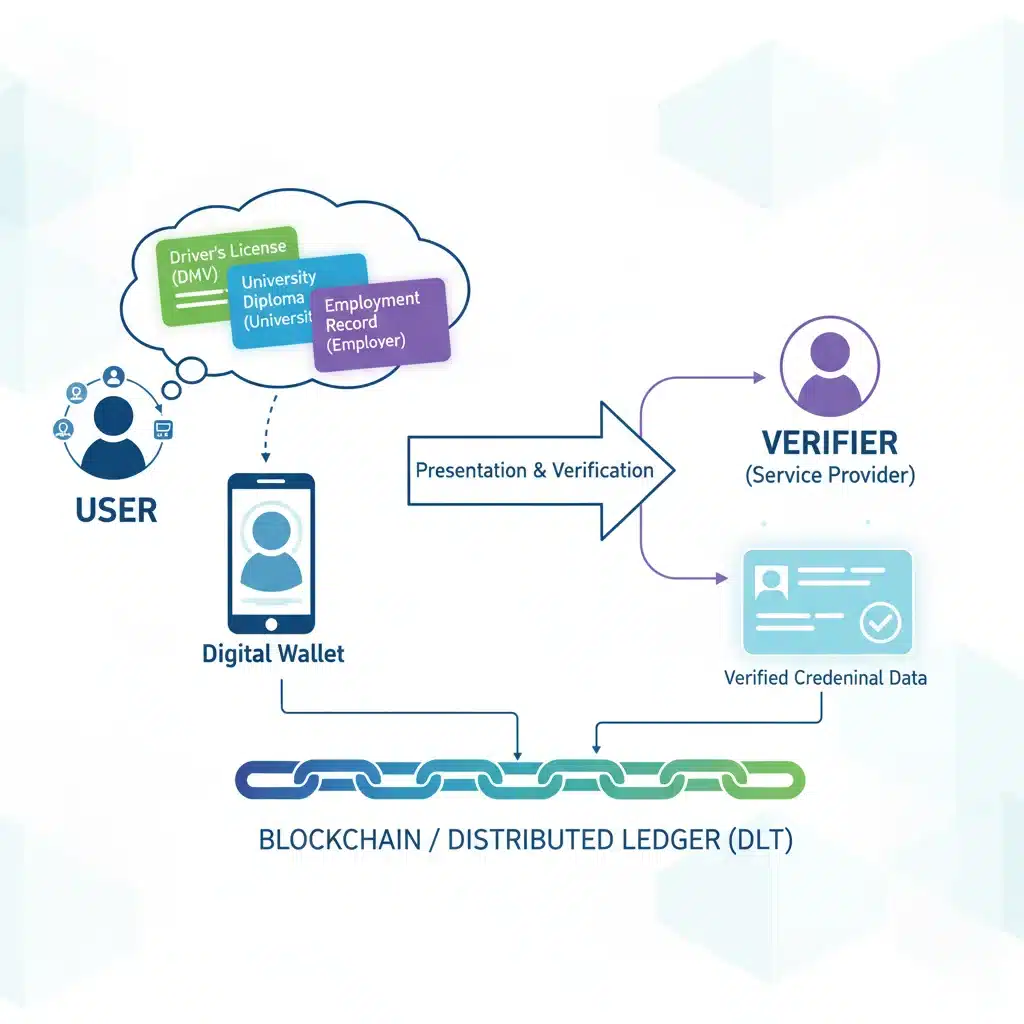
The architecture of DID typically involves three key components:
- Decentralized Identifiers (DIDs): These are unique identifiers registered on a distributed ledger (like a blockchain) or other decentralized network. They are self-generated and self-owned.
- Verifiable Credentials (VCs): These are digital attestations of claims made by an issuer about a subject, cryptographically signed and tamper-proof. For example, a press organization could issue a VC confirming a journalist’s employment, or a source could issue a VC confirming their identity to a journalist without revealing underlying personal data.
- DID Wallets: These are digital applications or hardware devices that store and manage DIDs, VCs, and cryptographic keys, allowing individuals to selectively present their credentials.
This framework enables a ‘trust but verify’ model where individuals can prove aspects of their identity without revealing unnecessary personal information, a concept known as selective disclosure. For decentralized identity journalists, this capability is revolutionary.
The Urgent Need for DID in US Journalism by 2026
The current digital environment poses severe threats to journalists. These include:
- Source Compromise: Centralized communication platforms and data storage solutions are vulnerable to hacking, subpoenas, and governmental demands, putting confidential sources at extreme risk.
- Surveillance and Tracking: Journalists are often targets of sophisticated surveillance, both from state actors and private entities, aiming to uncover their activities, contacts, and unpublished work.
- Impersonation and Disinformation: The ease with which digital identities can be faked or manipulated makes journalists susceptible to impersonation, which can damage their reputation, spread false narratives, and erode public trust.
- Censorship and Deplatforming: Centralized platforms retain the power to deplatform or censor journalists, impacting their ability to report and disseminate information freely.
- Personal Security Risks: The exposure of personal information can lead to harassment, doxing, and even physical threats against journalists and their families.
By 2026, these challenges are projected to intensify, driven by advancements in AI-powered surveillance, the proliferation of deepfakes, and an increasingly polarized information ecosystem. Adopting decentralized identity for journalists is not merely an upgrade; it’s a strategic imperative for survival and continued effectiveness.
How Decentralized Identity Empowers Journalists
The applications of DID for journalism are extensive and transformative. Here’s a look at some key areas:
1. Enhanced Source Protection and Anonymity
One of the most critical aspects of journalism is protecting confidential sources. DID can revolutionize this by:
- Anonymous Communication: Journalists can establish secure, verifiable communication channels with sources without revealing their real-world identities or relying on centralized services that log metadata. Sources can issue verifiable credentials proving their identity to the journalist (e.g., ‘I am an employee of X corporation’) without disclosing their name or other identifying details to the journalist, let alone a third party.
- Pseudonymous Interaction: Journalists and sources can use DIDs to create pseudonymous identities that are cryptographically linked to their true identities but only reveal specific, necessary attributes. This allows for accountability without full disclosure.
- Secure Whistleblower Platforms: DID can be integrated into whistleblower platforms, allowing individuals to submit sensitive information with verifiable authenticity while maintaining their anonymity, making it harder for organizations to trace them.
2. Verifiable Credentials for Journalistic Integrity
In an age rife with misinformation, proving the authenticity of a journalist or a news organization is paramount. VCs offer a robust solution:
- Journalist Verification: News organizations can issue VCs to their employed journalists, verifying their affiliation and professional standing. This allows the public to easily confirm a journalist’s legitimacy when encountering their work or interacting with them online, combating impersonation.
- Fact-Checker Credentials: Independent fact-checking organizations can issue VCs to their approved fact-checkers, allowing them to sign off on verified information with an immutable, cryptographically verifiable stamp of authenticity.
- Content Provenance: In the future, news articles and multimedia content could be associated with VCs proving their origin, the journalist who produced them, and any subsequent edits, establishing a clear chain of custody and combating deepfakes and manipulated media.
3. Sovereign Control Over Personal Data
Journalists often deal with sensitive personal and professional data. DID grants them unprecedented control:
- Selective Disclosure: When applying for press passes or accessing restricted areas, journalists can present only the specific verifiable credentials required (e.g., ‘I am an accredited journalist from X organization’) without revealing their home address, date of birth, or other unnecessary personal information.
- Data Minimization: By only sharing what’s absolutely necessary, journalists significantly reduce their digital footprint and the amount of data available for potential exploitation by adversaries.
- Revocation and Recovery: DIDs can be designed with robust revocation mechanisms, allowing journalists to invalidate compromised credentials, and secure recovery protocols in case of lost keys or devices.
4. Combating Disinformation and Deepfakes
The rise of sophisticated AI-generated content poses a significant threat to journalistic integrity. DID can play a crucial role in countering this:
- Authenticating Human Sources: In an era of AI-generated personas, DIDs can verify that a source is a real human being, not a bot or a deepfake identity, before a journalist engages with them.
- Verifying Media Originality: Future applications could involve DIDs embedded into camera hardware or recording software, creating an immutable chain of custody for photos and videos from the moment of capture, making it much harder to manipulate or falsely attribute media.
- Signed Content: Journalists can cryptographically sign their articles and reports using their DIDs, providing verifiable proof of authorship and ensuring that their work hasn’t been altered post-publication.
Implementation Challenges and Considerations for 2026
While the benefits are clear, the transition to widespread adoption of decentralized identity journalists won’t be without its hurdles. By 2026, several key areas will need to be addressed:
1. Technical Complexity and User Experience
DID systems, at their core, involve complex cryptographic processes. For mass adoption among journalists, the user experience must be streamlined and intuitive. Wallets need to be user-friendly, and the process of issuing and verifying credentials must be as simple as sending an email. News organizations and technology providers will need to invest heavily in developing accessible interfaces and providing comprehensive training.
2. Interoperability and Standardization
For DID to be truly effective, different systems and platforms must be able to communicate seamlessly. Standards bodies like the W3C are already working on specifications for DIDs and VCs, but widespread adoption and adherence to these standards will be crucial. By 2026, we can expect greater consensus and mature frameworks.
3. Legal and Regulatory Landscape
The legal implications of decentralized identity are still evolving. Questions around jurisdiction, liability, and the legal recognition of DIDs and VCs will need to be addressed. Governments and legal frameworks will need to adapt to this new paradigm, especially concerning data protection and journalistic privilege.
4. Education and Adoption Curve
A significant challenge will be educating journalists, news organizations, and the public about the benefits and mechanics of DID. Overcoming inertia and skepticism will require clear communication, successful pilot programs, and demonstrable improvements in security and privacy. Training programs specifically tailored for journalists will be essential.
5. Cost and Infrastructure
Implementing DID solutions will require investment in new infrastructure, software, and training. While the long-term benefits in terms of security and trust are likely to outweigh the costs, initial investment could be a barrier for smaller news outlets. Collaborative efforts and open-source solutions could help mitigate this.
Practical Steps for US Journalists and Newsrooms by 2026
For US journalists and news organizations looking to leverage the power of decentralized identity, here are some practical steps to consider by 2026:
- Stay Informed: Keep abreast of developments in the DID space. Follow organizations like the Decentralized Identity Foundation (DIF) and the W3C’s Decentralized Identifiers Working Group.
- Pilot Programs: Newsrooms should consider initiating small-scale pilot programs to test DID solutions for specific use cases, such as secure internal communications, source verification, or press credentialing.
- Invest in Training: Provide journalists with training on digital security best practices, including the principles of DID, how to manage digital wallets, and how to use verifiable credentials responsibly.
- Advocate for Standards: Support the development and adoption of open, interoperable DID standards. This will ensure that solutions are not locked into proprietary ecosystems.
- Collaborate with Tech Developers: Work closely with developers specializing in DID to tailor solutions that meet the unique needs and workflows of journalists.
- Develop Internal Policies: Establish clear internal policies for the use of DIDs and VCs, ensuring they align with journalistic ethics and legal requirements.
- Explore Decentralized Communication Tools: Investigate and integrate decentralized communication platforms that leverage DID for identity verification and secure messaging, moving away from vulnerable centralized services.

The Future of Journalism with Decentralized Identity
By 2026, the integration of decentralized identity will likely redefine how journalism is conducted, consumed, and trusted. We can envision a future where:
- Trust is Programmable: The authenticity of news, sources, and journalists can be cryptographically verified, making it significantly harder for disinformation campaigns to gain traction.
- Journalists are Empowered: Individuals have greater control over their digital footprint, reducing their vulnerability to surveillance, harassment, and deplatforming.
- Sources are Safer: Whistleblowers and confidential sources can share information with greater confidence in their anonymity and protection.
- Content Integrity is Enhanced: The provenance of media and articles can be traced and verified, combating deepfakes and manipulated content.
- A More Resilient Press: The overall infrastructure of independent journalism becomes more robust and resistant to attacks from hostile actors.
The journey towards widespread DID adoption for decentralized identity journalists is complex, but the destination—a more secure, trustworthy, and resilient press—is undeniably worth the effort. As the digital landscape continues to evolve, embracing these cutting-edge technologies is not just about staying relevant; it’s about safeguarding the very essence of independent journalism and its vital role in a democratic society.
Conclusion
The year 2026 marks a pivotal moment for US journalism, demanding proactive measures to protect its practitioners and preserve its integrity. Decentralized identity offers a powerful suite of tools to address the escalating threats of surveillance, source compromise, and disinformation. By shifting control of digital identity from centralized authorities to the individual, DID empowers journalists with unparalleled privacy, security, and verifiable authenticity. While challenges in adoption and standardization remain, the imperative for a more secure and trustworthy news ecosystem makes the embrace of decentralized identity not just an option, but a necessity. News organizations, technologists, and journalists must collaborate to build a future where the pursuit of truth can thrive, unhindered by digital vulnerabilities.