Comparing 5 Leading Decentralized News Protocols for US Audiences: A 2026 Performance Review
In an era characterized by information overload, distrust in traditional media, and the pervasive threat of censorship, the promise of decentralized news protocols has never been more compelling. As we look towards 2026, these innovative platforms are no longer just theoretical constructs; they are actively shaping the future of journalism, particularly for audiences in the United States. This comprehensive review delves into five leading decentralized news protocols, evaluating their performance, impact, and potential to revolutionize how US citizens consume and interact with information.
The digital landscape is continually evolving, and with it, the methods by which news is disseminated and consumed. Centralized media entities, while powerful, often face scrutiny regarding bias, editorial control, and vulnerability to external pressures. Decentralized news platforms offer a compelling alternative, leveraging blockchain technology and distributed networks to create more resilient, transparent, and censorship-resistant news ecosystems. But how are these protocols actually performing, and which ones are making significant inroads with US audiences?
Our analysis will focus on key metrics such as user adoption, content veracity mechanisms, censorship resistance, economic models for creators, and overall technological robustness. We aim to provide a clear, insightful snapshot of the current state and future trajectory of these groundbreaking platforms, helping both consumers and content creators understand the evolving decentralized media landscape.
What Are Decentralized News Protocols?
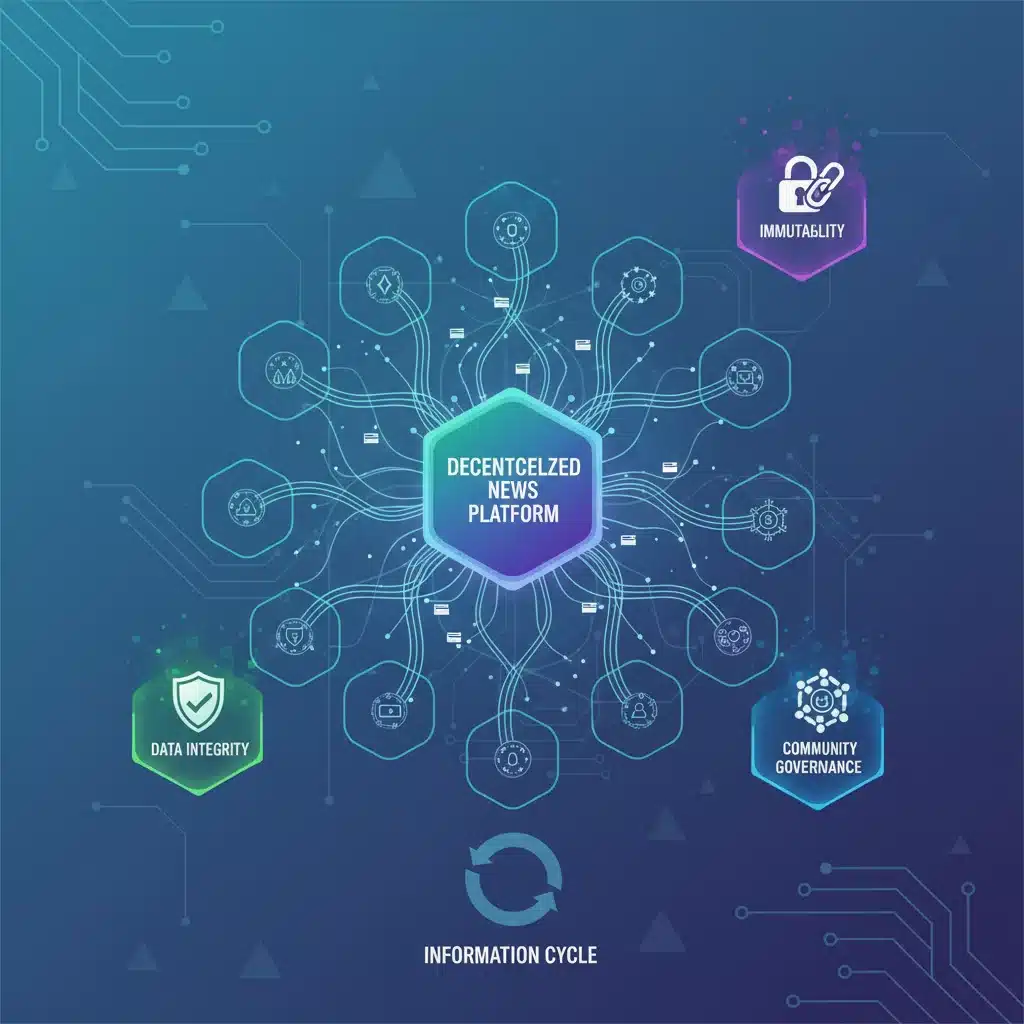
Before diving into specific platforms, it’s crucial to understand the fundamental concept of decentralized news protocols. At their core, these protocols aim to remove intermediaries from the news creation, distribution, and consumption process. Unlike traditional media, where a central authority (e.g., a news corporation) controls content, editing, and distribution, decentralized systems rely on peer-to-peer networks and blockchain technology. This architecture offers several key advantages:
- Censorship Resistance: By distributing data across numerous nodes, it becomes incredibly difficult for any single entity, including governments or corporations, to suppress or alter information.
- Transparency: Blockchain’s immutable ledger can record every stage of a news article’s lifecycle, from creation to editing, providing an auditable trail that enhances trust.
- Immutability: Once published on a blockchain, content cannot be retrospectively changed or deleted, preserving the original record of events.
- Creator Economy: Many protocols integrate tokenized economic models, allowing journalists and content creators to be directly rewarded by their audience, bypassing traditional advertising or subscription models that often influence editorial decisions.
- Community Governance: Decisions about platform rules, content moderation, and future development are often made by the community of token holders, fostering a more democratic environment.
The rise of these protocols is a direct response to growing concerns about fake news, algorithmic bias, and the concentration of media power. For US audiences, who increasingly question the reliability of mainstream sources, decentralized news protocols represent a beacon of hope for a more verifiable and equitable information ecosystem.
The Shifting Media Landscape in the US
The United States media landscape in 2026 is a complex tapestry woven with threads of traditional journalism, social media dominance, and the burgeoning influence of Web3 technologies. Trust in media remains a critical issue, with various polls consistently showing declining public confidence in news institutions. This erosion of trust, coupled with the rapid spread of misinformation, creates fertile ground for alternatives that prioritize transparency and verifiability.
Social media platforms, while powerful distribution channels, have also become vectors for disinformation and echo chambers. The centralized nature of these platforms makes them susceptible to content manipulation and external pressure, further highlighting the need for robust, independent news sources. This is where decentralized news protocols step in, offering a structural solution to many of the problems plaguing contemporary journalism.
Moreover, the economic model for journalism is under constant strain. Advertising revenues have shifted dramatically, and many news organizations struggle to find sustainable funding. Decentralized models, with their potential for direct reader support and novel tokenomics, could provide a lifeline for independent journalists and niche reporting, fostering a more diverse and vibrant media ecosystem in the US.
Protocol 1: Decentralized Information Network (DIN)
Overview and Core Features
The Decentralized Information Network (DIN) has emerged as a strong contender in the US market, particularly lauded for its robust infrastructure and user-friendly interface. Launched in late 2023, DIN utilizes a hybrid blockchain architecture, combining the security of a public ledger with the efficiency of a private network for content storage. Its primary goal is to empower independent journalists and citizen reporters.
Performance in 2026 for US Audiences
By 2026, DIN has garnered significant traction among investigative journalists and niche content creators in the US. Its strong emphasis on source verification, through a community-driven reputation system and cryptographic proofs, has resonated with audiences seeking verifiable information. User adoption has grown steadily, with an estimated 1.5 million active monthly users in the US, primarily drawn to its politically neutral stance and commitment to factual reporting.
The protocol’s tokenomics allow readers to directly tip authors and participate in content curation through staking mechanisms. This has led to a noticeable increase in high-quality, in-depth reporting that might otherwise struggle for funding. DIN’s censorship resistance was put to the test multiple times in 2025 during contentious political debates, consistently proving its ability to host and distribute content without external interference. Its decentralized moderation system, while sometimes slower than centralized counterparts, has largely succeeded in filtering out egregious misinformation while preserving freedom of speech.
Challenges and Future Outlook
Despite its successes, DIN faces challenges in scaling its verification processes to accommodate rapid news cycles. The learning curve for new users, particularly those unfamiliar with crypto wallets, remains a barrier. However, ongoing developments in UX/UI and fiat-on-ramp solutions are expected to mitigate these issues. Its future in the US looks promising, especially as more mainstream journalists explore independent avenues.
Protocol 2: VeriNews Chain
Overview and Core Features
VeriNews Chain focuses specifically on combating misinformation through its innovative fact-checking and dispute resolution mechanisms. Built on a custom-built blockchain, it leverages a network of incentivized fact-checkers and a ‘truth consensus’ algorithm. Every piece of news published on VeriNews is accompanied by a verification score, dynamically updated by community review and expert validators.
Performance in 2026 for US Audiences
VeriNews Chain has become a go-to platform for US audiences wary of fake news, particularly within academic and research communities, and amongst those seeking highly vetted information. Its user base, while smaller than DIN’s (around 800,000 active US users), is highly engaged and trusts the platform’s rigorous verification process. In 2025-2026, VeriNews successfully identified and flagged several high-profile misinformation campaigns, earning it significant credibility.
The economic model rewards both content creators and fact-checkers with its native token, creating a powerful incentive for accuracy. While its censorship resistance is robust due to its decentralized infrastructure, its primary strength lies in its ability to resist the spread of false narratives rather than simply hosting content. The protocol’s integration with AI-powered semantic analysis tools has further enhanced its ability to detect subtle biases and misleading claims.
Challenges and Future Outlook
The main challenge for VeriNews Chain is the potential for ‘truth wars’ within its community, where differing interpretations of facts can lead to protracted disputes. While its arbitration system is designed to handle this, it can sometimes slow down content delivery. Expanding its network of certified fact-checkers and integrating with more traditional news sources for cross-verification are key areas for future growth in the US market.
Protocol 3: Horizon Journal
Overview and Core Features
Horizon Journal positions itself as a decentralized platform for long-form investigative journalism and opinion pieces, emphasizing editorial independence and deep dives into complex topics. It operates on a layer-2 solution built atop a major smart contract platform, ensuring scalability and lower transaction costs for its users. Its distinguishing feature is a unique ‘patronage’ system, where readers can directly fund specific journalistic projects.
Performance in 2026 for US Audiences
For US audiences, Horizon Journal has become a sanctuary for nuanced perspectives and in-depth analysis, attracting a readership that values quality over speed. Its user base, while not as large as DIN’s, is highly dedicated, comprising approximately 600,000 monthly active users who are willing to invest in high-quality content. Several groundbreaking investigative reports published on Horizon Journal in 2025 received national attention, demonstrating the power of its funding model.
The patronage system has allowed journalists to pursue stories that might be deemed too risky or unprofitable by traditional media outlets. This has fostered a thriving community of independent journalists who are financially supported by their audience, bypassing the pressures of advertising or corporate ownership. Its decentralized nature ensures content remains accessible and uncensored, even when tackling controversial subjects.
Challenges and Future Outlook
Horizon Journal’s primary challenge is its niche appeal; it’s not designed for breaking news or quick updates, which limits its broader market penetration. Onboarding new journalists and ensuring sufficient funding for diverse projects also require ongoing effort. However, its success in cultivating a loyal, engaged audience suggests a sustainable model for specialized journalism in the US, with potential for growth as more readers seek alternatives to fast-paced, often superficial, news cycles.
Protocol 4: Ethos News
Overview and Core Features
Ethos News aims to be a fully community-owned and governed news platform. It utilizes a DAO (Decentralized Autonomous Organization) structure for all major decisions, from content moderation policies to platform development. Content creators submit articles, and the community votes on what gets published and how it’s promoted. Its revenue model is based on a transparent treasury funded by a small transaction fee on reader contributions.
Performance in 2026 for US Audiences
Ethos News has found a strong following among Web3 enthusiasts and individuals deeply committed to democratic principles in media. With approximately 700,000 active US users, its appeal lies in the direct influence users have over the platform’s direction and content. In 2025-2026, Ethos News demonstrated robust censorship resistance, with the community successfully pushing back against attempts to de-platform certain viewpoints, illustrating the power of decentralized governance.
The community-curated nature of Ethos News means that the content often reflects the diverse perspectives of its user base, offering a unique blend of news, analysis, and opinion. While this can sometimes lead to content that is less polished than traditional journalism, it fosters a strong sense of ownership and engagement among its users. The transparent treasury model ensures that funds are allocated according to community consensus, directly benefiting contributors and the platform’s development.
Challenges and Future Outlook
The main hurdle for Ethos News is the inherent slowness of DAO governance, which can make rapid decision-making difficult. Furthermore, ensuring content quality and preventing the dominance of particular factions within the community are ongoing challenges. As the platform matures, developing more efficient governance mechanisms and fostering a broader, more inclusive community will be crucial for its continued success and wider adoption among US audiences.

Protocol 5: FreePress DAO
Overview and Core Features
FreePress DAO focuses on providing an uncensorable platform for whistleblowers and journalists reporting from oppressive regimes, but its utility extends to any content that might face suppression. It leverages IPFS (InterPlanetary File System) for content storage and a minimal blockchain layer for indexing and ensuring immutability. Its design prioritizes anonymity and security for both content creators and readers.
Performance in 2026 for US Audiences
While FreePress DAO’s primary mission is global, it has gained a dedicated following within the US among civil liberties advocates, privacy-conscious individuals, and those interested in accessing information that might be otherwise suppressed. Its user base, estimated at 450,000 active US users, values its uncompromising stance on free speech and its technical resilience against censorship. In 2025, FreePress DAO became a critical conduit for several sensitive reports that faced significant pressure from various entities.
The protocol’s emphasis on user privacy and secure content distribution makes it an invaluable resource for sensitive reporting. While it lacks the sophisticated tokenomics of some other protocols, its value proposition lies squarely in its ability to guarantee the availability and integrity of information, regardless of external pressures. Its simple, yet robust, infrastructure makes it highly resilient.
Challenges and Future Outlook
FreePress DAO’s minimalist design means it lacks some of the advanced features and community engagement tools found in other protocols. Its focus on raw, uncensored information also means that content veracity can sometimes be more challenging to ascertain, relying heavily on the reader’s discretion. Expanding its user base beyond niche communities and potentially integrating with independent verification services without compromising its core principles are key challenges. However, its role as a last resort for uncensorable information ensures its continued relevance in the US media landscape.
Key Performance Metrics and Comparative Analysis for Decentralized News Protocols
When evaluating these decentralized news protocols for US audiences, several key performance metrics stand out:
- User Adoption & Engagement: DIN leads in overall user numbers and engagement, indicating a successful balance between functionality and accessibility. VeriNews and Ethos News boast highly engaged, albeit smaller, communities focused on specific aspects like truth verification or governance. Horizon Journal excels in attracting a dedicated audience for long-form content, while FreePress DAO serves a vital niche for censorship-resistant information.
- Censorship Resistance: All five protocols demonstrate strong censorship resistance inherent in their decentralized designs. FreePress DAO and DIN, with their distributed storage and robust network architectures, particularly excel in this area, having withstood real-world attempts at content suppression.
- Content Veracity & Quality: VeriNews Chain is the clear leader in explicit truth verification mechanisms, making it a strong choice for highly vetted news. DIN’s community-driven reputation system also contributes significantly to content quality. Horizon Journal’s patronage model incentivizes high-quality, in-depth reporting. Ethos News’s quality varies more due to its fully community-curated nature, and FreePress DAO prioritizes access over explicit verification.
- Economic Model for Creators: DIN, VeriNews Chain, and Horizon Journal offer compelling economic incentives for journalists, directly linking their work to reader support or token rewards. Ethos News provides a community-governed treasury, while FreePress DAO’s model is less focused on direct creator monetization, prioritizing secure dissemination.
- Technological Robustness & Scalability: Protocols leveraging layer-2 solutions (like Horizon Journal) or hybrid architectures (like DIN) show good scalability. All protocols demonstrate resilience, but ongoing development is crucial for handling increasing data loads and user traffic without compromising decentralization.
The diversity among these protocols highlights that there isn’t a one-size-fits-all solution for decentralized news. Each caters to slightly different needs and priorities within the US information ecosystem.
The Future of Decentralized News in the US Beyond 2026
Looking beyond 2026, the trajectory for decentralized news protocols in the US appears to be one of continued growth and increasing sophistication. Several trends are likely to shape their evolution:
- Improved User Experience: As Web3 technologies mature, onboarding processes will become smoother, making these platforms more accessible to non-technical users.
- Interoperability: Increased collaboration and interoperability between different protocols could create a more unified decentralized news ecosystem, allowing content to flow seamlessly across platforms while retaining its immutable properties.
- AI Integration: AI will likely play an even greater role in content curation, fact-checking, and even personalized news delivery within decentralized frameworks, while being carefully balanced with human oversight and community governance to avoid algorithmic bias.
- Legal and Regulatory Landscape: The US regulatory environment for blockchain and decentralized applications will continue to evolve, potentially presenting both opportunities and challenges for these protocols.
- Mainstream Adoption: As trust in traditional media continues to fluctuate, and as the benefits of decentralized, censorship-resistant news become more apparent, we can expect a gradual but significant shift of mainstream audiences towards these platforms.
The impact of these protocols extends beyond simply delivering news; they are fostering a new paradigm for information ownership, intellectual property, and community-driven media. For US audiences, this means a future where access to verifiable, uncensored information is not just a privilege, but a fundamental right secured by technology.
Conclusion
The 2026 landscape of decentralized news protocols for US audiences is vibrant and dynamic, offering promising alternatives to traditional media. DIN stands out for its balanced approach to user adoption and robust infrastructure, VeriNews Chain for its unwavering commitment to truth verification, and Horizon Journal for fostering high-quality investigative journalism. Ethos News champions community governance, while FreePress DAO provides an essential bulwark against censorship.
Each of these protocols brings unique strengths to the table, collectively contributing to a more resilient, transparent, and equitable information ecosystem. While challenges remain, particularly in user experience and broader mainstream adoption, the foundational principles of decentralization – censorship resistance, transparency, and creator empowerment – are proving their worth. As US audiences continue to seek reliable and unbiased news sources, these decentralized news protocols are poised to play an increasingly critical role in shaping the future of journalism and information dissemination.
The journey of decentralized news is still in its early stages, but the progress made by these five leading protocols by 2026 clearly indicates a powerful shift. For anyone concerned about the state of media and the future of information, keeping a close eye on these innovative platforms is not just advisable, but essential.