Immersive Tech: Reshaping US News Delivery in 3 Years
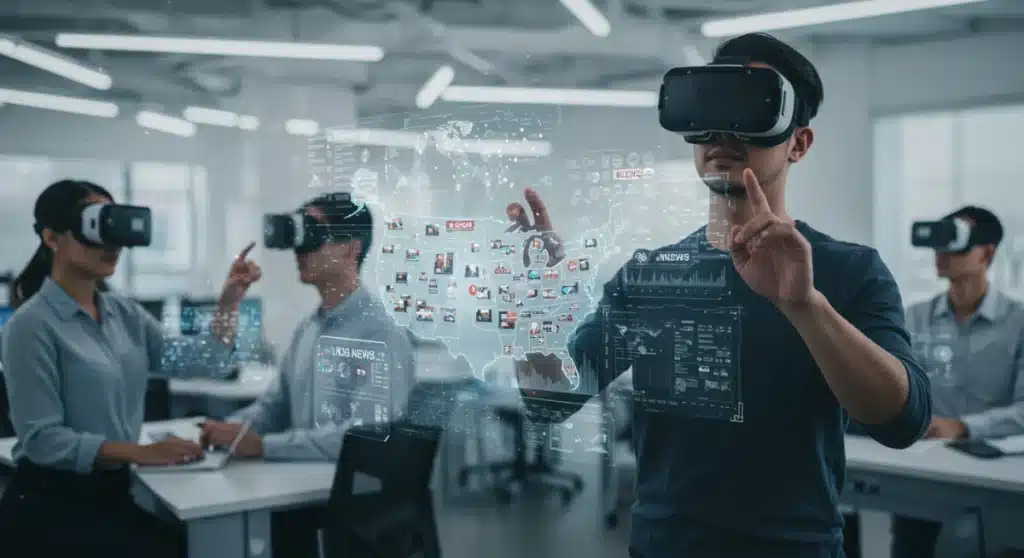
The landscape of news consumption is on the cusp of a profound transformation, moving decisively beyond the screen: how immersive tech will transform US news delivery within 3 years. This isn’t merely an incremental upgrade; it’s a paradigm shift driven by virtual reality (VR), augmented reality (AR), and mixed reality (MR) technologies. These innovations promise to pull audiences directly into the heart of stories, offering unprecedented levels of engagement, empathy, and understanding.
The Dawn of Experiential Journalism
Experiential journalism represents a radical departure from traditional news formats. Instead of simply reading or watching a story, audiences will be able to step inside it, becoming active participants rather than passive observers. This shift is powered by advancements in immersive technologies that are becoming more accessible and sophisticated.
Imagine bearing witness to a historical event as if you were there, or understanding the impact of climate change by virtually exploring affected regions. This isn’t science fiction; it’s the immediate future of news delivery. The ability to create a sense of presence and empathy will fundamentally alter how information is consumed and processed by the American public.
Virtual Reality (VR) in News Storytelling
VR offers fully enclosed, simulated environments that transport users to different locations and scenarios. For news, this means creating powerful, immersive narratives that can evoke strong emotional responses and foster a deeper understanding of complex issues.
- On-site Immersion: Virtually visit disaster zones, conflict areas, or remote scientific outposts.
- Historical Recreations: Experience pivotal historical moments as they unfolded.
- Empathy Building: Walk in the shoes of individuals experiencing social injustice or hardship.
- Data Visualization: Explore complex data sets in intuitive, three-dimensional spaces.
VR’s strength lies in its capacity to isolate the user within a curated experience, minimizing distractions and maximizing focus on the narrative. This makes it an incredibly potent tool for stories that require intense concentration and emotional resonance.
Augmented Reality (AR) for Everyday News Consumption
AR, unlike VR, overlays digital information onto the real world. This technology is likely to integrate more seamlessly into daily news consumption, particularly through smartphones and smart glasses. It allows news organizations to enrich the user’s immediate environment with relevant, contextual information without requiring a dedicated virtual space.
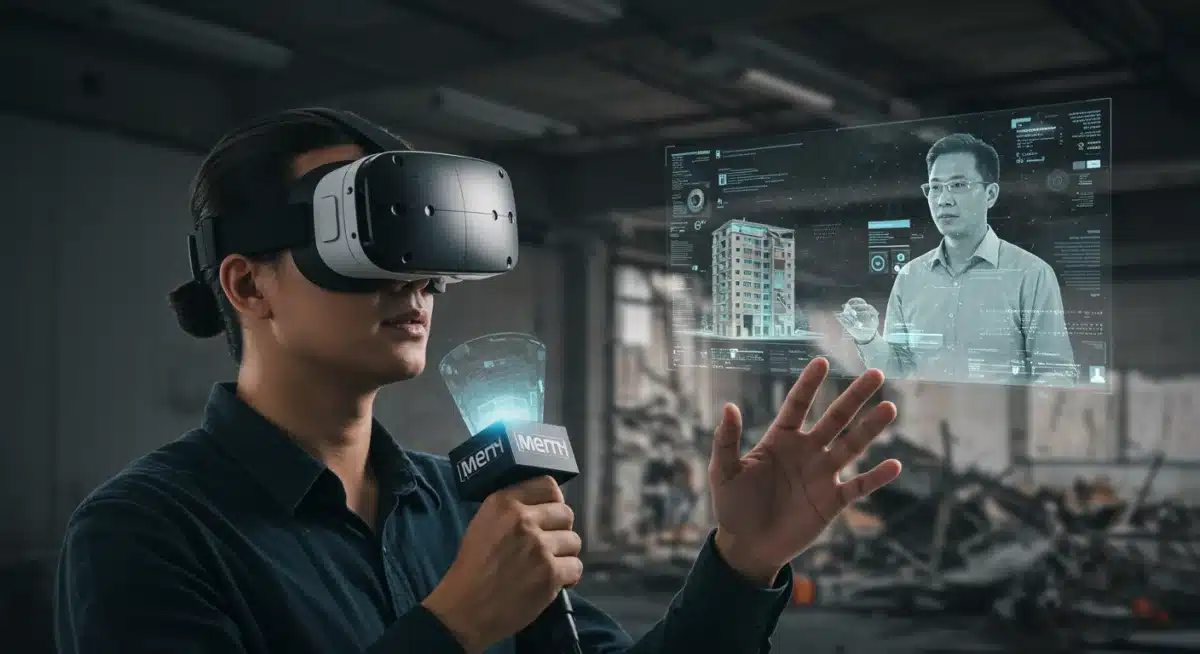
- Interactive Graphics: See 3D models of buildings or crime scenes overlaid on your physical surroundings.
- Live Data Overlays: Get real-time election results or stock market updates projected onto your living room table.
- Contextual Information: Point your phone at a landmark and receive news stories related to its history or current events.
AR’s ubiquity and ease of access make it a powerful tool for delivering bite-sized, contextual news updates that enhance the user’s perception of their immediate world. This technology promises to make news more dynamic and personally relevant.
Both VR and AR are evolving rapidly, with hardware becoming lighter, more powerful, and more affordable. This paves the way for widespread adoption, transforming niche experiments into mainstream news delivery methods across the United States. The experiential nature of these technologies will fundamentally redefine how audiences connect with journalistic content, pushing beyond traditional passive consumption.
Challenges and Opportunities for News Organizations
While the potential of immersive tech in news delivery is vast, news organizations face significant challenges in adoption. These include the high cost of production, the need for specialized skills, and the evolving technical infrastructure required to support immersive content. However, the opportunities for innovation and audience engagement are too significant to ignore.
Investing in immersive storytelling now can position news outlets at the forefront of media innovation, attracting a new generation of consumers and solidifying their relevance in a rapidly changing digital landscape. The learning curve is steep, but the rewards for pioneering this space could be substantial.
Content Creation and Production Pipelines
Producing immersive news content is fundamentally different from traditional video or text. It requires expertise in 3D modeling, spatial audio, interactive design, and game engine development. Newsrooms will need to adapt their workflows and acquire new talent or partner with specialized studios.
- Specialized Teams: Building dedicated VR/AR production units within newsrooms.
- Training Journalists: Equipping reporters with skills for 360-degree video capture and spatial storytelling.
- Ethical Considerations: Developing guidelines for representing reality in immersive environments to maintain journalistic integrity.
- Hardware Accessibility: Ensuring content is accessible across a range of devices, from high-end VR headsets to smartphones.
The initial investment in these areas will be considerable, but as tools become more streamlined and standardized, the cost and complexity of production are expected to decrease. Early adopters will gain a significant competitive advantage in developing best practices and captivating audiences.
Monetization Models for Immersive News
Traditional advertising models may not translate directly to immersive environments. News organizations will need to explore new ways to monetize their content, focusing on premium experiences, subscriptions, or sponsorships that align with the immersive nature of the medium.
- Premium Subscriptions: Offering exclusive VR/AR news experiences as part of a tiered subscription service.
- Experiential Sponsorships: Brands sponsoring immersive documentaries or virtual tours.
- In-experience Microtransactions: Potentially offering deeper dives or interactive elements for a small fee.
Developing viable monetization strategies will be crucial for the long-term sustainability of immersive journalism. The value proposition of unique, deeply engaging content will likely command a higher price point than conventional news formats.
Overcoming these challenges requires a forward-thinking approach and a willingness to experiment. News organizations that embrace the complexities of immersive tech will be the ones that thrive in the evolving media ecosystem, securing their place as innovative storytellers for the next generation.
Enhanced Engagement and Empathy
One of the most compelling aspects of immersive technology in news is its unparalleled ability to foster engagement and empathy. By placing the audience directly within the narrative, these tools can create a profound sense of connection to the events and people being reported.
This goes beyond simply understanding a story intellectually; it allows for an emotional resonance that traditional media often struggles to achieve. The impact on public discourse and understanding could be revolutionary, especially for complex or emotionally charged topics.
Building Empathy Through Presence
Immersive experiences can break down barriers of distance and difference, allowing users to virtually inhabit another person’s perspective. This ’embodied cognition’ can lead to a deeper, more visceral understanding of issues like poverty, displacement, or conflict.
For example, a VR experience that simulates life in a refugee camp can convey the daily struggles and emotional toll in a way no written article or video can. This direct emotional connection is a powerful antidote to news fatigue and detachment.
Interactive Storytelling and Agency
Immersive news often allows for a degree of interactivity, giving users agency within the story. This isn’t about altering the facts, but about controlling the perspective, exploring details at their own pace, and engaging with data in a hands-on manner. This active participation enhances retention and understanding.
- User-controlled Perspectives: Choose where to look, what details to focus on, and explore different angles of a scene.
- Data Manipulation: Interact with 3D charts and graphs, filtering information to gain personalized insights.
- Narrative Pathways: While the core facts remain, users might choose to follow different character arcs or investigative paths within a larger story.
This shift from passive consumption to active exploration transforms news into a more personal and memorable experience. It respects the user’s intelligence and curiosity, allowing them to delve as deeply as they wish into a given topic.
The emotional and intellectual dividends of immersive news are substantial. By fostering a sense of presence and offering interactive control, these technologies are poised to make news consumption a more impactful and personally resonant activity, driving deeper understanding and empathy across the US population.
Technological Advancements Driving Adoption
The rapid evolution of hardware and software is a key factor enabling the imminent transformation of news delivery. Devices are becoming more powerful, affordable, and user-friendly, pushing immersive tech from niche curiosity to mainstream potential. This democratizes access and encourages wider content creation.
Improvements in connectivity, processing power, and display technology are converging to create an ecosystem ripe for immersive experiences. The next three years will see these advancements reach a critical mass, making immersive news a viable and attractive option for both publishers and consumers.
Hardware Evolution: Lighter, Faster, Cheaper
Early VR headsets were bulky and expensive, requiring powerful PCs. Today’s standalone VR headsets are much more accessible, while AR glasses are becoming sleeker and more integrated into everyday wear. This trend will continue, making immersive devices as common as smartphones.
- Standalone VR Headsets: Increased processing power and higher resolution displays in all-in-one devices.
- AR Smart Glasses: Miniaturization and improved battery life for discreet, always-on digital overlays.
- Haptic Feedback: More realistic tactile sensations enhancing the sense of presence.
- Eye-Tracking Technology: Enabling more intuitive interaction and personalized experiences.
As these devices become staples of consumer electronics, the barrier to entry for immersive news consumption will significantly decrease, expanding the potential audience exponentially.
5G and Cloud Computing
The rollout of 5G networks provides the necessary bandwidth and low latency for streaming high-quality immersive content, especially for AR experiences that rely on real-time data overlays. Cloud computing further alleviates the need for powerful local hardware, allowing complex rendering to happen remotely.
- Seamless Streaming: High-resolution VR experiences delivered without lag or buffering.
- Real-time AR Updates: Instantaneous overlay of dynamic news data onto the physical world.
- Collaborative Immersive Spaces: Journalists and audiences interacting in shared virtual environments.
This robust digital infrastructure is critical for delivering the rich, dynamic content that immersive journalism promises. Without it, the full potential of VR and AR in news would remain unrealized.
The convergence of advanced hardware, robust network infrastructure, and sophisticated software platforms is creating a perfect storm for the widespread adoption of immersive technologies. This technological readiness is the engine driving the imminent transformation of US news delivery, making it a tangible reality within the next three years.
Ethical Considerations and Trust in Immersive News
As immersive tech reshapes news delivery, it also introduces a new set of ethical challenges that news organizations must navigate carefully. Maintaining trust, ensuring accuracy, and avoiding manipulation are paramount in a medium that can feel incredibly real and impactful. The responsibility to uphold journalistic integrity is magnified in immersive environments.
Addressing these concerns proactively will be crucial for the public’s acceptance and the credibility of immersive journalism. Transparency and clear ethical guidelines will be the bedrock upon which this new form of news is built.
The Challenge of Authenticity and Deepfakes
The ability to create highly realistic virtual environments also opens the door to potential misuse, such as deepfakes or fabricated scenarios. News organizations must establish clear standards and technologies to verify the authenticity of immersive content and educate audiences.
- Source Verification: Rigorous fact-checking and explicit sourcing for all immersive elements.
- Content Disclosures: Clearly labeling reconstructed scenes, simulations, or AI-generated elements.
- Combating Misinformation: Developing tools and strategies to identify and debunk deepfake news in immersive formats.
The immersive nature of these experiences means that false information can have an even more profound and misleading impact. News outlets must commit to unwavering transparency.
Privacy and Data Security
Immersive technologies collect vast amounts of user data, including biometric information, gaze patterns, and environmental scans. Protecting this data and ensuring user privacy will be a critical ethical and legal challenge for news providers.
- Transparent Data Policies: Clearly informing users about what data is collected and how it is used.
- Secure Data Storage: Implementing robust cybersecurity measures to protect sensitive user information.
- User Consent: Obtaining explicit consent for data collection and usage, especially for highly personal data.
Building trust in immersive news requires not only delivering accurate content but also demonstrating a strong commitment to protecting the privacy and security of the audience. A breach of trust in this area could severely hinder adoption.
Navigating the ethical landscape of immersive tech is as important as mastering its technical capabilities. News organizations that prioritize transparency, authenticity, and user privacy will build the trust necessary for this transformative mode of news delivery to flourish and effectively serve the US public.
The Future Landscape: Personalized and Participatory News
Looking ahead, immersive tech promises a future where news is not only experiential but also highly personalized and participatory. Audiences will have greater control over how they consume news, tailoring experiences to their interests and even contributing to the storytelling process. This shift could redefine the relationship between news organizations and their communities.
The vision is one where news becomes a dynamic, two-way street, fostering a more informed and engaged citizenry. This evolution will move beyond the traditional broadcast model, empowering individuals with tools for deeper understanding and connection.
Hyper-Personalized News Experiences
AI algorithms combined with immersive tech will deliver news content curated to individual preferences, learning styles, and emotional responses. This goes beyond simple topic filtering to create truly bespoke news journeys.
- Adaptive Narratives: Stories that adjust their depth and detail based on user engagement and prior knowledge.
- Personalized Perspectives: Offering different angles or viewpoints on a story based on user interest.
- Contextual Relevance: AR overlays providing news relevant to the user’s immediate physical location or activities.
While personalization offers immense benefits, news organizations must also guard against filter bubbles, ensuring users are still exposed to diverse perspectives and critical information beyond their immediate interests.
Citizen Journalism in Immersive Spaces
Immersive tools could empower citizens to become more effective contributors to newsgathering and storytelling. Simple 360-degree cameras and AR creation tools will allow individuals to document events from their perspective, adding rich, authentic content to the news ecosystem.
- User-Generated Immersive Reports: Citizens capturing and sharing 360-degree footage of local events.
- Interactive Community Stories: Local residents contributing to AR experiences about their neighborhoods.
- Crowdsourced Investigations: Utilizing collective immersive data to explore complex local issues.
This participatory model could foster a stronger sense of community ownership over local news and provide diverse perspectives often missed by traditional media. Trust and verification mechanisms will be crucial for integrating citizen-generated content responsibly.
The future of news delivery in the US, shaped by immersive tech, is one of profound personalization, active participation, and deep engagement. This evolution holds the promise of a more informed, empathetic, and connected society, fundamentally altering how we interact with the world’s stories within the next three years.
| Key Aspect | Impact on US News Delivery |
|---|---|
| Experiential Journalism | Audiences will step directly into news stories via VR/AR, fostering deeper engagement and empathy. |
| Production Challenges | Newsrooms need to invest in new skills and technology for immersive content creation. |
| Ethical Considerations | Ensuring authenticity, combating deepfakes, and protecting user privacy are critical for trust. |
| Personalized News | AI and immersive tech will deliver highly customized and interactive news experiences. |
Frequently Asked Questions About Immersive News
Immersive tech for news includes Virtual Reality (VR), Augmented Reality (AR), and Mixed Reality (MR). These technologies allow users to experience news stories in highly engaging, interactive 3D environments, either by fully simulating a scene (VR) or by overlaying digital information onto the real world (AR).
The average American will move from passively consuming news to actively experiencing it. Instead of just reading about a disaster, they might virtually walk through it; instead of watching an election graphic, they could see 3D models projected into their living room, offering deeper understanding and empathy.
Key challenges include the high cost of production, the need for specialized skills in 3D design and spatial storytelling, and developing new monetization models. Newsrooms must also navigate ethical considerations like ensuring authenticity and protecting user data in these new formats.
While immersive tech can be misused for deepfakes, it also offers powerful tools to combat misinformation. News organizations can use it to provide highly verifiable, interactive data visualizations and transparently label content. Clear ethical guidelines and technological safeguards are crucial to maintaining trust.
It’s unlikely to replace traditional formats entirely but will significantly augment them. Immersive news will offer unique, in-depth experiences for certain stories, while traditional text and video will continue to serve for quick updates and broad coverage. It will become a vital, complementary layer in the news ecosystem.
Conclusion
The journey beyond the screen: how immersive tech will transform US news delivery within 3 years is not merely a technological upgrade but a fundamental redefinition of how society engages with information. Virtual, augmented, and mixed reality are poised to make news more experiential, empathetic, and personalized than ever before. While challenges in production, ethics, and monetization remain, the undeniable potential for deeper audience engagement and understanding makes this a frontier that news organizations cannot afford to ignore. Those who embrace these technologies now will not only shape the future of journalism but also secure their relevance in an increasingly immersive world, offering the American public an unprecedented window into the stories that matter most.