Smart Contracts for Journalism: Automating Royalties 2026

Smart contracts are rapidly reshaping journalism by 2026, enabling automated and transparent royalty distribution for crypto content creators, thereby fostering a more equitable and efficient media ecosystem powered by blockchain technology.
The landscape of journalism is undergoing a profound transformation, driven by innovative technologies that promise greater transparency and fairness. By 2026, smart contracts journalism royalties are not just a concept but a tangible reality, fundamentally altering how crypto content creators are compensated and how their work is valued within a decentralized media framework.
The Dawn of Decentralized Journalism and Smart Contracts
Decentralized journalism, powered by blockchain technology, is rapidly moving from theoretical discussions to practical applications. This shift empowers content creators by removing intermediaries and offering direct, transparent monetization pathways. Smart contracts are at the heart of this revolution, providing an unalterable and auditable framework for royalty distribution.
In traditional media, content creators often face opaque payment structures and significant delays in receiving their due. Blockchain technology, specifically through smart contracts, aims to dismantle these inefficiencies. It establishes a direct link between content consumption and creator compensation, ensuring that every view, read, or share translates into immediate and verifiable payment.
Understanding the Core Mechanics of Smart Contracts
Smart contracts are self-executing agreements with the terms of the agreement directly written into lines of code. This code exists across a distributed, decentralized blockchain network. When predefined conditions are met, the contract automatically executes, eliminating the need for third parties.
- Automated Execution: Once conditions are met (e.g., content viewed, subscription paid), payments are automatically triggered.
- Immutability: Transactions and contract terms are permanently recorded on the blockchain, making them tamper-proof.
- Transparency: All transactions are visible on the public ledger, ensuring accountability for all parties involved.
- Security: Cryptographic security protects against fraud and unauthorized alterations.
The implications for crypto content creators are immense. They gain unprecedented control over their intellectual property and revenue streams, fostering a more sustainable and equitable ecosystem for digital journalism. This paradigm shift encourages greater innovation and independence among journalists, allowing them to focus on quality content without the constant battle over payment transparency.
Automating Royalty Payments: A Game Changer for Creators
The automation of royalty payments via smart contracts represents a significant leap forward for crypto content creators. No longer are creators subjected to lengthy payment cycles or arbitrary deductions. Instead, their earnings are directly tied to their content’s performance, executed with mathematical precision.
This automated system operates on pre-agreed terms embedded within the smart contract. For instance, a contract could specify that a creator receives a certain percentage for each article read, or a fixed amount per unique visitor. The beauty of this system lies in its impartiality and efficiency; once the conditions are met, the payment is released without human intervention.
Direct Payments and Reduced Friction
One of the primary benefits is the direct payment mechanism. Funds flow directly from consumers or platforms to creators’ digital wallets, bypassing multiple intermediaries that traditionally take a cut. This not only increases the creator’s share but also significantly reduces the administrative burden and associated costs.
- Instantaneous Transactions: Payments can be processed almost instantly, improving cash flow for creators.
- Lower Fees: Eliminating intermediaries reduces transaction fees, leading to higher net earnings.
- Global Reach: Payments can be made across borders without complex international banking processes.
The efficiency gained through automated royalties also allows creators to dedicate more time to their craft rather than managing payment disputes or chasing invoices. This shift cultivates an environment where journalistic integrity and creative output are prioritized, free from the financial anxieties often associated with freelance and independent media work.
Enhancing Transparency and Trust in Crypto Content
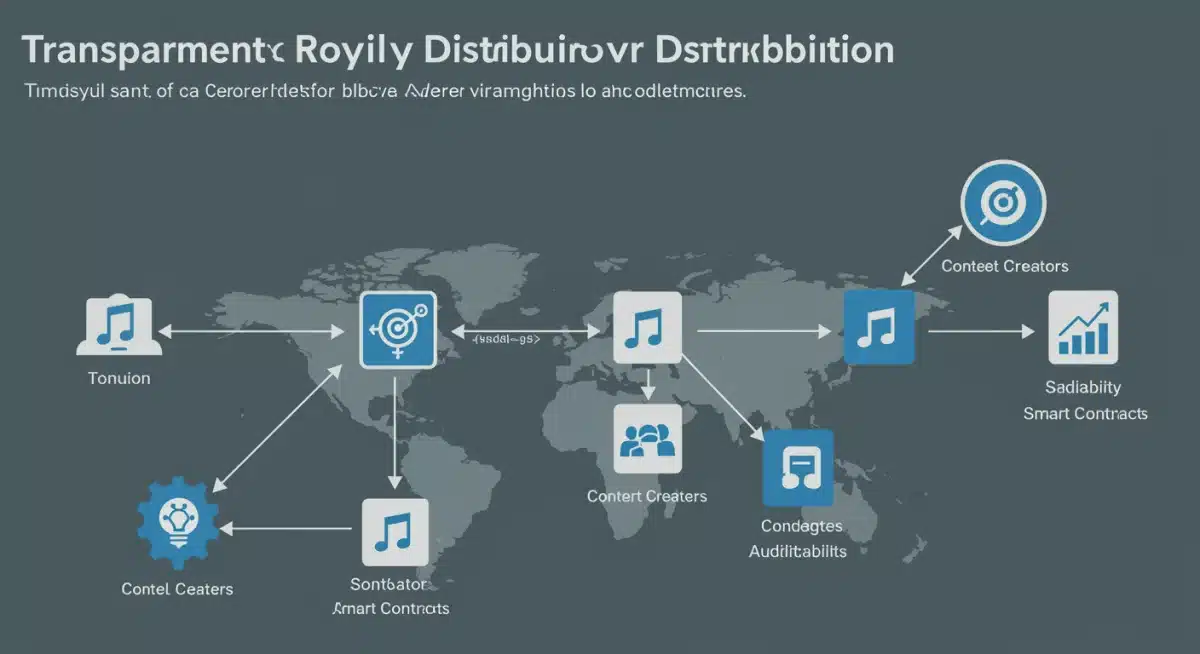
Transparency is a cornerstone of blockchain technology, and its application to journalism through smart contracts is revolutionary. Every transaction, every royalty payment, is recorded on an immutable public ledger, accessible for verification by anyone. This level of transparency builds unparalleled trust between creators, platforms, and consumers.
In an era where trust in media is often questioned, smart contracts offer a verifiable truth. Content creators can prove they’ve been compensated fairly, and consumers can see that their contributions directly support the journalists they value. This creates a virtuous cycle of trust and accountability that strengthens the entire crypto journalism ecosystem.
Auditable Records and Dispute Resolution
The auditable nature of blockchain records provides a robust mechanism for dispute resolution. Should any disagreement arise regarding payments or content usage, the smart contract’s execution history serves as an undeniable source of truth. This minimizes the potential for conflicts and provides clear evidence for all parties.
- Public Ledger: All transactions are recorded and publicly viewable, ensuring full transparency.
- Immutable Data: Once recorded, data cannot be altered, preventing fraudulent claims.
- Reduced Litigation: Clear, verifiable records reduce the need for costly legal disputes.
This trust extends beyond mere financial transactions. It builds confidence in the authenticity of news and information itself. When the entire process, from content creation to monetization, is transparently managed on a blockchain, it lends credibility to the journalistic output, which is invaluable in combating misinformation and promoting factual reporting.
Innovations in 2026: Beyond Basic Royalties
By 2026, innovations in smart contract technology for journalism extend far beyond basic royalty payments. We are seeing sophisticated models emerge that allow for granular control over content monetization, intellectual property rights, and community engagement. These advancements are paving the way for truly dynamic and interactive media experiences.
For example, fractional ownership of content, where multiple contributors can share royalties based on their specific input, is becoming more feasible. Similarly, smart contracts can be programmed to release funds only after certain performance metrics are met, such as reaching a specific number of unique readers or achieving a certain engagement rate. This incentivizes quality and impact.
Advanced Monetization Models and IP Protection
The evolution of smart contracts allows for the creation of complex monetization strategies tailored to different content types and creator needs. From micropayments for individual articles to subscription models managed entirely on-chain, the flexibility is immense. Furthermore, intellectual property rights can be embedded directly into the contract, providing an immutable record of ownership and usage permissions.
- Dynamic Pricing: Content pricing can adjust based on demand or other predefined parameters.
- Licensing Agreements: Automated licensing and copyright management via smart contracts.
- Community Governance: Decentralized autonomous organizations (DAOs) can manage content platforms and reward creators.
These innovations foster a more robust and adaptable ecosystem for crypto journalism. Creators can experiment with different models, retaining greater control over their work and its distribution, while platforms can offer more diverse and appealing options to their audience. The emphasis is on flexibility, security, and empowering the creator at every turn.
Challenges and Considerations for Widespread Adoption
Despite the immense potential, the widespread adoption of smart contracts in journalism faces several challenges. Technical complexities, regulatory uncertainties, and the need for greater user education are significant hurdles that must be addressed for these innovations to reach their full potential.
One major concern is the current scalability limitations of some blockchain networks, which can affect transaction speeds and costs. As the volume of content and users grows, these networks must be able to handle the increased load efficiently. Furthermore, the legal enforceability of smart contracts in various jurisdictions is still evolving, creating a patchwork of regulatory landscapes that creators and platforms must navigate.
Overcoming Technical and Regulatory Hurdles
Addressing these challenges requires concerted effort from developers, policymakers, and the journalism community. Innovations in layer-2 solutions and new blockchain architectures are continuously improving scalability. Simultaneously, legal frameworks are slowly catching up, with a growing understanding of how to integrate blockchain-based agreements into existing legal systems.
- Scalability Solutions: Development of faster, more efficient blockchain networks.
- Regulatory Clarity: Establishment of clear legal guidelines for smart contracts.
- User Education: Simplifying user interfaces and educating creators on blockchain tools.
Moreover, the learning curve for creators and consumers to interact with blockchain wallets and smart contract interfaces remains a barrier. User-friendly platforms and educational resources are crucial to demystify these technologies and encourage broader participation. Overcoming these challenges will unlock the full transformative power of smart contracts in journalism.
The Future Impact on Crypto Content Creators
The long-term impact of smart contracts on crypto content creators is poised to be profoundly positive, ushering in an era of unprecedented autonomy, financial stability, and creative freedom. As the technology matures and adoption grows, we can expect a significant shift in the power dynamics of the media industry, favoring independent journalists and niche content producers.
Creators will no longer be beholden to traditional media conglomerates or advertisers for their livelihoods. Instead, they will have direct relationships with their audience, fostering communities built on shared values and direct financial support. This independence can lead to more diverse, unbiased, and high-quality journalistic output, as creators are free from the pressures of commercial agendas.
Empowering Independent Journalism and Niche Content
Smart contracts empower independent journalists to build sustainable careers by ensuring fair compensation and transparent revenue streams. This support is particularly crucial for niche content creators who might struggle to find a voice or adequate funding within mainstream media. Blockchain provides a platform where specialized knowledge and unique perspectives can thrive, directly supported by their dedicated audiences.
- Increased Autonomy: Creators gain control over their content and monetization strategies.
- Sustainable Income: Transparent and automated payments provide financial stability.
- Niche Market Growth: Easier monetization for specialized content, fostering diversity.
Ultimately, the integration of smart contracts into journalism is not just about technology; it’s about reimagining the very foundations of media production and consumption. It promises a future where creators are valued, transparency is paramount, and the flow of information is more equitable and robust for everyone involved. This evolution signifies a monumental step towards a truly decentralized and democratic media landscape.
| Key Aspect | Description |
|---|---|
| Automated Royalties | Smart contracts automatically disburse payments to creators upon predefined conditions, eliminating manual processes and delays. |
| 100% Transparency | All transactions are recorded on a public, immutable blockchain ledger, ensuring verifiable and auditable payment flows. |
| Creator Empowerment | Content creators gain direct control over monetization, intellectual property, and revenue streams, fostering independence. |
| Future Innovations | Beyond royalties, smart contracts enable dynamic pricing, automated licensing, and community governance models for content. |
Frequently Asked Questions about Smart Contracts in Journalism
Smart contracts are self-executing agreements coded onto a blockchain. In journalism, they automate royalty payments, manage intellectual property, and enable transparent content monetization for crypto content creators without intermediaries.
Smart contracts record every transaction on a public, immutable blockchain ledger. This means all payment flows and terms are verifiable by anyone, providing 100% transparency and building trust between creators and their audience.
Creators benefit from instant, direct payments, reduced transaction fees, and global reach. This frees them from traditional payment delays and administrative burdens, allowing more focus on content creation and enhancing financial stability.
Yes, challenges include technical scalability issues, evolving regulatory landscapes, and the need for greater user education. Overcoming these requires continuous development in blockchain technology and clearer legal frameworks.
Smart contracts will empower independent journalists with autonomy and financial stability. They facilitate direct audience support, foster niche content growth, and reduce reliance on traditional media, leading to more diverse and unbiased reporting.
Conclusion
The evolution of smart contracts in journalism by 2026 marks a pivotal moment for crypto content creators. By automating royalties with unparalleled transparency and efficiency, these innovations are not merely optimizing payment processes but fundamentally reshaping the economics and ethics of content creation. As the technology matures and adoption expands, smart contracts promise a future where journalistic integrity is upheld by verifiable trust, creators are empowered, and the media landscape becomes more decentralized, equitable, and resilient.