Web3 Self-Sovereign Identity: U.S. Consumer Guide 2026
The digital world is undergoing a profound transformation, and at its core lies the evolution of identity. For U.S. consumers, the landscape of how we prove who we are, access services, and protect our personal data is rapidly shifting. By 2026, the concepts of Web3 and Self-Sovereign Identity (SSI) will not just be buzzwords but fundamental pillars of our online existence, promising unprecedented levels of security, privacy, and control. This comprehensive guide delves into what Web3 Self-Sovereign Identity entails, why it matters, and what U.S. consumers need to know to navigate this exciting new frontier effectively.
The Current State of Digital Identity: A Centralized Predicament
Before we explore the future, it’s crucial to understand the challenges inherent in our current digital identity systems. Today, our online identities are largely centralized. When you sign up for a new social media platform, an e-commerce site, or a banking service, you typically create an account tied to a username and password. This process often involves sharing a significant amount of personal information with these platforms. In essence, you are entrusting third-party organizations with your most sensitive data.
Vulnerabilities of Centralized Identity
- Data Breaches: Centralized databases are prime targets for cybercriminals. High-profile data breaches are a regular occurrence, exposing millions of users’ personal information, from credit card numbers to social security numbers. This leads to identity theft, financial fraud, and a significant erosion of trust.
- Lack of Control: Once you hand over your data, you largely lose control over how it’s stored, used, and shared. Companies can monetize your data, and you often have limited recourse if you disagree with their practices.
- Identity Silos: Your identity is fragmented across numerous platforms. Each service requires you to create a new identity, leading to password fatigue and inefficient management of your digital life.
- Censorship and De-platforming: Centralized entities have the power to restrict or revoke access to their services, sometimes without clear justification, impacting freedom of speech and access to essential services.
These challenges highlight the urgent need for a more robust, secure, and user-centric approach to digital identity. This is where Web3 Self-Sovereign Identity steps in.
Understanding Web3: The Decentralized Internet
To grasp Self-Sovereign Identity, we first need to understand Web3. Web3 represents the next iteration of the internet, built on decentralized technologies like blockchain. While Web1 was about static web pages and Web2 introduced interactive platforms and user-generated content (think social media), Web3 aims to give power back to the users.
Key Principles of Web3
- Decentralization: Instead of data and applications residing on central servers controlled by large corporations, Web3 utilizes distributed networks. This means no single entity has complete control.
- Blockchain Technology: The backbone of Web3, blockchain is a distributed, immutable ledger that securely records transactions and data across a network of computers.
- Cryptocurrency and Tokens: Digital currencies and tokens play a crucial role in incentivizing participation and enabling transactions within decentralized ecosystems.
- User Ownership: In Web3, users have greater ownership and control over their data, digital assets, and online experiences.
This shift from centralized to decentralized power is the fertile ground from which Web3 Self-Sovereign Identity emerges, promising a paradigm shift in how U.S. consumers interact with the digital world.
What is Web3 Self-Sovereign Identity (SSI)?
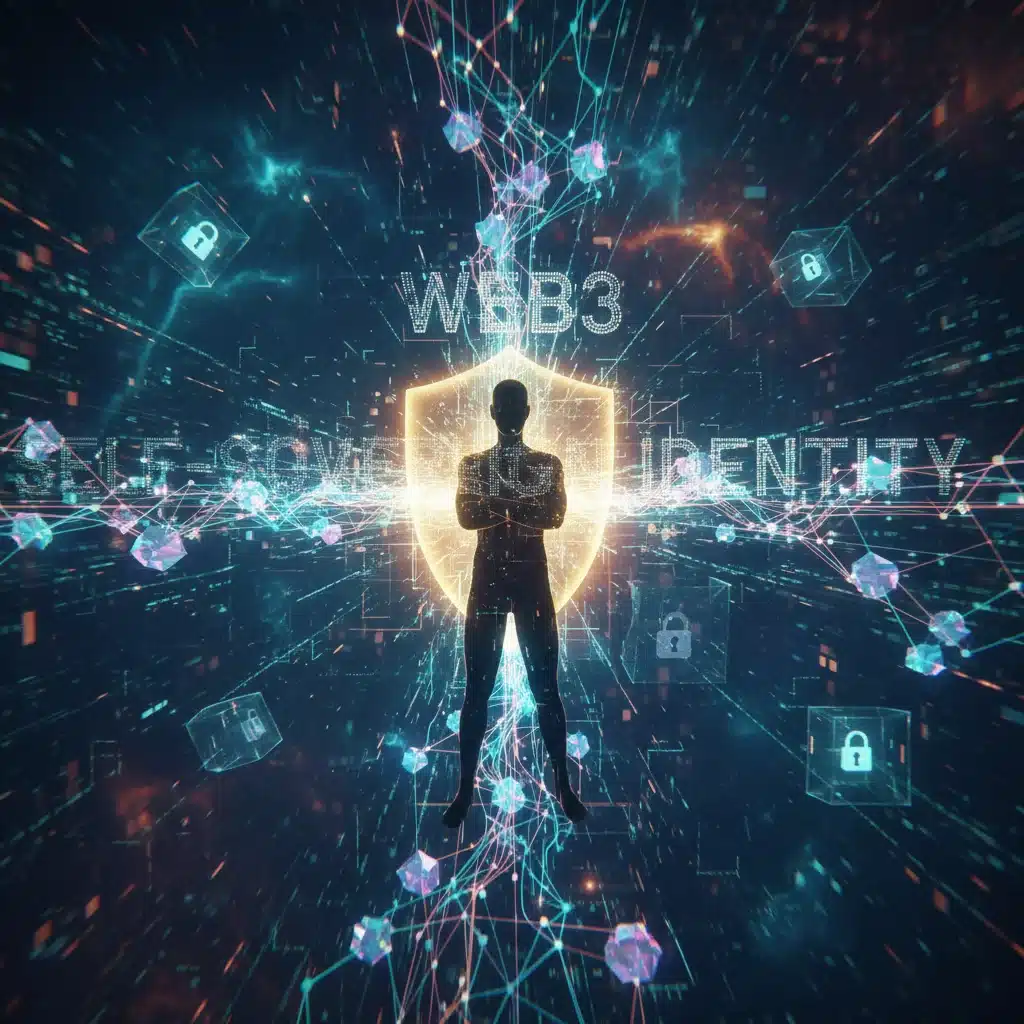
Web3 Self-Sovereign Identity (SSI) is a revolutionary approach to digital identity that empowers individuals with complete ownership and control over their personal data and identity attributes. Unlike traditional systems where third parties manage your identity, SSI places the individual at the center, making them the ultimate authority over their digital presence.
Core Tenets of SSI
- User Control: You decide what information to share, with whom, and for how long.
- Decentralization: Identity data is not stored in a central database but often anchored to a decentralized ledger (blockchain) or managed through secure peer-to-peer connections.
- Verifiable Credentials: Instead of sharing raw data, SSI uses cryptographically secure, verifiable credentials. These are digital proofs of attributes (e.g., age, educational qualification, address) issued by trusted entities (issuers) and presented by the individual (holder) to a verifier.
- Privacy-Preserving: SSI minimizes the amount of personal information shared. For instance, instead of showing your driver’s license to prove you’re over 21, you might present a verifiable credential that simply states, ‘I am over 21,’ without revealing your exact birthdate or other details.
- Interoperability: SSI aims for a universal system where your digital identity can be used across various platforms and services, reducing the need for multiple accounts and logins.
- Persistence: Your identity is not tied to a single provider and can persist even if a service goes out of business.
Imagine a digital passport that you fully control, where you can selectively reveal only the necessary information for a transaction, without exposing your entire identity profile. This is the promise of Web3 Self-Sovereign Identity.
How Web3 Self-Sovereign Identity Works for U.S. Consumers
The mechanics of SSI, while complex under the hood, are designed to be user-friendly for consumers. Here’s a simplified breakdown:
1. The Digital Wallet (Identity Wallet)
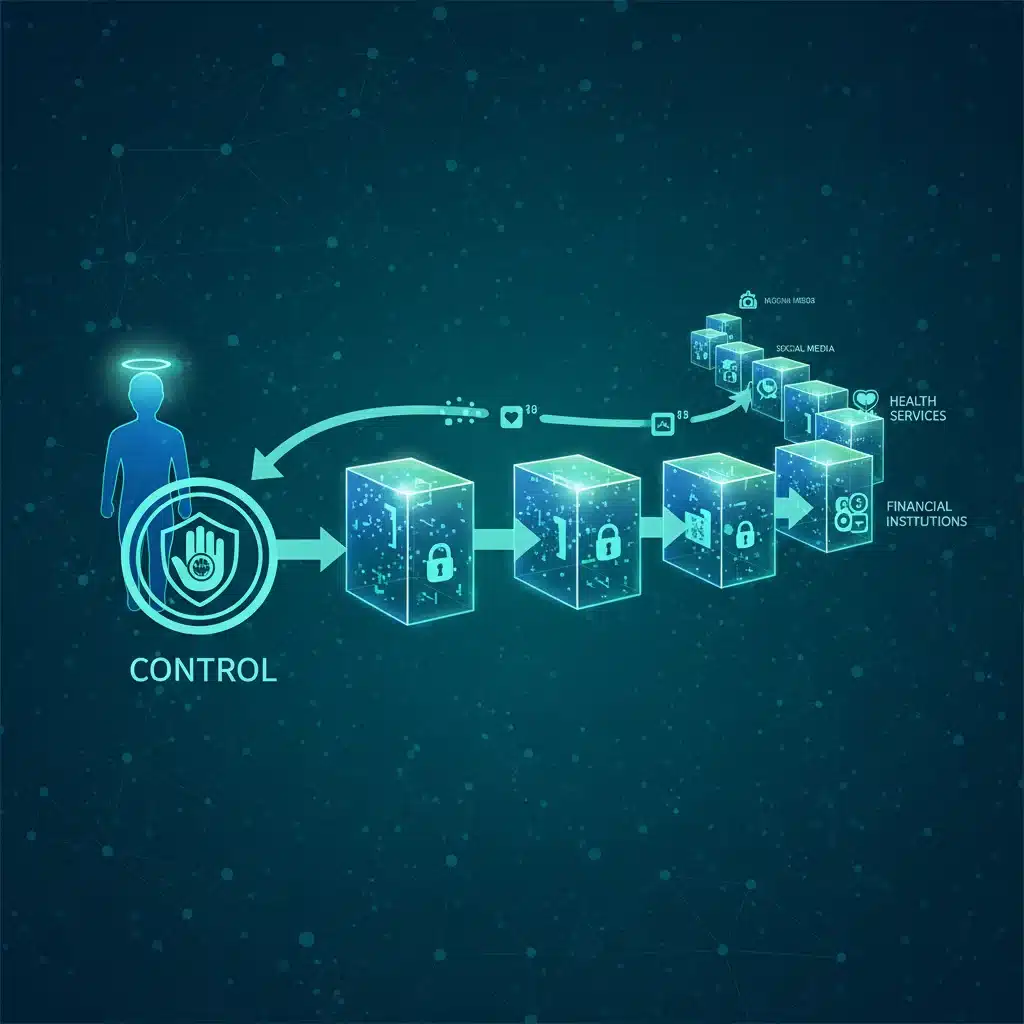
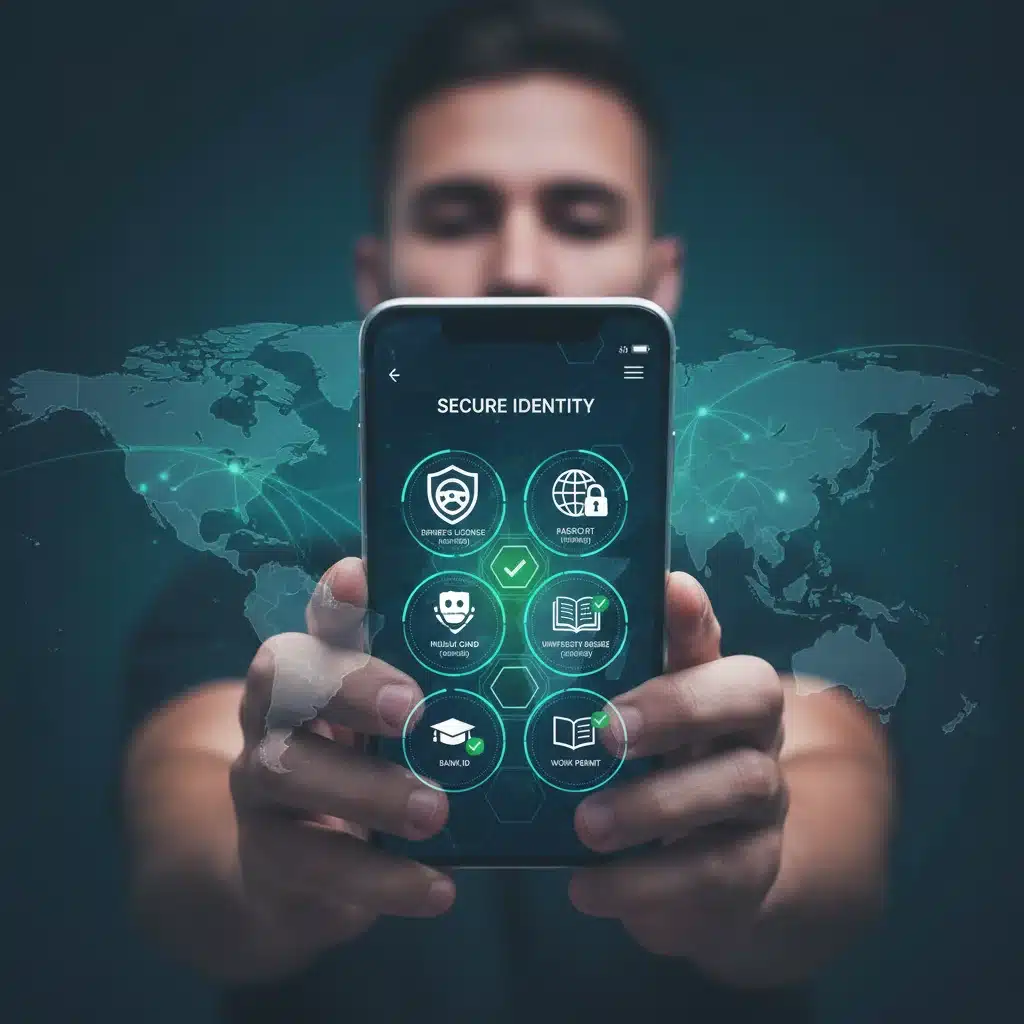
At the heart of your Web3 Self-Sovereign Identity is a digital identity wallet, typically an application on your smartphone or computer. This wallet is where you securely store your verifiable credentials. Think of it as a modernized, digital version of your physical wallet, but for all your digital proofs.
2. Issuers, Holders, and Verifiers
- Issuers: These are trusted organizations that issue verifiable credentials. Examples include a university issuing a digital degree, a government agency issuing a digital driver’s license, or a bank issuing proof of address. These credentials are cryptographically signed by the issuer, making them tamper-proof and verifiable.
- Holders: This is you, the individual. You receive and store these verifiable credentials in your digital wallet. You have complete control over these credentials.
- Verifiers: These are entities that need to verify certain attributes about you. For instance, an online retailer might need to verify your age, or a landlord might need to verify your past rental history. You, as the holder, present the relevant verifiable credential from your wallet to the verifier, who can then cryptographically confirm its authenticity with the issuer’s public key.
3. Decentralized Identifiers (DIDs)
Instead of usernames and email addresses, Web3 SSI uses Decentralized Identifiers (DIDs). A DID is a unique, persistent identifier that you own and control. It’s often anchored to a blockchain or other decentralized ledger, ensuring its immutability and global resolvability. DIDs are not linked to any central authority, granting you true self-sovereignty.
4. Selective Disclosure and Zero-Knowledge Proofs
One of the most powerful features of Web3 Self-Sovereign Identity is its ability to enable selective disclosure. This means you only reveal the minimum amount of information necessary. For example, if a website needs to confirm you are over 18, you can present a credential that cryptographically proves your age without revealing your exact birthdate. This is often achieved through advanced cryptographic techniques like Zero-Knowledge Proofs (ZKPs), which allow one party to prove they know a piece of information to another party, without revealing the information itself.
Benefits of Web3 Self-Sovereign Identity for U.S. Consumers by 2026
The adoption of Web3 Self-Sovereign Identity promises a multitude of benefits for U.S. consumers, significantly enhancing their digital experience by 2026 and beyond.
Enhanced Security and Reduced Fraud
- Reduced Attack Surface: By eliminating centralized honey pots of personal data, SSI drastically reduces the risk of large-scale data breaches and identity theft.
- Tamper-Proof Credentials: Verifiable credentials, secured by cryptography and often anchored to blockchains, are incredibly difficult to forge or alter.
- Stronger Authentication: SSI can facilitate more robust authentication methods, moving beyond vulnerable passwords to cryptographic proofs of identity.
Greater Privacy and Data Control
- Data Minimization: Consumers can choose to reveal only the essential information needed for a transaction, rather than sharing their entire profile.
- Consent-Based Sharing: Every instance of data sharing requires explicit consent from the individual, putting them in the driver’s seat.
- No Centralized Data Brokerage: SSI fundamentally disrupts business models based on collecting and selling user data without explicit consent.
Seamless and Efficient Digital Interactions
- Single, Portable Identity: Your SSI can be used across various services, eliminating the need for multiple logins and cumbersome registration processes.
- Streamlined Onboarding: New service sign-ups can become almost instantaneous, as you can quickly share verified attributes from your digital wallet.
- Improved User Experience: Less friction in online interactions, leading to a more pleasant and efficient digital journey.
Empowerment and Autonomy
- True Ownership: SSI gives individuals true ownership and agency over their digital identity, a fundamental human right in the digital age.
- Resilience to Censorship: A decentralized identity is harder for any single entity to revoke or control, promoting digital freedom.
Challenges and Considerations for U.S. Consumers
While the promise of Web3 Self-Sovereign Identity is immense, its widespread adoption in the U.S. by 2026 faces several challenges that consumers should be aware of.
Technical Complexity and User Experience
The underlying technology of SSI (blockchain, cryptography, DIDs) is complex. For mass adoption, the user experience of identity wallets and credential management must be intuitive and seamless, akin to current mobile banking apps. U.S. consumers will need easy-to-use interfaces that abstract away the technical intricacies.
Interoperability and Standardization
For SSI to be truly effective, different SSI systems and platforms need to be able to communicate and recognize each other’s credentials. Significant efforts are underway through organizations like the Decentralized Identity Foundation (DIF) and the W3C to establish global standards, but achieving universal interoperability remains a crucial hurdle.
Regulatory and Legal Frameworks
The existing regulatory landscape in the U.S. was not designed with decentralized identities in mind. Questions around legal liability, data governance, and compliance with existing privacy laws (like CCPA) need to be addressed. Clear legal frameworks will be essential to foster trust and accelerate adoption. By 2026, we can expect to see more legislative discussions and potentially new laws emerging to support SSI.
Issuers’ Adoption and Trust
For SSI to function, trusted entities (governments, universities, banks) must be willing to become issuers of verifiable credentials. This requires significant investment in new infrastructure and a shift in mindset. Building this trust and encouraging widespread issuer adoption will be a gradual process.
Education and Awareness
A significant portion of the U.S. consumer base is still unfamiliar with concepts like blockchain, Web3, and self-sovereign identity. Extensive education and awareness campaigns will be necessary to help consumers understand the benefits, how to use these new tools, and how to protect their digital identities in this evolving ecosystem.
Real-World Use Cases for U.S. Consumers by 2026
By 2026, Web3 Self-Sovereign Identity is expected to impact various aspects of daily life for U.S. consumers:
Online Onboarding and KYC (Know Your Customer)
Imagine opening a new bank account or signing up for a new service online. Instead of uploading documents and waiting for verification, you could simply present a verifiable credential from your digital wallet that cryptographically proves your identity, address, and other required attributes, accelerating the process and enhancing security.
Healthcare Access and Data Management
Patients could control their health records more effectively, granting specific healthcare providers access to only the necessary information for a limited time. This would enhance privacy and streamline the sharing of medical data between different healthcare systems.
Education and Employment Verification
Digital diplomas and certifications issued as verifiable credentials would simplify job applications and academic transfers. Employers could instantly verify qualifications without relying on manual checks or third-party background services.
E-commerce and Age Verification
For age-restricted purchases (e.g., alcohol, tobacco, adult content), consumers could prove they are of legal age without revealing their exact birthdate, protecting their privacy while complying with regulations.
Voting and Civic Participation
SSI could enable more secure and verifiable online voting systems, reducing fraud and increasing voter confidence, while maintaining voter anonymity.
Travel and Border Control
Digital passports and travel documents as verifiable credentials could expedite border crossings, making international travel more seamless and secure.
Preparing for the Web3 Self-Sovereign Identity Era
As a U.S. consumer, there are several steps you can take to prepare for the advent of Web3 Self-Sovereign Identity:
Stay Informed
Keep abreast of developments in Web3, blockchain, and decentralized identity. Follow reputable news sources, tech blogs, and organizations working on SSI standards.
Explore Digital Wallets
As SSI solutions mature, familiarize yourself with different digital identity wallets. While still early, some experimental wallets are available. Understand how they work and their security features.
Understand Your Data Rights
Even before widespread SSI, be aware of your existing data privacy rights under laws like CCPA. This foundational knowledge will help you better leverage SSI’s privacy-enhancing features.
Practice Good Digital Hygiene
Continue using strong, unique passwords, enabling multi-factor authentication, and being cautious about what information you share online. These practices remain crucial even as SSI emerges.
Advocate for Privacy and Control
Support policies and initiatives that promote individual control over personal data and digital identity. Your voice can contribute to shaping the regulatory landscape.
The Road Ahead: 2026 and Beyond
By 2026, we anticipate significant progress in the adoption of Web3 Self-Sovereign Identity in the U.S. While a complete overhaul of all digital identity systems may take longer, key sectors are likely to embrace SSI, especially those with high security and privacy requirements. Government agencies, financial institutions, and healthcare providers are prime candidates for early adoption due to the enhanced security and compliance benefits.
The journey to a fully self-sovereign digital world will be iterative, involving collaboration between technology developers, policymakers, businesses, and consumers. As the ecosystem matures, U.S. consumers will gradually transition from being passive recipients of digital identity services to active participants and owners of their digital selves.
Key Milestones to Watch For:
- Pilot Programs: Look for pilot programs by state or federal agencies exploring the use of verifiable credentials for specific services.
- Industry Consortia: Observe the progress of industry groups forming to establish common standards and best practices for SSI implementation.
- Wallet Development: The emergence of user-friendly and secure identity wallets will be a critical indicator of adoption readiness.
- Legislative Action: New laws or amendments addressing digital identity and data ownership will signal regulatory support.
Conclusion
The evolution of digital identity towards Web3 Self-Sovereign Identity represents a monumental shift, promising a future where U.S. consumers have unprecedented control, security, and privacy over their online lives. By 2026, this paradigm will be well underway, transforming how we interact with services, manage our personal data, and build trust in the digital realm.
While challenges remain in terms of technical integration, regulatory clarity, and widespread adoption, the fundamental benefits of SSI—empowerment, enhanced security, and true data ownership—are too compelling to ignore. For U.S. consumers, understanding and embracing Web3 Self-Sovereign Identity is not just about staying current with technology; it’s about reclaiming agency in a rapidly digitizing world and securing a more private and resilient digital future.
The journey has begun, and by staying informed and preparing for these changes, U.S. consumers can confidently step into an era where their digital identity truly belongs to them.