Web3 vs. Traditional News: Trust Metrics 2025 Analysis
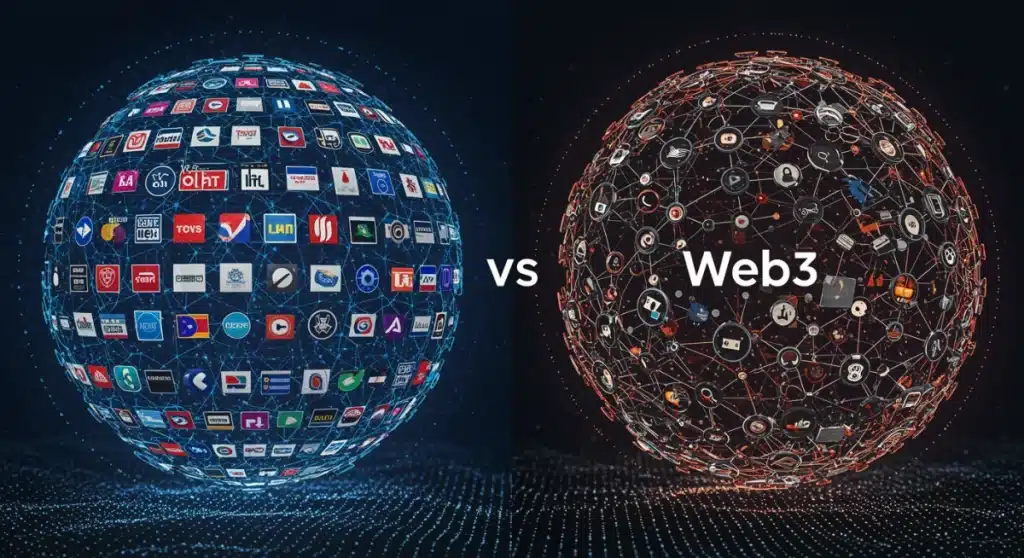
Web3 news platforms are poised to fundamentally reshape U.S. news trust metrics by 2025, offering decentralized transparency and direct audience participation as a stark contrast to the centralized editorial control of traditional gatekeepers.
The landscape of news consumption in the United States is undergoing a profound transformation, driven by technological advancements and shifting public expectations. At the heart of this evolution lies the burgeoning comparison between Web3 and traditional gatekeepers, particularly when analyzing 5 key differences in U.S. news trust metrics for 2025. This article delves into how blockchain-powered decentralized news models are challenging the established paradigms, offering new avenues for transparency, authenticity, and audience engagement that could redefine what it means to trust the news.
Transparency and Immutability: A Core Trust Driver
One of the most significant differentiators in the Web3 news trust metrics debate is the inherent transparency and immutability offered by blockchain technology. Traditional news organizations, while striving for accuracy, often face scrutiny regarding their editorial processes, funding sources, and potential biases, which can erode public trust.
Blockchain’s verifiable ledger
Web3 platforms, by contrast, leverage decentralized ledgers to record every piece of information, edit, and source attribution. This creates an immutable trail, making it virtually impossible to alter or remove content without detection. The transparency extends to funding mechanisms, where tokenized journalism models can allow for public verification of financial flows, mitigating concerns about hidden agendas.
- Every article’s origin and modifications are publicly verifiable.
- Funding sources for journalists and platforms can be transparent.
- Reduced potential for censorship or content manipulation.
This verifiable record stands in stark contrast to traditional media, where editorial decisions and source verification processes are largely opaque to the average consumer. The ability for anyone to inspect the provenance of information on a blockchain provides a new level of assurance, directly addressing a critical component of trust that has been eroding in traditional news for years.
Decentralized Ownership and Content Creation
The ownership and creation of content represent another pivotal difference impacting news trust. Traditional gatekeepers operate on a centralized model where a few corporations or editorial boards control the narrative and distribution channels. This concentration of power often leads to concerns about media monopolies and limited perspectives.
Community-driven journalism
Web3 news platforms empower individual creators and communities, shifting control away from centralized entities. Through tokenization and decentralized autonomous organizations (DAOs), journalists can own their content, and communities can collectively govern platforms, influencing editorial direction and content moderation. This democratic approach fosters a sense of shared ownership and responsibility.
- Journalists retain greater control over their intellectual property.
- Community voting mechanisms can shape content priorities.
- Reduced influence of corporate advertisers on editorial content.
This distribution of power aims to democratize news production, allowing for a wider array of voices and perspectives to emerge. The trust derived from this model comes from the belief that content is less likely to be swayed by a single corporate agenda or political leaning, as it is validated and curated by a diverse, distributed network rather than a select few.
Audience Engagement and Reward Mechanisms
Engagement with news in the traditional model is largely passive, with readers consuming content generated by distant institutions. While comment sections exist, they often lack meaningful incentives for constructive participation or accurate fact-checking. This one-way communication can contribute to a feeling of detachment and distrust.
Incentivizing quality and participation
Web3 news platforms are pioneering innovative ways to engage their audience through direct reward mechanisms. Readers can be incentivized with tokens for contributing to fact-checking, curating content, or providing valuable insights. This transforms passive consumption into active participation, creating a more dynamic and trustworthy news ecosystem.
By aligning incentives, Web3 seeks to foster a community where quality reporting and thoughtful engagement are directly rewarded. This contrasts sharply with traditional models, where the primary reward for engagement is often simply the consumption of information. The promise of direct financial or reputational rewards for contributing to the accuracy and value of news can significantly boost trust.
Censorship Resistance and Information Freedom
Traditional news media, despite constitutional protections, can still be susceptible to various forms of censorship, whether from government pressure, corporate interests, or self-censorship to maintain access or avoid controversy. This vulnerability raises questions about the complete and unfiltered dissemination of information, especially in politically sensitive contexts.
Decentralized content distribution
Web3 platforms, built on decentralized networks, offer a higher degree of censorship resistance. Content published on a blockchain is distributed across numerous nodes globally, making it extremely difficult for any single entity to take it down or block access. This architectural resilience is a cornerstone of the trust proposition for Web3 news, particularly in regions where information control is a concern.
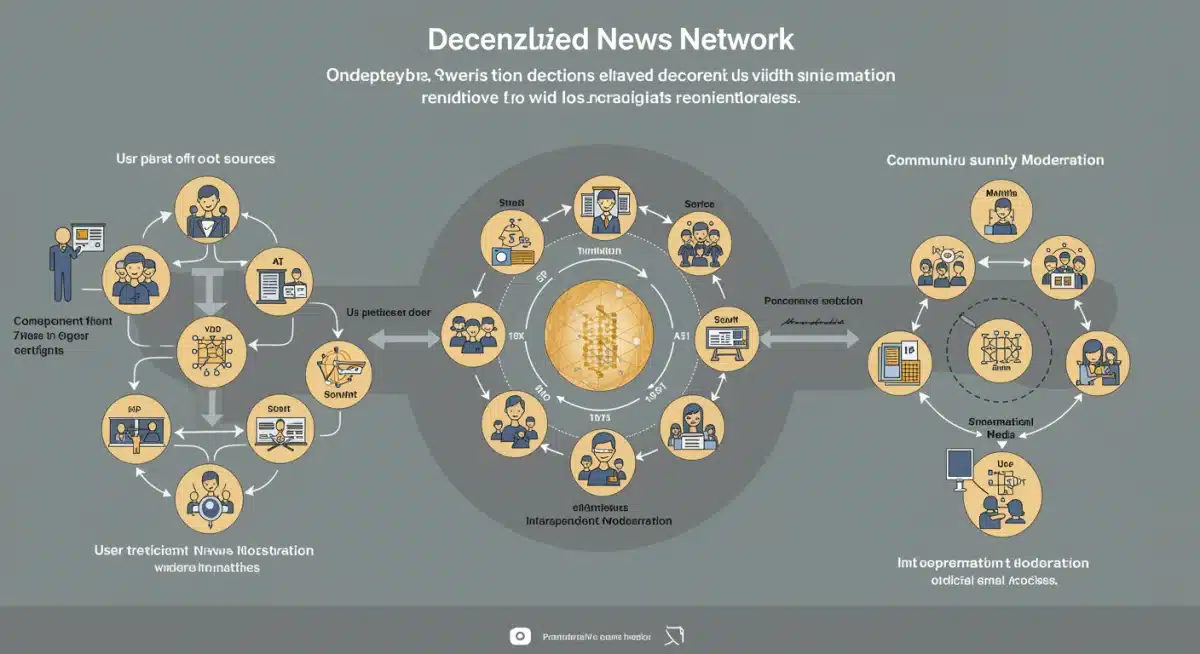
The ability to publish and access information without fear of centralized intervention is a powerful driver of trust, especially for audiences who feel their voices are not adequately represented or heard in mainstream media. This fundamental difference positions Web3 as a potential bulwark against information suppression.
Economic Models and Sustainability
The economic models underpinning traditional news have been under immense pressure for years. Reliance on advertising, subscriptions, and corporate ownership can create conflicts of interest, pushing news organizations to prioritize profit or specific agendas over journalistic integrity. This financial fragility directly impacts trust.
Tokenized economies and direct support
Web3 introduces novel economic models that aim to create more sustainable and independent news ecosystems. Tokenized journalism allows for direct micro-payments to creators, community-funded initiatives, and reputation-based rewards. This reduces reliance on traditional advertising and allows news organizations to be more accountable to their direct supporters rather than external gatekeepers.
- Direct compensation for quality content through tokens.
- Community-funded investigative journalism projects.
- Reduced influence of traditional advertisers on editorial decisions.
By diversifying revenue streams and aligning financial incentives with content quality and community value, Web3 seeks to build news organizations that are financially robust and less susceptible to external pressures. This shift in economic foundation has the potential to significantly enhance public trust by demonstrating a commitment to journalistic independence.
Addressing Misinformation and Disinformation
Both Web3 and traditional news grapple with the pervasive challenge of misinformation and disinformation. Traditional media employs editorial checks, fact-checking departments, and journalistic ethics to combat false narratives, yet these efforts are not always immune to criticism or successful in stemming the tide of misleading content.
Community-driven fact-checking and reputation systems
Web3 news platforms are developing innovative, decentralized approaches to combat misinformation. These include community-driven fact-checking mechanisms, where users can collectively verify or flag content, often incentivized by token rewards. Additionally, reputation systems built on blockchain can track the accuracy and reliability of individual journalists and sources over time, providing a transparent measure of trustworthiness.
This collective verification process harnesses the power of the crowd, potentially offering a more scalable and resilient defense against false information than centralized fact-checking alone. The transparency of these reputation systems allows users to make informed judgments about the credibility of sources, fostering a more discerning news consumption environment. While challenges remain in scaling and preventing coordinated attacks, the promise of a self-correcting, community-governed information ecosystem is a significant step towards rebuilding trust.
| Key Difference | Impact on Trust Metrics |
|---|---|
| Transparency & Immutability | Web3’s verifiable ledgers enhance trust by ensuring content provenance and preventing manipulation. |
| Decentralized Ownership | Shifts control from corporate gatekeepers to creators and communities, fostering diverse perspectives. |
| Audience Engagement | Web3 incentivizes active participation in fact-checking and curation, building stronger community trust. |
| Censorship Resistance | Decentralized networks make content highly resistant to removal or blocking by single entities. |
Frequently Asked Questions About Web3 News Trust
The primary advantage is enhanced transparency and immutability. Blockchain technology ensures that every piece of news content, along with its edits and sources, is recorded on an immutable ledger, making it verifiable and resistant to alteration, significantly boosting public trust.
Web3 counters editorial bias through decentralized ownership and community governance. Content creation shifts from centralized corporations to individual journalists and DAOs, allowing diverse voices and reducing the influence of single corporate or political agendas, fostering more balanced reporting.
Yes, Web3 news platforms are designed for censorship resistance. Content is distributed across a global network of nodes, making it incredibly difficult for any single government or entity to remove or block access to information, ensuring greater freedom of the press.
Audiences play an active and crucial role in Web3 news. They are often incentivized with tokens for fact-checking, curating content, and providing valuable feedback, transforming passive consumers into active participants who collectively enhance the trustworthiness and accuracy of news.
Web3’s tokenized economic models reduce reliance on traditional advertising and corporate funding. This allows news organizations to be more accountable to their direct supporters and less susceptible to external pressures, fostering greater journalistic independence and, consequently, higher public trust.
Conclusion
The comparison between Web3 and traditional gatekeepers in the realm of U.S. news trust metrics for 2025 reveals a clear paradigm shift. Web3’s inherent transparency, decentralized ownership, incentivized audience engagement, censorship resistance, and innovative economic models offer compelling alternatives to the challenges faced by traditional media. While both models strive for journalistic integrity, Web3’s architectural foundations are uniquely positioned to rebuild and sustain public trust in an increasingly fractured information environment, promising a future where news is more verifiable, equitable, and resilient.