Tokenized Content Models: 2026 Guide for Crypto Journalists

Tokenized content models, particularly through NFT subscriptions, represent a pivotal shift for crypto journalists, enabling a potential 25% revenue increase by 2026 by forging direct creator-audience relationships and unlocking novel monetization avenues.
As the digital landscape evolves, the concept of tokenized content models is rapidly gaining traction, particularly within specialized niches like crypto journalism. This guide explores how crypto journalists can leverage NFT subscriptions to potentially maximize their revenue by 25% by 2026, offering a fresh perspective on content monetization and audience engagement in the Web3 era.
understanding tokenized content models
Tokenized content models represent a paradigm shift in how digital content is created, distributed, and monetized. Instead of traditional advertising or paywall subscriptions, these models leverage blockchain technology to assign unique, verifiable ownership or access rights to digital content through tokens, most notably Non-Fungible Tokens (NFTs).
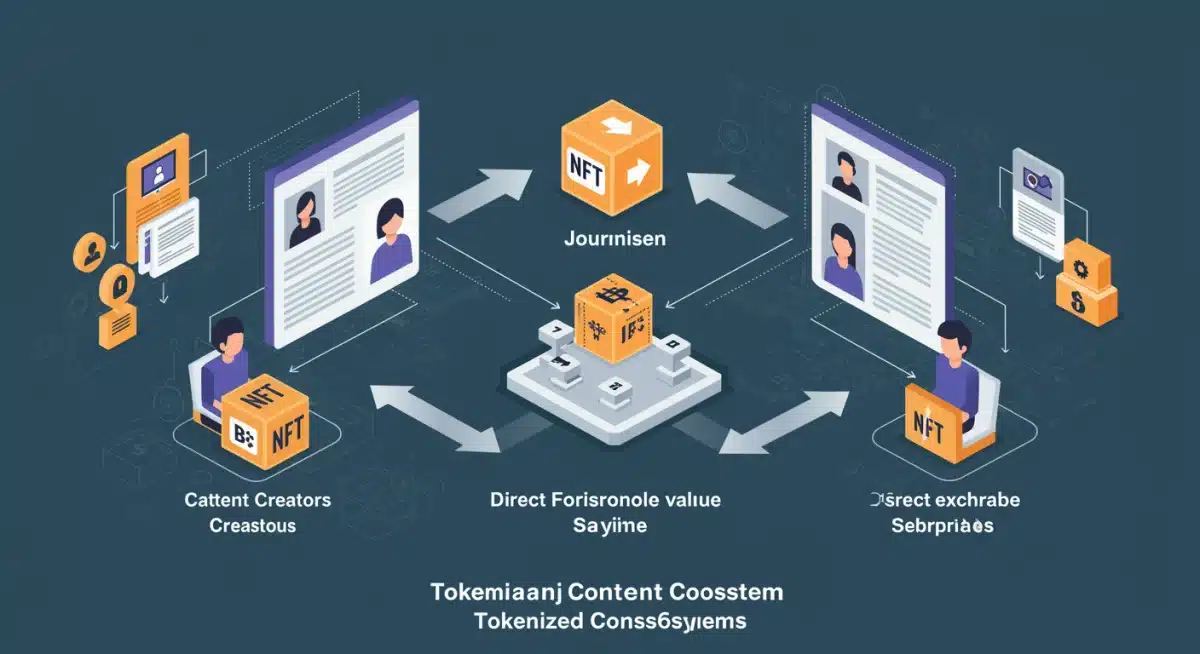
For crypto journalists, this means transforming articles, reports, analyses, or even exclusive access into digital assets. These assets can then be bought, sold, or traded on a blockchain, creating new revenue streams and fostering a more direct relationship between creators and their audience. The inherent transparency and immutability of blockchain ensure authenticity and verifiable ownership.
the core mechanics of tokenization
At its heart, tokenization involves packaging content into a digital token. This token, typically an NFT, carries metadata linking it to the specific piece of content. When a journalist issues an NFT for an exclusive article, for example, they are essentially selling a unique key to that content.
- Unique Ownership: NFTs provide irrefutable proof of ownership for digital assets.
- Scarcity and Value: Journalists can control the supply of their tokenized content, creating scarcity that drives value.
- Programmable Rights: NFTs can embed smart contracts that dictate usage rights, royalties, or even future access.
- Direct Monetization: Eliminates intermediaries, allowing journalists to retain a larger share of their earnings.
The beauty of this system lies in its flexibility. Journalists can decide whether an NFT grants perpetual access, limited-time access, or even exclusive membership to a content community. This opens up creative possibilities for content packaging and pricing that were previously unavailable in traditional models.
In conclusion, understanding tokenized content is the first step for crypto journalists looking to innovate their revenue strategies. It’s about moving beyond conventional methods and embracing a decentralized future where content creators have more control and their audience gains tangible value.
the rise of NFT subscriptions in crypto journalism
NFT subscriptions are emerging as a powerful evolution of the traditional subscription model, specifically tailored for the Web3 environment. For crypto journalists, this means offering exclusive content, early access, or community membership not through a recurring fiat payment, but through the ownership of a specific NFT.
Imagine a scenario where owning a particular NFT grants you a year’s access to a journalist’s premium research reports, or perhaps a lifetime pass to their private Discord channel for market insights. This model transforms a transactional relationship into one based on digital asset ownership, fostering greater loyalty and perceived value among subscribers.
how NFT subscriptions work
Unlike traditional subscriptions that expire, an NFT subscription grants access as long as the subscriber holds the NFT. This creates a secondary market where subscribers can sell their access if they no longer need it, or new readers can purchase access from existing holders. This dynamic adds a new layer of value and liquidity.
- Access as an Asset: Subscription becomes a transferable digital asset.
- Community Building: NFTs can serve as membership passes to exclusive communities.
- Royalty Opportunities: Journalists can earn royalties on secondary sales of their subscription NFTs.
- Enhanced Engagement: Holders feel a greater stake in the journalist’s work, leading to deeper engagement.
The implementation involves smart contracts that verify NFT ownership before granting access to content or community features. This automated process ensures that only legitimate holders can access the premium offerings, streamlining management for the journalist and providing seamless access for the subscriber.
The transition to NFT subscriptions offers a compelling alternative to traditional models. It not only diversifies revenue streams but also empowers the audience by giving them tangible ownership and control over their access rights, creating a more symbiotic relationship within the crypto journalism ecosystem.
maximizing revenue by 25% through NFT subscriptions
Achieving a 25% revenue increase by 2026 through NFT subscriptions is an ambitious yet attainable goal for crypto journalists who strategically embrace these new models. This growth isn’t just about higher prices; it’s about unlocking multiple new revenue avenues that traditional models simply cannot offer.
The primary driver of this revenue maximization comes from the intrinsic value and secondary market potential of NFTs. When a journalist’s content is tokenized, it gains an asset-like quality. Subscribers aren’t just paying for content; they’re investing in a digital collectible that might appreciate in value, or can be resold.
strategic revenue streams for journalists
To hit the 25% target, journalists need to consider a multi-faceted approach to monetization with NFTs. This involves careful planning of tokenomics and community engagement.
- Primary Sales: Direct sales of NFTs granting access to exclusive content or communities.
- Secondary Market Royalties: A percentage of every subsequent sale of the NFT on secondary markets. This passive income stream can be significant.
- Tiered Access NFTs: Offering different tiers of NFTs (e.g., bronze, silver, gold) with varying levels of access and perks.
- Token-Gated Events: Hosting exclusive webinars, AMAs, or workshops accessible only to specific NFT holders.
Furthermore, the increased engagement and loyalty fostered by NFT communities can lead to other opportunities, such as sponsorships from Web3 projects aligned with the journalist’s niche. The direct connection with a highly invested audience makes these sponsorship opportunities far more valuable.
In essence, reaching a 25% revenue increase hinges on creatively leveraging the unique properties of NFTs to build a sustainable, diversified income portfolio. It requires a shift in mindset from single-transaction sales to building a valuable digital ecosystem around journalistic output.
implementing NFT subscriptions: a practical roadmap
For crypto journalists looking to dive into NFT subscriptions, a clear roadmap is crucial. The implementation process involves several technical and strategic considerations, from platform selection to community management. It’s not just about minting an NFT; it’s about building an entire ecosystem around your content.
The first step involves choosing the right blockchain and NFT marketplace. Ethereum has been the traditional choice, but newer, more scalable and cost-effective alternatives like Polygon, Solana, or Avalanche are gaining traction. The marketplace choice will dictate ease of minting, listing, and secondary sales.
key steps for successful implementation
A well-executed plan ensures a smooth launch and sustained growth for your tokenized content model.
- Platform Selection: Research and choose a blockchain and NFT marketplace that aligns with your technical comfort and audience’s preferences.
- Content Strategy: Define what content will be tokenized (exclusive articles, research, newsletters, community access).
- Smart Contract Development (or Template Use): Either custom-code or utilize existing templates for your NFT smart contract, ensuring royalty clauses are embedded.
- Pricing and Tiers: Determine the initial price of your NFTs and consider offering different tiers with varying benefits.
- Community Building: Establish a dedicated space (Discord, Telegram) for your NFT holders to foster engagement.
- Marketing and Launch: Promote your NFT subscription offering through your existing channels and crypto communities.
Beyond the technical setup, continuous engagement with your NFT holders is paramount. This includes delivering on promised exclusive content, actively participating in community discussions, and even involving them in content direction decisions. This builds a strong, loyal base that will not only subscribe but also advocate for your work.
Implementing NFT subscriptions requires a blend of technical understanding and strategic community engagement. By following a structured approach, crypto journalists can successfully transition to this innovative monetization model and unlock significant growth.
challenges and considerations for crypto journalists
While the promise of tokenized content models is significant, crypto journalists must navigate several challenges to ensure sustainable success. The Web3 space is dynamic and complex, presenting unique obstacles that differ from traditional publishing.
One primary concern is the volatility of cryptocurrency markets. If NFT subscriptions are priced in volatile assets like ETH, the real-world value of a journalist’s earnings can fluctuate dramatically. This requires careful consideration of pricing strategies, perhaps pegging prices to stablecoins or offering a mix of payment options.
navigating the Web3 landscape
Addressing these challenges proactively will help build a robust and resilient tokenized content strategy.
- Market Volatility: Develop pricing strategies that account for crypto market fluctuations.
- Regulatory Uncertainty: Stay informed about evolving regulations concerning NFTs and digital assets in journalism.
- Technical Barriers: Simplify the onboarding process for subscribers who may be new to Web3 wallets and transactions.
- Security Risks: Educate yourself and your community on best practices for wallet security and avoiding scams.
- Content Quality: Maintain exceptionally high journalistic standards to justify premium NFT access and retain value.
Another crucial aspect is managing gas fees, which can impact both the journalist minting NFTs and the subscriber purchasing them. Opting for blockchains with lower transaction costs or utilizing layer-2 solutions can mitigate this issue. Furthermore, educating the audience about these processes is vital for a smooth user experience.
Ultimately, success in tokenized content models requires not just innovation but also resilience and adaptability. By anticipating and addressing these challenges, crypto journalists can build a more secure and profitable future for their work.
the future of crypto journalism with tokenized content
Looking ahead to 2026 and beyond, tokenized content models are poised to redefine the landscape of crypto journalism. This shift is not merely about new monetization methods; it’s about fundamentally altering the relationship between journalists, their content, and their audience, fostering a more transparent and equitable ecosystem.
The decentralization inherent in Web3 allows for a more direct connection, bypassing traditional media gatekeepers. This enables independent crypto journalists to build sovereign media empires, directly supported by their most dedicated readers, without censorship or algorithmic interference. The power dynamics are shifting, empowering creators like never before.
long-term impacts and opportunities
The long-term implications of tokenized content extend far beyond simple subscriptions, promising a richer, more interactive future for journalism.
- Decentralized Autonomous Organizations (DAOs): Journalists could form DAOs where NFT holders collectively govern editorial decisions or fund investigative reports.
- Enhanced Authenticity: Blockchain can verify the provenance of journalistic work, combating misinformation.
- Micro-Monetization: Smaller, granular pieces of content or data could be tokenized and exchanged.
- New Forms of Storytelling: Interactive NFTs or dynamic content that evolves with community input.
Moreover, the concept of content ownership could evolve. Imagine NFTs that represent fractional ownership of a long-form investigative piece, where holders share in the success or impact of the journalism. This collective ownership model could incentivize higher quality and deeper community investment.
The future of crypto journalism, powered by tokenized content, is one of innovation, community, and direct value exchange. It offers a compelling vision where quality journalism is not only valued but also owned and championed by its dedicated audience, paving the way for unprecedented growth and influence.
| Key Point | Brief Description |
|---|---|
| Tokenized Content Definition | Leveraging blockchain (NFTs) to assign unique ownership or access rights to digital journalistic content. |
| NFT Subscriptions | Granting content access through NFT ownership, allowing for a secondary market and royalties. |
| Revenue Maximization | Achieving up to 25% revenue increase via primary sales, secondary royalties, and tiered access models. |
| Implementation Strategy | Choosing platforms, defining content, setting pricing, and building community are essential steps. |
Frequently asked questions about tokenized content models
Tokenized content models in crypto journalism involve using blockchain technology, primarily NFTs, to create unique digital assets for articles, analyses, or exclusive access. These tokens grant verifiable ownership or access rights, allowing journalists to monetize their work directly and transparently, bypassing traditional intermediaries and fostering community.
NFT subscriptions can increase revenue through direct primary sales of access tokens, earning royalties on secondary market resales, and implementing tiered access models. This approach transforms content access into a valuable, transferable digital asset, encouraging deeper engagement and providing multiple passive income streams for the journalist.
The main benefits include verifiable ownership, creating scarcity for premium content, embedding programmable rights for royalties, and enabling direct monetization without intermediaries. NFTs also foster stronger community bonds by giving subscribers a tangible stake in the content, leading to enhanced loyalty and advocacy.
Challenges include cryptocurrency market volatility affecting earnings, regulatory uncertainties in the Web3 space, technical barriers for new users, and potential security risks. Journalists must also manage gas fees and maintain high content quality to justify premium NFT access and retain their dedicated audience in a competitive environment.
To start, journalists should select a suitable blockchain and NFT marketplace, define their tokenized content strategy, and consider smart contract development or templates. Key steps also involve establishing clear pricing tiers, actively building and engaging with their NFT holder community, and effectively marketing their unique offerings to attract subscribers.
conclusion
The adoption of tokenized content models, particularly through NFT subscriptions, offers crypto journalists a transformative pathway to significantly enhance their revenue and redefine their relationship with their audience by 2026. By embracing the principles of Web3 – decentralization, verifiable ownership, and direct monetization – journalists can cultivate highly engaged communities and unlock novel income streams, ultimately fostering a more resilient and rewarding future for independent journalism.