Tokenized Content Models: US Media’s 2025 Revenue Streams

Tokenized content models are poised to redefine US media revenue streams by 2025, leveraging blockchain technology to create new monetization avenues and foster deeper audience engagement through digital ownership.
The media landscape is in constant flux, driven by technological advancements and shifting consumer expectations. As we approach 2025, a significant paradigm shift is underway with the emergence of tokenized content models, promising to reshape how US media companies generate revenue and interact with their audiences. This innovative approach leverages blockchain technology to create new forms of digital ownership and monetization, moving beyond traditional subscription and advertising models to unlock unprecedented value for creators and consumers alike.
The rise of tokenization in media
Tokenization, at its core, involves converting rights to an asset into a digital token on a blockchain. In the context of media, this means transforming articles, videos, music, or even access to exclusive content into unique, verifiable digital assets. This fundamental shift introduces scarcity and provable ownership to digital information, something long elusive in the internet age.
For US media, this presents a compelling opportunity to address diminishing returns from conventional revenue streams. As ad blockers proliferate and subscription fatigue sets in, new models are desperately needed. Tokenization offers a path to direct monetization, allowing creators to capture more value from their work and build more robust, engaged communities.
Understanding the blockchain foundation
The underlying technology enabling tokenized content models is blockchain. This distributed ledger system provides transparency, immutability, and security for digital assets. Each token, whether fungible or non-fungible (NFT), is recorded on this ledger, ensuring its authenticity and tracking its ownership.
- Decentralization: Reduces reliance on intermediaries, empowering creators.
- Transparency: All transactions are publicly verifiable, fostering trust.
- Immutability: Once recorded, data cannot be altered, ensuring content integrity.
- Programmability: Smart contracts automate rules for token usage and distribution.
The adoption of blockchain in media is not merely a technological upgrade; it represents a philosophical shift towards a more equitable and transparent ecosystem where value can be distributed more fairly among participants. This foundational understanding is crucial for grasping the full potential of tokenized content models.
As media organizations look to the future, understanding the mechanisms of tokenization and the capabilities of blockchain will be paramount. These technologies are not just about cryptocurrencies; they are about redefining digital property rights and creating new economic models for creative industries.
NFTs for exclusive content and experiences
One of the most prominent tokenized content models emerging in US media is the use of Non-Fungible Tokens (NFTs) for exclusive content and experiences. NFTs represent unique digital assets, perfectly suited for monetizing rare or premium media offerings. This model allows media outlets to create digital collectibles, limited-edition articles, or unique access passes, transforming content into a valuable, tradable asset.
The appeal of NFTs lies in their ability to confer verifiable ownership of a digital item, something that was previously impossible in a world of infinitely reproducible digital files. For media, this opens up avenues for creators to directly monetize their most valuable or exclusive work, connecting with super-fans who value ownership and rarity.
Examples of NFT adoption in media
Several forward-thinking US media companies are already experimenting with NFTs. These early adopters are setting precedents for how digital content can be packaged and sold as unique assets. From selling iconic front pages as digital art to offering exclusive membership tokens, the possibilities are vast.
Consider a major news publication minting an NFT of a significant historical article. This isn’t just about selling a digital image; it’s about offering a piece of history, authenticated and owned by the buyer. The scarcity and provenance provided by the NFT add a layer of value that traditional digital content lacks.
- Digital Collectibles: Selling limited edition articles, photos, or videos as NFTs.
- Exclusive Access: NFTs granting access to premium content, events, or communities.
- Historical Archives: Tokenizing significant journalistic pieces for ownership.
- Creator Royalties: Programmed royalties ensure creators earn from future resales.
The revenue potential from NFTs extends beyond the initial sale. Smart contracts can be configured to pay creators a royalty percentage every time their NFT is resold on a secondary market. This creates a continuous revenue stream, aligning incentives between creators and collectors while fostering a vibrant ecosystem for digital media assets.
The integration of NFTs into media strategies represents a significant step towards a more creator-centric economy. It empowers media organizations to leverage their intellectual property in novel ways, building stronger direct relationships with their audience and pioneering new forms of digital engagement.
Fractional ownership and shared content revenue
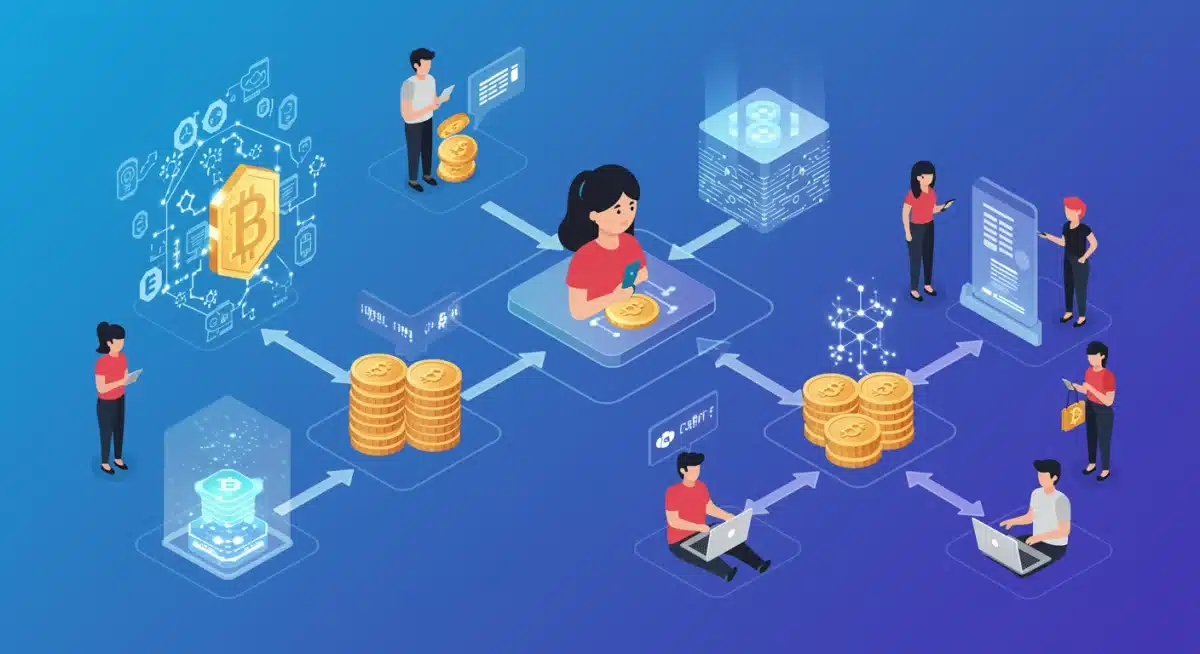
Another compelling tokenized content model gaining traction is fractional ownership, particularly within content libraries or intellectual property. This model allows a larger asset, such as a media franchise, a documentary film, or a music catalog, to be divided into multiple smaller, tradable tokens. Each token represents a fractional share of ownership, entitling holders to a proportional share of future revenues or royalties generated by the underlying asset.
This approach democratizes investment in media projects, enabling individual consumers and smaller investors to participate in the success of content they believe in. For media companies, it provides a new avenue for fundraising and audience engagement, transforming passive consumers into active stakeholders with a vested interest in the content’s performance.
How fractional ownership works for media
Imagine a new independent film project seeking funding. Instead of relying solely on traditional investors, the creators could tokenize portions of the film’s future streaming royalties. Fans could purchase these tokens, becoming partial owners and sharing in the film’s success. This not only funds the project but also creates a highly engaged community of supporters.
This model is particularly attractive for long-tail content or niche media that might struggle to attract large-scale traditional investment. It fosters a sense of community and shared success, turning content consumption into a collaborative economic endeavor.
- Crowdfunding Content: Allows fans to invest in and own a piece of media projects.
- Shared Royalties: Token holders receive a portion of future revenue generated by the content.
- Enhanced Engagement: Stakeholders become advocates, promoting the content’s success.
- Liquidity for Assets: Fractional tokens can be traded on secondary markets, offering liquidity.
The transparency and immutability of blockchain ensure that revenue distribution is fair and auditable. Smart contracts automatically execute payouts to token holders based on predefined rules, removing the need for complex and often opaque royalty payment systems. This level of transparency builds trust between creators, investors, and consumers.
Fractional ownership is poised to be a game-changer for media financing and audience participation. It moves beyond simple patronage, offering a genuine stake in the creative process and its outcomes, thereby fostering a deeper connection between content and its community.

Challenges and opportunities for US media
While the potential of tokenized content models is vast, US media companies face several challenges in their adoption. Navigating regulatory landscapes, educating audiences, and integrating complex blockchain infrastructure are significant hurdles. However, overcoming these challenges unlocks substantial opportunities for innovation and growth.
One primary challenge is regulatory clarity. The legal status of various tokens, particularly those representing fractional ownership or revenue shares, is still evolving. Media companies must carefully consider compliance with securities laws and other financial regulations, which can vary significantly.
Navigating the regulatory landscape
The Securities and Exchange Commission (SEC) in the US has been actively scrutinizing digital assets, often classifying them as securities if they meet certain criteria. This means that offering certain tokenized content models might require compliance with strict financial regulations, including registration and disclosure requirements.
Media organizations will need to work closely with legal experts specializing in blockchain and securities law to ensure their tokenization strategies are compliant. This complexity can deter smaller players, but it also creates a competitive advantage for those who successfully navigate it.
- Regulatory Uncertainty: Evolving legal frameworks for digital assets.
- Consumer Education: Explaining complex blockchain concepts to a broader audience.
- Technical Integration: Implementing blockchain infrastructure and smart contracts.
- Market Volatility: The inherent price fluctuations of digital assets.
Despite these challenges, the opportunities are compelling. Tokenized content models offer a direct, disintermediated path to monetization, reducing reliance on gatekeepers and enabling creators to retain a larger share of their revenue. They also foster incredibly loyal and engaged communities, as audiences become stakeholders in the content they consume.
The ability to create new forms of digital scarcity and ownership opens up entirely new markets and business models that were previously unimaginable. For media, this means moving beyond the limitations of advertising and subscriptions to a more diverse and resilient revenue portfolio.
Technological infrastructure and integration
Implementing tokenized content models requires robust technological infrastructure and seamless integration with existing media platforms. This isn’t merely about adopting a new payment system; it involves re-architecting how content is managed, distributed, and monetized. Media companies must invest in blockchain development, smart contract auditing, and secure wallet solutions to facilitate these new revenue streams.
The choice of blockchain platform is critical. Different blockchains offer varying levels of scalability, security, and transaction costs. Media organizations must select a platform that aligns with their specific needs, considering factors like transaction volume, environmental impact, and developer ecosystem.
Key technological considerations
Integrating blockchain technology into existing content management systems (CMS) and distribution networks presents a significant technical challenge. This often requires custom development and careful API integration to ensure a smooth user experience. Security is also paramount, as tokenized assets are highly valuable and susceptible to cyber threats.
Furthermore, user experience (UX) design for tokenized platforms is crucial. Audiences accustomed to simple ‘click and consume’ models may find the complexities of crypto wallets and blockchain transactions daunting. Simplifying these interactions will be key to broader adoption.
- Blockchain Platform Selection: Choosing suitable networks (e.g., Ethereum, Polygon, Solana).
- Smart Contract Development: Creating secure and efficient contracts for token logic.
- Wallet Integration: Providing user-friendly and secure digital asset management.
- Scalability Solutions: Ensuring the infrastructure can handle high transaction volumes.
The development of user-friendly interfaces and educational resources will be essential for lowering the barrier to entry for mainstream audiences. Media companies that successfully abstract away the technical complexities behind an intuitive front-end will be best positioned for success.
Ultimately, the technological infrastructure supporting tokenized content models must be as reliable and accessible as traditional digital platforms. Investment in this area will determine the long-term viability and widespread adoption of these innovative revenue streams within the US media landscape.
The future landscape: US media in 2025
By 2025, tokenized content models are expected to be more than just experimental ventures for US media; they will likely represent established and significant revenue streams. The early adopters will have refined their strategies, demonstrating successful case studies that encourage broader industry adoption. We will see a diversification of monetization approaches, moving beyond the binary of ads or subscriptions.
The media landscape will be characterized by a hybrid model, where traditional revenue streams coexist with token-based economies. This will create a more resilient and adaptable industry, better equipped to withstand economic fluctuations and evolving consumer preferences.
Evolving audience engagement and community building
Beyond direct monetization, tokenized content fosters unprecedented levels of audience engagement and community building. When audiences own a piece of the content or have exclusive access through tokens, their relationship with the media brand transforms. They become more invested, loyal, and often, active participants in content creation or curation.
This shift from passive consumption to active participation can lead to stronger brand loyalty, increased word-of-mouth marketing, and a more vibrant ecosystem around media properties. Communities built around tokenized content can become powerful forces for growth and innovation.
- Hybrid Revenue Models: Combining traditional ads/subscriptions with token sales.
- Enhanced Creator Economy: Empowering individual journalists and artists.
- Decentralized Content Curation: Community-driven content selection and validation.
- New Ownership Paradigms: Consumers become true owners of digital media.
The role of independent journalists and content creators is also likely to be amplified. Tokenization allows them to monetize their work directly, without necessarily needing a large institutional publisher. This could lead to a renaissance of independent journalism and niche content, funded and supported directly by its audience.
The year 2025 will see US media embracing a future where content is not just consumed but owned, invested in, and actively shaped by its audience. Tokenized content models will be a cornerstone of this evolution, offering both financial stability and deeper, more meaningful connections with communities.
Building trust and transparency with tokens
A critical advantage of tokenized content models, especially in an era of misinformation and declining trust in media, is their ability to foster transparency and build trust. By leveraging blockchain’s immutable ledger, media organizations can provide verifiable proof of content origin, editorial changes, and ownership. This inherent transparency can significantly enhance a media brand’s credibility and authority.
In a world saturated with digital content, establishing authenticity is paramount. Tokenization offers a technological solution to this challenge, allowing both creators and consumers to verify the provenance and integrity of digital media assets.
Verifying content authenticity and provenance
Consider a news article that has been tokenized. The unique token associated with it could contain metadata detailing its author, publication date, and any subsequent edits, all immutably recorded on the blockchain. This provides an indisputable record of the content’s journey, making it far more difficult to falsify or manipulate.
This capability is particularly valuable for investigative journalism or historical archives, where the authenticity of information is of utmost importance. It empowers consumers to make informed judgments about the content they consume, reinforcing trust in credible media sources.
- Immutable Content Records: Blockchain ensures content history cannot be altered.
- Creator Attribution: Clear, verifiable ownership and authorship for all digital assets.
- Transparent Monetization: Clear revenue distribution through smart contracts.
- Anti-Piracy Measures: Digital ownership can deter unauthorized content use.
Furthermore, tokenized content can facilitate transparent monetization models. Smart contracts can automatically distribute royalties to creators, contributors, and fractional owners, eliminating opaque accounting practices. This level of financial transparency fosters trust among all stakeholders in the media ecosystem.
By embracing tokenized content models, US media can actively combat the challenges of misinformation and rebuild public trust. The inherent transparency and verifiable nature of blockchain technology offer a powerful tool for establishing credibility and ensuring the integrity of digital information in the years to come.
| Description | |
|---|---|
| NFTs for Content | Monetizing unique digital media as collectibles or access passes, enabling direct creator income and royalties. |
| Fractional Ownership | Dividing larger media assets into tradable tokens, allowing shared revenue from content and democratized investment. |
| Regulatory Challenges | Navigating evolving legal frameworks for digital assets, particularly concerning securities laws in the US. |
| Enhanced Trust | Blockchain’s immutability and transparency build credibility, verifying content origin and ensuring fair monetization. |
Frequently Asked Questions About Tokenized Content Models
Tokenized content models use blockchain technology to convert media assets or access rights into digital tokens. These tokens can be unique (NFTs) or fractional, allowing for new ways to monetize content, establish ownership, and engage audiences beyond traditional subscriptions or advertising.
NFTs generate revenue by enabling media outlets to sell exclusive digital content, such as limited-edition articles, photos, or videos, as unique, verifiable assets. They also allow for programmed royalties, ensuring creators earn a percentage from future resales on secondary markets, creating continuous income.
Fractional ownership in media allows a larger asset, like a film or content library, to be divided into multiple tokens. Each token represents a share of ownership, entitling holders to a proportional share of future revenues. This democratizes investment and fosters deeper audience engagement.
Key challenges include navigating the evolving regulatory landscape, especially concerning securities laws for fractional tokens. Other hurdles involve educating audiences about blockchain concepts, integrating complex technical infrastructure, and managing the inherent volatility of digital asset markets.
Tokenized content builds trust by leveraging blockchain’s immutable ledger to provide verifiable proof of content origin, authorship, and editorial history. This transparency helps combat misinformation and establishes authenticity, enhancing a media brand’s credibility and fostering confidence among its audience.
Conclusion
The journey towards 2025 for US media is undeniably shaped by the transformative potential of tokenized content models. From the unique monetization avenues offered by NFTs to the democratized investment and shared revenue of fractional ownership, these blockchain-powered approaches are redefining the economic and relational dynamics between creators and consumers. While challenges in regulation and technological integration persist, the opportunities for enhanced trust, direct monetization, and unparalleled audience engagement are too significant to ignore. Media organizations that strategically embrace these emerging revenue streams will not only secure their financial future but also build more resilient, transparent, and community-driven ecosystems, truly innovating in the digital age.