DAOs for News: 2026 Outlook for US Media Governance
Anúncios
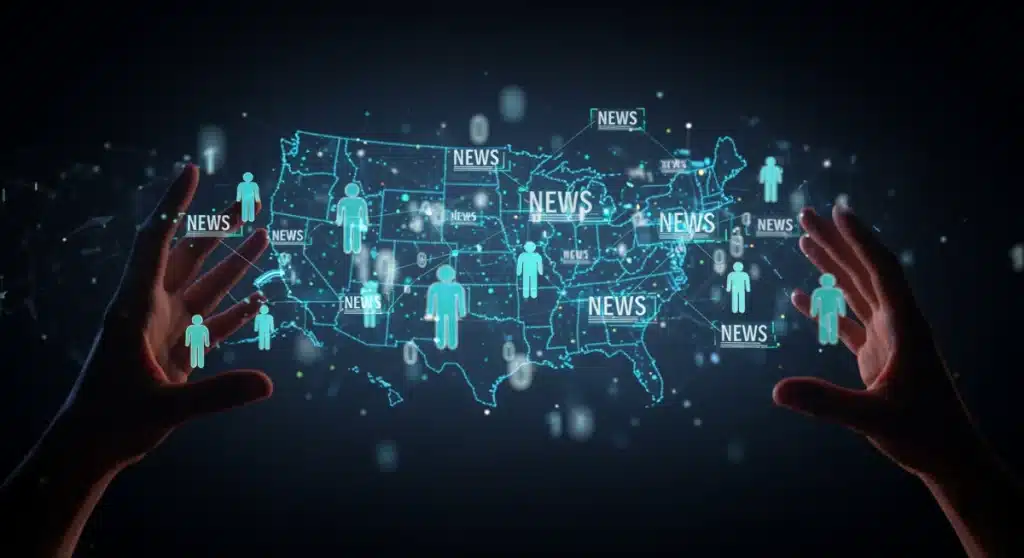
Decentralized Autonomous Organizations (DAOs) for news governance in the US media landscape by 2026 are poised to introduce transparent, community-driven models that could revolutionize content creation, editorial decisions, and audience engagement.
Anúncios
The traditional media landscape is grappling with challenges of trust, transparency, and economic viability. Amidst this backdrop, the emergence of Decentralized Autonomous Organizations (DAOs) for News: A 2026 Outlook for US Media Governance presents a compelling vision for the future. These blockchain-powered entities promise to democratize media ownership and editorial control, putting power back into the hands of the community. But what does this truly mean for US media by 2026, and how might DAOs reshape the way news is produced, consumed, and governed?
Understanding DAOs in the News Context
To grasp the future impact of DAOs on US media, it’s crucial to first understand what DAOs are and how their core principles apply to news. At its heart, a DAO is an organization represented by rules encoded as a transparent computer program, controlled by its members, and not influenced by a central authority. In the news context, this translates to a community-owned and operated media entity where editorial decisions, funding allocations, and even reporter hiring could be determined by token holders.
The transition from traditional media structures to decentralized ones involves a fundamental shift in power dynamics. Instead of a board of directors or a single owner, a DAO’s community collaboratively governs the platform. This distributed control aims to mitigate biases, reduce censorship risks, and foster a more equitable and trustworthy news ecosystem. By 2026, we anticipate several pioneering DAO news projects in the US demonstrating these principles in action, laying the groundwork for broader adoption.
Core Principles of DAO Governance
DAO governance in news is built upon several foundational principles that distinguish it from conventional media models. These principles are designed to enhance transparency, fairness, and community participation.
- Token-Based Voting: Members hold governance tokens that grant them voting rights on proposals, proportional to their holdings.
- Transparency: All transactions and governance decisions are recorded on a blockchain, making them publicly verifiable and immutable.
- Community Ownership: The platform and its assets are owned collectively by its token holders, not a single entity.
- Decentralized Decision-Making: Editorial policies, funding for investigations, and platform development are determined through collective voting.
These principles aim to create a media environment where the audience and contributors have a direct stake in the organization’s direction, fostering a sense of shared responsibility and trust. The success of these initial ventures will be critical in shaping the public perception and regulatory landscape for DAOs in US journalism.
In conclusion, the application of DAO structures to news organizations represents a paradigm shift. By embracing transparency and community-driven governance, DAOs offer a potent antidote to the centralization and trust deficits plaguing conventional media. The coming years will reveal the extent to which these foundational principles can be successfully integrated into the complex world of news production and dissemination.
Challenges and Opportunities for US Media DAOs
While the promise of DAOs in news governance is significant, their implementation in the complex US media landscape comes with a unique set of challenges and opportunities. By 2026, many of these will be actively addressed, defining the trajectory of decentralized journalism.
One of the primary challenges is regulatory uncertainty. The legal frameworks surrounding DAOs are still evolving, and their classification (e.g., as corporations, partnerships, or something entirely new) has significant implications for liability, taxation, and intellectual property. Furthermore, ensuring broad participation in governance and preventing whale dominance (where a few large token holders control decisions) remains a critical hurdle for maintaining true decentralization.
Navigating Regulatory Hurdles
The US regulatory environment is notoriously complex, and DAOs present novel questions for existing laws. Securities laws, consumer protection, and even labor laws could apply differently to decentralized entities. Clarity from regulatory bodies like the SEC and FTC will be crucial for the widespread adoption and scaling of news DAOs.
- Legal Classification: Defining the legal status of DAOs to establish clear responsibilities and protections.
- Compliance Costs: High legal and compliance costs could deter smaller, nascent news DAOs.
- Jurisdictional Issues: The global nature of blockchain technology clashes with geographically defined legal systems.
Despite these challenges, the opportunities are immense. DAOs can foster novel funding models, such as token sales and community grants, bypassing traditional advertising revenue dependencies. They can also incentivize high-quality journalism through direct rewards for contributors and robust content verification mechanisms. The ability to build trust through transparent operations and community oversight offers a powerful alternative to the current crisis of confidence in media.
Ultimately, the success of US media DAOs by 2026 will hinge on their ability to innovate around these challenges while capitalizing on their inherent strengths. This includes developing robust governance frameworks, engaging diverse communities, and actively collaborating with regulators to forge a path forward.
Technological Infrastructure and Adoption
The viability of DAOs for news governance in the US by 2026 is deeply intertwined with the underlying technological infrastructure and the rate of mainstream adoption. Blockchain technology, while foundational, still faces scalability, user experience, and interoperability issues that need to be addressed for widespread impact.
Current blockchain networks, particularly Ethereum, can be expensive and slow for frequent micro-transactions or high-volume voting. Layer-2 solutions and alternative blockchains (e.g., Polygon, Solana, Avalanche) are emerging to tackle these issues, offering faster and cheaper transactions. For news DAOs to thrive, the technical barriers for participation must be significantly lowered, making it easy for journalists, editors, and readers to engage without deep technical knowledge.
User Experience and Accessibility
Beyond raw technical performance, the user experience (UX) of DAO platforms is paramount. Complex interfaces, confusing wallet management, and difficult-to-understand governance proposals can alienate potential participants. Simplification and intuitive design will be key drivers of adoption.
- Intuitive Interfaces: Designing platforms that mimic familiar web experiences, reducing the learning curve.
- Seamless Wallet Integration: Making cryptocurrency wallets easy to set up and use for voting and token management.
- Educational Resources: Providing clear guides and tutorials for new users on how to participate in DAO governance.
Moreover, the integration of AI tools within DAO news ecosystems offers another layer of technological advancement. AI could assist in content moderation, fact-checking, and even personalized news delivery, all while operating under the transparent governance rules defined by the DAO members. This blend of blockchain and AI could create highly efficient and trustworthy news operations.
By 2026, significant strides in blockchain scalability and UX design will be evident, paving the way for more accessible and efficient news DAOs. The ability of these platforms to seamlessly integrate with existing digital habits will largely determine their success in capturing a significant portion of the US media market.
Economic Models and Sustainability
A crucial aspect of the 2026 outlook for Decentralized Autonomous Organizations (DAOs) for News: A 2026 Outlook for US Media Governance is their economic models and long-term sustainability. Traditional media struggles with advertising revenue declines and subscription fatigue. DAOs offer innovative financial structures that could provide more stable and community-aligned funding.
Tokenomics, the economic structure governing the use and distribution of tokens, will be central to these models. News DAOs can generate revenue through various mechanisms: initial token sales, subscription-like models where tokens grant access to premium content or voting rights, and even direct patronage through NFT sales of journalistic work. The key is to align financial incentives with the production of high-quality, trustworthy news.
Innovative Funding Mechanisms
Unlike traditional publications relying heavily on advertisers or a few wealthy owners, DAOs can diversify their funding sources, making them more resilient to market fluctuations and external pressures.
- Governance Token Sales: Initial offerings to fund development and distribute voting power.
- Content NFTs: Selling unique journalistic pieces or archival content as non-fungible tokens.
- Community Grants: Allocating a portion of the DAO’s treasury to fund specific investigative projects or reporting initiatives.
- Direct Reader Contributions: Micro-payments or donations directly to journalists or projects deemed valuable by the community.
Furthermore, the decentralized nature of DAOs can significantly reduce operational overheads associated with traditional media organizations, such as large corporate offices and extensive management hierarchies. This lean operational structure, combined with diversified revenue streams, positions news DAOs for greater financial independence and sustainability. The incentive alignment between token holders and content quality also drives a healthier ecosystem where good journalism is directly rewarded.
The economic models of news DAOs by 2026 will likely be a dynamic blend of these innovative approaches, constantly evolving as the market matures and community preferences shift. Their ability to demonstrate viable, sustainable financial pathways will be critical for their growth and influence within the broader US media landscape.
Impact on Journalism Ethics and Trust
The emergence of Decentralized Autonomous Organizations (DAOs) for News: A 2026 Outlook for US Media Governance holds profound implications for journalism ethics and public trust. In an era marked by misinformation and declining confidence in traditional news sources, DAOs offer a promise of enhanced transparency and accountability that could rebuild faith in media.
By encoding editorial policies and ethical guidelines directly into smart contracts or through transparent governance proposals, DAOs can create a more verifiable and immutable commitment to journalistic standards. Decisions regarding corrections, retractions, or even the prioritization of certain stories can be made through community consensus, reducing the perception of editorial bias or external influence. This direct, auditable decision-making process stands in stark contrast to the often opaque operations of conventional newsrooms.
Enhancing Transparency and Accountability
The inherent transparency of blockchain technology, central to DAOs, allows for an unprecedented level of scrutiny into media operations. Every governance vote, funding allocation, and even the origin of content can theoretically be traced and verified by anyone.
- Immutable Records: All editorial decisions and funding flows are permanently recorded on the blockchain.
- Community Oversight: Token holders can actively monitor and challenge perceived ethical breaches.
- Reduced Bias: Decentralized decision-making aims to dilute the influence of individual biases or corporate agendas.
However, challenges remain. The potential for “mob rule” or coordinated attacks by malicious actors within a DAO needs robust governance mechanisms to prevent. Establishing clear, universally accepted ethical frameworks that can be effectively implemented through smart contracts or community voting will be an ongoing task. Despite these hurdles, the potential for DAOs to create a more trustworthy and ethically driven news ecosystem is immense, offering a powerful model for restoring public confidence by 2026.
In essence, DAOs bring a new layer of verifiable integrity to journalism. By decentralizing control and embedding transparency, they provide a structural answer to some of the most pressing ethical dilemmas facing contemporary media. The coming years will be crucial in demonstrating how effectively these principles can translate into real-world trust and journalistic excellence.
The Role of Community and Participation
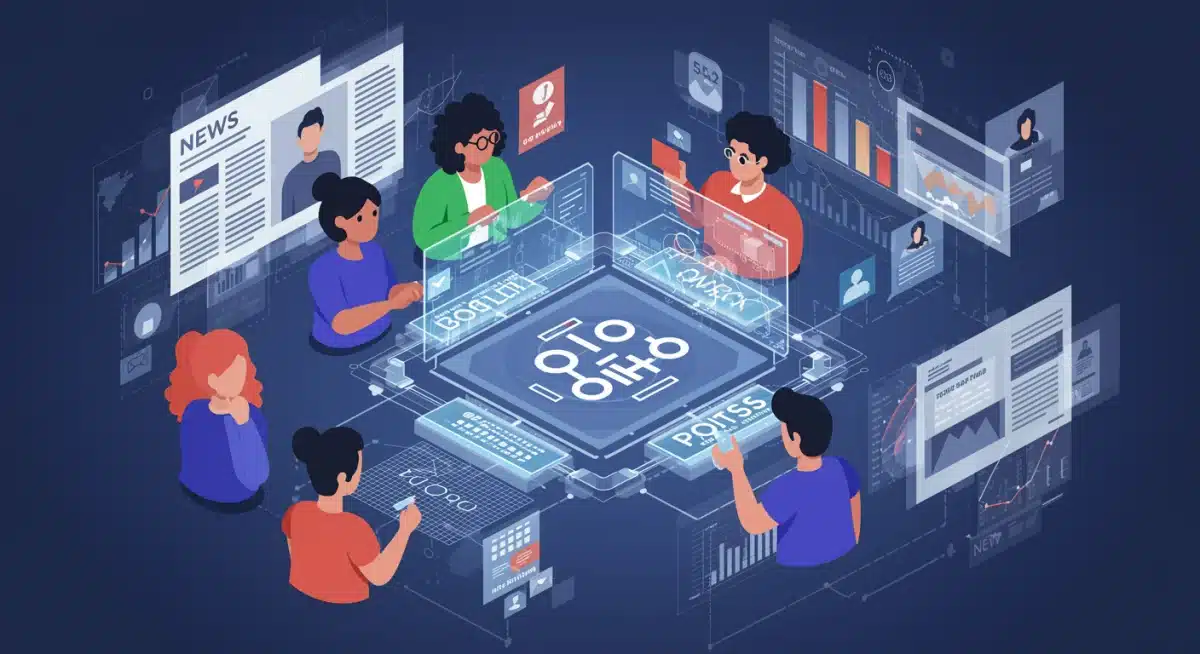
The success and evolution of Decentralized Autonomous Organizations (DAOs) for News: A 2026 Outlook for US Media Governance are fundamentally dependent on the active role of community and participation. Unlike traditional media, where audiences are primarily consumers, DAOs empower individuals to become active stakeholders, contributors, and decision-makers.
This shift from passive consumption to active participation is a cornerstone of the decentralized news model. Community members can vote on story ideas, fact-check content, moderate discussions, and even contribute directly to reporting. This collective intelligence and distributed effort can lead to more diverse perspectives, higher quality content, and a stronger sense of ownership among the audience. By 2026, successful news DAOs will have cultivated vibrant, engaged communities that are integral to their operations.
Fostering Active Engagement
Building and maintaining an engaged community requires careful design of incentives and governance structures. It’s not enough to simply offer voting rights; the process must be accessible, meaningful, and rewarding for participants.
- Incentive Mechanisms: Rewarding contributors with tokens for valuable participation, such as fact-checking or content curation.
- Clear Governance Pathways: Making it easy for members to submit proposals and understand voting procedures.
- Community Moderation: Empowering token holders to collectively manage platform conduct and content standards.
- Diverse Representation: Actively working to include a wide range of voices and perspectives in governance.
The strength of a news DAO lies in its collective intelligence and the diversity of its members. Encouraging active and informed participation is paramount to avoiding groupthink and ensuring that editorial decisions reflect a broad spectrum of public interest. This community-driven approach also creates a strong defense against external influence, as decisions are distributed across a wide network rather than concentrated in a single point of control.
Ultimately, the vitality of news DAOs by 2026 will be a direct reflection of their ability to cultivate and sustain robust community engagement. These organizations will demonstrate that a collective, participatory model can not only produce high-quality journalism but also build a more resilient and trusted media ecosystem.
The Future Landscape: 2026 Projections
Looking ahead to 2026, the landscape for Decentralized Autonomous Organizations (DAOs) for News: A 2026 Outlook for US Media Governance is poised for significant evolution. While still nascent, the foundational elements are being laid for DAOs to become a recognized, albeit specialized, segment within the broader US media ecosystem.
We anticipate a handful of prominent news DAOs emerging, particularly in niche areas of investigative journalism, hyper-local news, or specialized reporting where community passion and expertise can be leveraged most effectively. These pioneers will serve as case studies, demonstrating both the potential and the pitfalls of decentralized media governance. Their success stories will likely inspire further experimentation and investment in the sector, attracting both talent and capital.
Key Trends by 2026
Several observable trends will shape the trajectory of news DAOs over the next few years, influencing their growth and integration into mainstream consciousness.
- Increased Regulatory Clarity: Governments will likely provide more defined legal frameworks, reducing uncertainty for DAO operators.
- Improved Usability: Technical barriers to entry will significantly decrease, making DAO participation more accessible to non-technical users.
- Hybrid Models: We may see traditional news organizations experimenting with DAO-like elements for specific projects or departments.
- Specialized Content: DAOs will thrive in areas requiring deep community expertise or high levels of trust, such as science, technology, or local politics.
Furthermore, the integration of Web3 technologies beyond just blockchain, such as decentralized identity and storage solutions, will enhance the capabilities and resilience of news DAOs. This will allow for more secure content archiving, verifiable authorship, and privacy-preserving reader interactions. The competitive pressure from these innovative models may also push traditional media to adopt more transparent and community-centric practices.
By 2026, while DAOs may not have fully replaced traditional media, they will undoubtedly have established a significant footprint, offering a compelling alternative model for news governance that prioritizes transparency, community input, and financial independence. Their impact will be felt not just in their direct operations, but also in the broader conversation about the future of media trust and sustainability.
| Key Aspect | 2026 Outlook |
|---|---|
| Governance Model | Community-driven, transparent, token-based voting for editorial and funding decisions. |
| Economic Sustainability | Diversified funding via token sales, NFTs, and direct community contributions, reducing reliance on traditional ads. |
| Trust and Ethics | Enhanced transparency and immutable records combat misinformation, fostering greater public trust in news. |
| Technological Readiness | Improved blockchain scalability and user-friendly interfaces will drive broader adoption and participation. |
Frequently Asked Questions About News DAOs
A DAO in journalism is a media entity governed by rules encoded on a blockchain, with decisions made by its community of token holders. It aims for transparency, community ownership, and decentralized editorial control, offering an alternative to traditional, centrally managed news organizations.
DAOs enhance trust through blockchain’s inherent transparency, making all governance decisions and financial transactions publicly verifiable. This reduces the perception of bias, allows for community oversight, and creates immutable records of editorial choices, fostering greater accountability.
Key challenges include navigating evolving regulatory frameworks, ensuring widespread and equitable community participation to prevent centralization of power, and overcoming technical hurdles like blockchain scalability and user experience complexities for mainstream adoption.
News DAOs will utilize diverse funding models, including initial token sales, NFT sales of journalistic work, community grants for specific projects, and direct reader contributions. These mechanisms reduce reliance on traditional advertising and promote financial independence aligned with community values.
DAOs offer journalists new avenues for funding, direct compensation, and editorial freedom, potentially empowering them to pursue stories aligned with community interests. Content creators may also gain greater ownership over their work and participate directly in the governance of the platforms they contribute to.
Conclusion
The 2026 outlook for Decentralized Autonomous Organizations (DAOs) for News: A 2026 Outlook for US Media Governance paints a picture of a media landscape in flux, where innovation meets the urgent need for trust and transparency. While significant challenges remain in regulation, technology, and widespread adoption, the promise of community-governed, blockchain-powered news organizations is undeniable. DAOs offer a path toward more equitable economic models, enhanced journalistic ethics, and a renewed sense of public trust in media. As these decentralized entities mature, they are poised to not only disrupt traditional news structures but also inspire a fundamental rethinking of how information is produced, disseminated, and consumed in the United States and beyond.