Metaverse News Consumption: 2026 Forecast for US Audiences

The Metaverse and News Consumption: A 2026 Forecast on How Immersive Experiences Will Transform US Audiences’ Information Access
The digital landscape is in a perpetual state of evolution, constantly reshaping how we interact with information, entertainment, and each other. Among the most revolutionary shifts on the horizon is the advent and mainstream adoption of the metaverse. While still in its nascent stages, the metaverse promises to deliver an unprecedented level of immersion and interactivity, fundamentally altering various aspects of daily life. One area poised for significant disruption is news consumption. By 2026, the way US audiences access, engage with, and understand news will have undergone a profound transformation, driven by the capabilities of the metaverse. This article delves into a comprehensive forecast of how immersive experiences will redefine metaverse news consumption for American audiences, exploring the technological advancements, journalistic innovations, and societal impacts that lie ahead.
The concept of the metaverse, often described as a persistent, shared, 3D virtual space, extends beyond simple virtual reality (VR) or augmented reality (AR). It envisions a seamless integration of these technologies into a unified digital realm where users can work, play, socialize, and learn. For news organizations, this presents both immense opportunities and significant challenges. The traditional static, two-dimensional delivery of news via websites, television, or print will likely evolve into dynamic, experiential narratives that place the audience directly within the story. This shift will demand new forms of storytelling, innovative technological infrastructure, and a re-evaluation of ethical considerations in journalism.
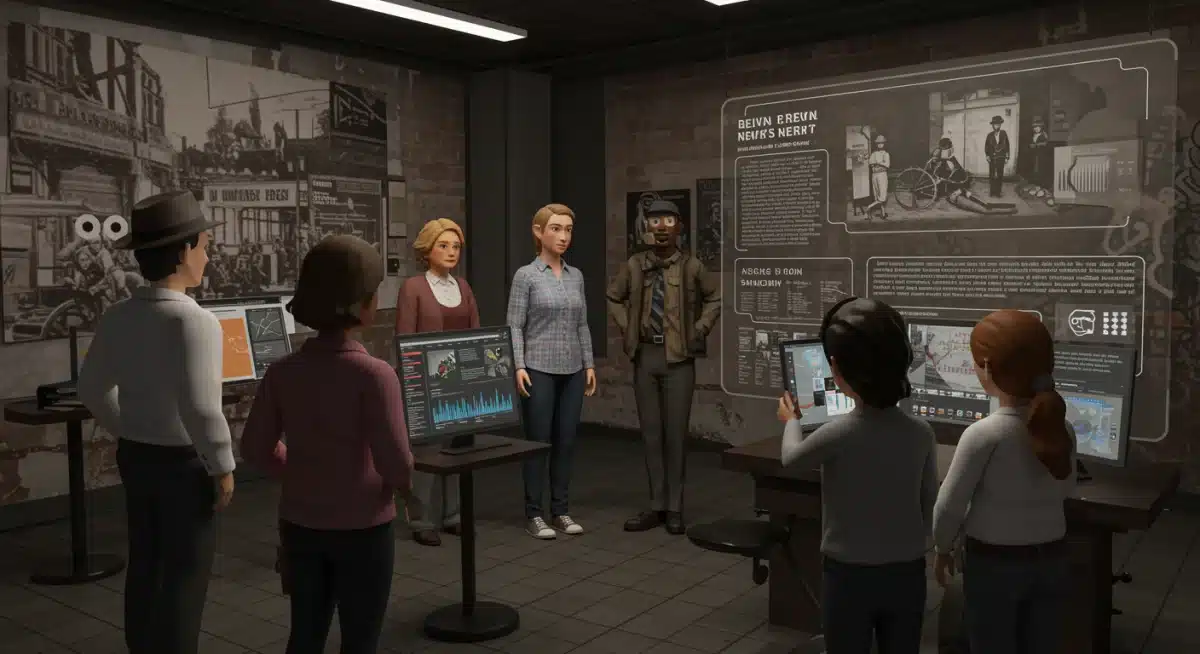
Our 2026 forecast for metaverse news consumption in the US suggests a landscape where news is not just read or watched, but actively experienced. Imagine attending a virtual press conference as an avatar, standing alongside other journalists and asking questions directly to a digital representation of a world leader. Or perhaps witnessing a historical event unfold in a meticulously recreated 3D environment, complete with archival footage and expert commentary. These are not distant sci-fi fantasies but increasingly tangible possibilities within the next few years. The drive towards greater immersion and personalization will be key to captivating and retaining audiences in an increasingly fragmented media environment.
The Technological Underpinnings: Enabling Immersive News
The realization of a truly immersive news experience in the metaverse hinges on several technological advancements. By 2026, we anticipate significant improvements in VR and AR hardware, making devices more affordable, comfortable, and ubiquitous. Lighter, more powerful headsets with wider fields of view and higher resolutions will enhance the sense of presence. Haptic feedback technology will become more sophisticated, allowing users to ‘feel’ elements within the virtual news environment, adding another layer of sensory engagement to metaverse news consumption.
Furthermore, advancements in 5G and nascent 6G networks will provide the necessary bandwidth and low latency to support complex, real-time metaverse environments. This is crucial for delivering seamless, high-fidelity experiences without buffering or lag, which could otherwise detract from immersion. Cloud computing will also play a pivotal role, enabling the rendering and streaming of vast virtual worlds to a multitude of users simultaneously, democratizing access to these advanced news platforms.
Artificial intelligence (AI) will be an invisible yet powerful engine driving many aspects of metaverse news consumption. AI algorithms will personalize news feeds, curating content based on individual interests, past behaviors, and even emotional responses within the metaverse. This personalization will extend beyond simple content recommendations; AI could generate dynamic news environments, adapting the visual and auditory experience to suit user preferences or learning styles. For instance, a user interested in environmental news might find themselves in a virtual forest experiencing the effects of climate change firsthand, guided by an AI-powered narrator.
Blockchain technology, while often associated with cryptocurrencies, will also contribute to the integrity and authenticity of news in the metaverse. Distributed ledger technology could be used to verify the origin and veracity of news content, combating misinformation and deepfakes. Non-fungible tokens (NFTs) might also find a role in authenticating digital assets used in news reporting, or even in creating unique, collectible journalistic pieces, offering new revenue streams for news organizations and creators.
Journalism Reimagined: New Storytelling Paradigms
The shift to metaverse news consumption will necessitate a radical rethinking of journalistic practices and storytelling paradigms. News organizations will move beyond text and video to embrace spatial and experiential narratives. This means hiring new talent with expertise in 3D design, game development, and interactive storytelling. Journalists will no longer just report on events; they will become architects of immersive experiences.
Immersive Reporting and Virtual Field Trips
Imagine breaking news being delivered not through a traditional newscast, but by allowing audiences to virtually ‘visit’ the scene of an event. For example, reporting on a natural disaster could involve a metaverse experience where users can see 3D models of affected areas, hear survivor testimonies in spatial audio, and interact with data visualizations explaining the impact. This level of immersion could foster a deeper sense of empathy and understanding than traditional media ever could. Virtual field trips to historical sites, scientific laboratories, or even political rallies will become commonplace, offering unparalleled access and context.
Interactive Data Visualization and Explanatory Journalism
Complex data and abstract concepts can be challenging to convey effectively through traditional means. The metaverse offers a powerful solution through interactive data visualization. Economic trends, climate change models, or public health statistics could be represented as dynamic, explorable 3D graphs and environments. Users could manipulate variables, dissect data points, and witness the implications of various scenarios in real-time. This active engagement transforms passive consumption into active learning, significantly enhancing the effectiveness of explanatory journalism.

Personalized News Avatars and AI-Powered Guides
The concept of a personalized news avatar, an AI-powered guide tailored to a user’s preferences, will gain traction. These avatars could lead users through news environments, highlighting relevant information, providing contextual background, and even facilitating discussions with other users. This goes beyond simple content filtering; it’s about having a knowledgeable, virtual companion to navigate the complexities of daily news, making metaverse news consumption highly individualized and engaging.
Live Events and Virtual Town Halls
Live news events, such as presidential debates, sporting events, or cultural festivals, will gain a new dimension in the metaverse. Users could attend these events virtually, choosing their vantage point, interacting with fellow attendees, and even participating in live polls or Q&A sessions. Virtual town halls with politicians or community leaders could foster greater civic engagement, allowing for direct, albeit virtual, interaction between constituents and their representatives. The sense of shared presence, even in a digital space, can significantly enhance the impact of these events.
Challenges and Ethical Considerations in Metaverse News Consumption
While the opportunities are vast, the transition to metaverse news consumption also presents significant challenges and ethical dilemmas that must be addressed by 2026. News organizations, policymakers, and platform developers will need to collaborate to ensure a responsible and equitable future for journalism in this new frontier.
Combating Misinformation and Deepfakes
The immersive nature of the metaverse could amplify the impact of misinformation and deepfakes. Highly realistic virtual environments and AI-generated content could make it even harder for audiences to discern truth from fabrication. Robust verification mechanisms, clear labeling of AI-generated content, and media literacy education tailored for the metaverse will be critical. News organizations will need to invest in advanced fact-checking technologies and develop new protocols for authenticating virtual experiences.
Privacy and Data Security
The metaverse will generate vast amounts of user data, including biometric information, behavioral patterns, and emotional responses. Protecting user privacy and ensuring data security will be paramount. News platforms in the metaverse must adhere to stringent data protection regulations, offer transparent data usage policies, and give users robust control over their personal information. The potential for targeted manipulation based on this data is a serious concern that must be proactively addressed.
Accessibility and Digital Divide
As metaverse news consumption becomes more prevalent, there’s a risk of exacerbating the digital divide. Access to high-end VR/AR hardware and high-speed internet is not universal. Efforts must be made to ensure that metaverse news experiences are accessible to all, regardless of socioeconomic status or technical proficiency. This could involve developing lower-cost hardware alternatives, offering public access points, or designing experiences that are compatible with a range of devices, from basic smartphones to advanced VR headsets.
Ethical Storytelling and Representation
Journalists in the metaverse will wield immense power in shaping perceptions through immersive narratives. This demands a heightened sense of ethical responsibility. How are sensitive events portrayed? Are diverse perspectives adequately represented in virtual environments? How do we avoid sensationalism when the audience is ‘inside’ the story? These questions will require careful consideration and the development of new ethical guidelines for metaverse journalism. The potential for psychological impact, particularly when dealing with traumatic events, also needs to be thoroughly understood and mitigated.
The Business Model of Metaverse News in 2026
The economic models supporting metaverse news consumption will also evolve. Traditional subscription models and advertising will likely persist, but new revenue streams will emerge, leveraging the unique capabilities of the metaverse.
Premium Immersive Experiences
News organizations could offer premium access to highly immersive, interactive experiences. This might include exclusive virtual interviews, behind-the-scenes access to major events, or personalized one-on-one sessions with expert commentators in a virtual setting. These premium offerings could command higher subscription fees or be available on a pay-per-experience basis.
Virtual Goods and Sponsorships
The metaverse economy thrives on virtual goods. News platforms could sell digital collectibles related to news events, exclusive avatar wearables, or virtual real estate within their news hubs. Sponsorships could also take on new forms, with brands integrating their presence into news environments in subtle, non-intrusive ways, perhaps through sponsored virtual buildings or interactive brand experiences within relevant news contexts.
Data Monetization (with caution)
While fraught with ethical concerns, the anonymized and aggregated data generated from user interactions within metaverse news environments could be a valuable asset. This data could inform content strategy, audience segmentation, and even product development. However, strict ethical guidelines and user consent mechanisms will be crucial to avoid privacy breaches and maintain public trust. Transparency regarding data usage will be paramount.
Societal Impact: A More Informed or More Polarized Public?
The impact of metaverse news consumption on US audiences by 2026 will be multifaceted, potentially leading to both a more informed citizenry and, if not carefully managed, increased polarization.
Enhanced Understanding and Empathy
By placing audiences directly within news stories, the metaverse has the potential to foster a deeper understanding of complex issues and cultivate greater empathy. Experiencing the plight of refugees in a virtual camp or witnessing the effects of climate change firsthand could lead to more informed public discourse and inspire action. The ability to explore different perspectives within a shared virtual space could break down echo chambers.
Risk of Echo Chambers and Confirmation Bias
Conversely, the highly personalized nature of metaverse news, driven by AI algorithms, could inadvertently create more sophisticated echo chambers. If users are primarily shown content that confirms their existing biases, the metaverse could deepen societal divisions. Designing algorithms that actively expose users to diverse viewpoints and encourage critical thinking will be a significant challenge and a moral imperative for news organizations.
New Forms of Civic Engagement
The metaverse could revolutionize civic engagement. Virtual town halls, interactive policy simulations, and direct participation in virtual protests or advocacy campaigns could empower citizens in new ways. The ease of access and the immersive nature of these experiences could lower barriers to participation, particularly for younger demographics who are native to digital environments.
Conclusion: Navigating the Immersive Future of News
By 2026, metaverse news consumption will have moved beyond nascent experimentation to become a significant, albeit still evolving, component of the US media landscape. The promise of immersive experiences to enhance understanding, foster empathy, and deepen engagement is immense. However, realizing this potential requires a concerted effort from technologists, journalists, policymakers, and the public to navigate the complex ethical, technological, and societal challenges.
News organizations that embrace these changes, invest in new storytelling capabilities, and prioritize ethical considerations will be at the forefront of this transformation. Those that fail to adapt risk becoming increasingly irrelevant in an era where audiences demand more than just passive consumption. The future of news is not just digital; it is immersive, interactive, and intrinsically linked to the evolving metaverse. The journey to 2026 will be a critical period for shaping how American audiences interact with information in this exciting new digital frontier, ultimately determining whether the metaverse becomes a tool for enlightenment or further fragmentation.