DAO Newsroom Funding: The 2026 Shift Towards Community Grants
Anúncios
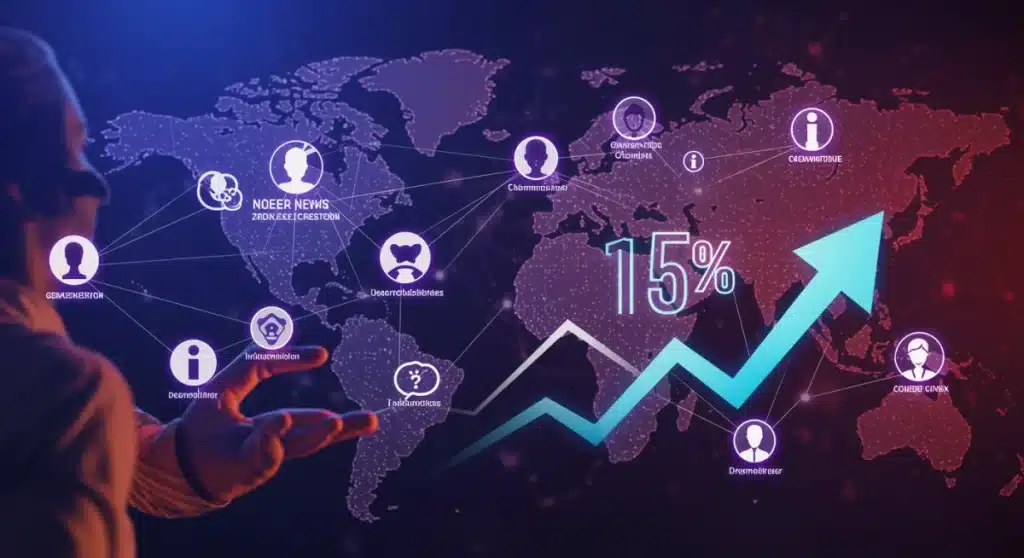
The 2026 Shift: How Decentralized Autonomous Organizations (DAOs) are Reshaping Newsroom Funding with a 15% Increase in Community-Led Grants
The landscape of journalism is undergoing a seismic shift, driven by technological innovation and a growing demand for transparency and community involvement. At the forefront of this revolution are Decentralized Autonomous Organizations (DAOs), emerging as powerful catalysts for change in how newsrooms are funded and governed. As we approach 2026, the data indicates a compelling trend: a projected 15% increase in community-led grants through DAOs, fundamentally altering the financial bedrock of journalistic enterprises. This article delves deep into this transformative phenomenon, exploring the mechanics, benefits, challenges, and future implications of DAO Newsroom Funding.
Anúncios
The Traditional Funding Predicament in Journalism
For decades, news organizations have grappled with a precarious funding model. Advertising revenue, once the lifeblood of the industry, has dwindled with the rise of digital platforms and ad blockers. Subscription models offer some stability but often alienate broader audiences. Philanthropic grants provide crucial support but can introduce biases or limit editorial independence. The result is a media ecosystem often beholden to corporate interests, political agendas, or the whims of wealthy donors, leading to a crisis of trust and sustainability.
This traditional model has fostered an environment where newsrooms, particularly local and investigative journalism outlets, struggle to maintain operations, leading to layoffs, consolidation, and the unfortunate closure of vital information sources. The need for an alternative, more resilient, and community-aligned funding mechanism has never been more urgent. This is precisely where the promise of DAO Newsroom Funding shines.
Understanding Decentralized Autonomous Organizations (DAOs)
Before we explore their impact on news, it’s essential to grasp what DAOs are. A DAO is an organization represented by rules encoded as a transparent computer program, controlled by the organization’s members, and not influenced by a central government. Built on blockchain technology, DAOs enable collective ownership and decision-making, where every member holding the DAO’s native token has a say in its governance. Decisions are made through proposals and voting, ensuring transparency and immutability.
Key characteristics of DAOs include:
- Decentralization: No single entity has control; power is distributed among token holders.
- Transparency: All transactions and governance decisions are recorded on a public blockchain.
- Community Governance: Members vote on proposals, including funding allocations, project directions, and rule changes.
- Immutability: Once a decision is recorded on the blockchain, it cannot be altered.
- Programmability: Rules are embedded in smart contracts, automating processes and reducing human error or bias.
These features make DAOs particularly attractive for industries seeking to overcome issues of trust, transparency, and centralized control – qualities inherently valuable to journalism. The application of DAOs to newsroom funding offers a paradigm shift, moving away from opaque, top-down funding structures to a more democratic, community-driven approach.
The Mechanism of DAO Newsroom Funding
How exactly do DAOs facilitate newsroom funding? The process typically involves several key steps:
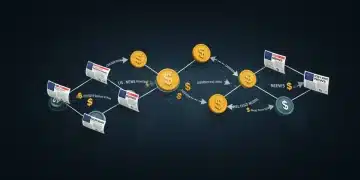
- Token Issuance: A DAO dedicated to journalism funding issues its native cryptocurrency tokens. These tokens can be acquired by community members, journalists, or supporters through various means, such as direct purchase, contributions to a treasury, or participation in the DAO’s activities.
- Treasury Management: The funds collected from token sales or other contributions are held in a decentralized treasury, managed by the DAO’s smart contracts. No single individual or organization has direct control over these funds.
- Proposal Submission: News organizations, independent journalists, or even community groups with journalistic projects can submit proposals requesting funding. These proposals detail their project’s scope, budget, objectives, and anticipated impact.
- Community Voting: Token holders review the submitted proposals. Using their tokens, they vote on which projects should receive funding. The weight of each vote is typically proportional to the number of tokens held, though some DAOs implement quadratic voting or other mechanisms to prevent whale domination.
- Grant Disbursement: Once a proposal receives sufficient votes and meets predefined criteria, the smart contract automatically releases funds from the treasury to the approved project. This automated disbursement ensures efficiency and eliminates intermediaries.
- Accountability and Reporting: Funded projects are often required to provide regular updates or reports to the DAO community, demonstrating how the funds are being utilized and the progress of their journalistic endeavors. This fosters a high degree of accountability to the community that provided the funding.
This model ensures that funding decisions are made collectively by a diverse community of stakeholders, rather than a small group of executives or donors. It aligns the interests of the news organization with its audience and supporters, fostering a more sustainable and ethical journalistic ecosystem. This is the core of how DAO Newsroom Funding operates.
The Projected 15% Increase in Community-Led Grants by 2026
The forecast of a 15% increase in community-led grants through DAOs by 2026 is not merely speculative; it’s rooted in several converging trends and emerging data points. The past few years have seen exponential growth in the DAO ecosystem across various sectors, demonstrating its viability and scalability. For journalism, specifically, this growth is being fueled by:
- Growing Disillusionment with Traditional Media: Audiences are increasingly wary of mainstream media narratives, often perceiving them as biased or influenced by corporate interests. DAOs offer a promise of independent, community-driven journalism that can rebuild trust.
- The Rise of Web3 and Crypto Adoption: As blockchain technology and cryptocurrencies become more mainstream, a larger population is becoming familiar with and comfortable participating in decentralized governance models. This expands the pool of potential token holders and voters for journalism DAOs.
- Successful Pilot Projects: Early examples of journalism DAOs, such as Decentralized Autonomous Organizations for News (D.A.O.N.) or specific initiatives within broader Web3 ecosystems, have demonstrated the potential for effective community-led funding. These successes serve as blueprints and inspire further adoption.
- Technological Maturation: The underlying blockchain infrastructure is becoming more robust, scalable, and user-friendly, lowering the barrier to entry for both news organizations and community participants.
- Demand for Niche and Specialized Journalism: DAOs are particularly well-suited to fund highly specialized or local journalistic endeavors that might struggle to find funding through traditional channels. Communities passionate about specific topics or regions can directly support the reporting they value.
This 15% increase represents a significant shift in capital allocation, diverting funds from traditional sources to a more democratic, community-centric model. It signifies a growing recognition that the future of journalism may well lie in the hands of its readers and supporters, empowered by decentralized technologies.

Benefits of DAO Newsroom Funding
The adoption of DAO Newsroom Funding offers a multitude of benefits for the journalistic ecosystem:
Enhanced Editorial Independence
By diversifying funding sources and placing control in the hands of a broad community, DAOs can significantly reduce the influence of individual donors, advertisers, or corporate owners. Newsrooms funded by DAOs are accountable to their token-holding community, whose primary interest is often the quality and integrity of the journalism itself, rather than profit or political agenda.
Increased Transparency and Accountability
Every funding decision, every transaction, and often even the progress reports of funded projects are recorded on an immutable public ledger. This unparalleled transparency fosters trust and holds news organizations accountable to their community in a way traditional models often cannot. It minimizes the risk of corruption or misuse of funds.
Community Engagement and Ownership
DAOs transform passive readers into active participants and stakeholders. When community members directly contribute to funding decisions, they develop a stronger sense of ownership and investment in the news outlet. This can lead to increased loyalty, more robust feedback loops, and even direct contributions to journalistic work, such as fact-checking or story suggestions.
Sustainable and Resilient Funding Models
The decentralized nature of DAOs can create more resilient funding streams. Instead of relying on a single, vulnerable revenue source, DAOs can draw from a diverse pool of community contributions. Furthermore, the token economy can incentivize long-term participation and investment, fostering a sustainable financial model less susceptible to market fluctuations or corporate whims.
Support for Niche and Investigative Journalism
Traditional funding models often struggle to support highly specialized or long-form investigative journalism, which may not generate immediate advertising revenue or appeal to a mass audience. DAOs, however, can mobilize communities passionate about specific topics, enabling them to collectively fund critical but otherwise underfunded reporting. This democratization of funding can lead to a richer, more diverse journalistic output.
Innovation in News Production
The Web3 environment often fosters innovation. DAOs can experiment with new forms of content creation, distribution, and community interaction. They can incentivize participation through token rewards for contributions, curating, or even peer-reviewing journalistic content, pushing the boundaries of what news can be.
Challenges and Considerations for DAO Newsroom Funding
While the potential of DAOs in journalism funding is immense, several challenges and considerations need to be addressed for widespread adoption and success:
Governance Design and Voter Participation
Designing effective governance structures that prevent ‘whale’ domination (where a few large token holders control decisions) and encourage broad community participation is crucial. Mechanisms like quadratic voting, conviction voting, or delegated democracy might be necessary to ensure equitable decision-making. Low voter turnout can also undermine the decentralized ethos.
Legal and Regulatory Uncertainty
The regulatory landscape for DAOs and cryptocurrencies is still evolving. Legal clarity regarding token classifications, liability, and governance structures is needed to provide a stable operating environment for journalism DAOs. Different jurisdictions may have varying interpretations, posing challenges for global initiatives.
Onboarding and Education
The technical complexities of blockchain and DAOs can be a barrier for many journalists and community members. User-friendly interfaces, educational resources, and simplified onboarding processes are essential to encourage broader participation. Bridging the gap between Web2 and Web3 users is vital.
Sustainability of Token Value
The value of a DAO’s native token can be volatile, potentially impacting the stability of its treasury and its ability to fund projects consistently. Strategies for treasury diversification, stablecoin integration, and robust tokenomics are necessary to mitigate this risk.
Quality Control and Editorial Standards
While community input is valuable, maintaining high journalistic standards and preventing the spread of misinformation within a decentralized framework can be challenging. DAOs need to establish clear editorial guidelines, robust fact-checking processes, and mechanisms for addressing ethical concerns, potentially involving expert committees or reputation-based systems.
Scalability and Efficiency
As the number of proposals and participants grows, DAOs must ensure their governance processes remain efficient and scalable. Slow decision-making or high transaction fees on certain blockchains could hinder their effectiveness. Layer-2 solutions and more efficient consensus mechanisms are continually being developed to address these issues.

Case Studies and Emerging Examples
Several pioneering initiatives are already demonstrating the potential of DAO Newsroom Funding:
- Decentralized Autonomous Organizations for News (D.A.O.N.): While still in nascent stages, projects like D.A.O.N. aim to create a global network of independent newsrooms funded and governed by their communities. They explore mechanisms for content curation, fact-checking, and reputational systems to ensure quality.
- Gitcoin Grants for Public Goods: While not exclusively for journalism, Gitcoin’s quadratic funding model has successfully channeled millions of dollars to open-source projects and public goods, including some journalistic endeavors. This model could be adapted and specialized for news.
- The Tally DAO: Although primarily focused on governance infrastructure, projects utilizing Tally and similar platforms could easily spin up specific DAOs for journalistic funding, leveraging existing tools for proposal submission and voting.
- Specific Web3 Media Initiatives: A growing number of Web3-native media outlets are experimenting with DAO-like structures for community engagement and content monetization, even if not fully decentralized in their funding. These serve as valuable learning grounds.
These early examples, though varied in their scope and maturity, provide crucial insights into the practical application of DAOs in journalism. They highlight both the promise and the challenges, paving the way for more sophisticated and impactful models in the coming years.
The Future of Journalism: A Decentralized Horizon
The projected 15% increase in community-led grants through DAOs by 2026 is more than just a statistic; it’s a harbinger of a new era for journalism. This shift suggests a move towards a more democratized, transparent, and community-centric media landscape. Imagine a world where:
- Local newsrooms are sustained by the direct contributions and governance of their residents.
- Investigative journalists can pursue critical stories without fear of corporate reprisal, funded by a global network of truth-seekers.
- Content creators are rewarded fairly for their work, and their audiences have a direct say in what stories get told.
- Misinformation is combated not by central authorities, but by a vigilant, decentralized community committed to factual reporting.
This future is not without its hurdles, but the foundational technology and the growing community interest are undeniably present. As the Web3 ecosystem matures and best practices for DAO governance are refined, we can expect to see an accelerating adoption of this model.
For journalists, this means new opportunities for funding, greater editorial freedom, and a direct connection with their audience. For readers, it promises more trustworthy, diverse, and relevant news coverage. For the media industry as a whole, it represents a chance to redefine its purpose and regain public trust.
Conclusion
The shift towards Decentralized Autonomous Organizations (DAOs) for newsroom funding is a profound development with the potential to fundamentally reshape the future of journalism. The projected 15% increase in community-led grants by 2026 underscores a growing recognition of DAOs as a viable, sustainable, and ethical alternative to traditional funding models.
While challenges related to governance, regulation, and adoption remain, the benefits of enhanced independence, transparency, community engagement, and support for critical journalism are too significant to ignore. As the Web3 space continues to evolve, DAO Newsroom Funding stands poised to empower journalists and communities alike, fostering a more resilient, trustworthy, and democratic media landscape for generations to come. The era of community-driven news is not just on the horizon; it is already here, and it’s gaining momentum rapidly.