Decentralized News Organizations: A 2026 Roadmap for US Media

Anúncios
From Centralized to Decentralized: A 2026 Roadmap for US News Organizations
The landscape of news dissemination is undergoing a profound transformation. For decades, the media industry operated on a largely centralized model, with a few dominant players controlling the narrative, distribution, and monetization of information. However, trust in traditional media is at an all-time low, fueled by concerns over bias, misinformation, and opaque editorial processes. The rise of digital technologies, particularly blockchain and Web3, offers a compelling alternative: a decentralized future for news organizations. This article presents a comprehensive 2026 roadmap for US news organizations to navigate this pivotal shift, embracing the principles of transparency, community engagement, and technological innovation to build a more resilient and trustworthy media ecosystem. The journey towards decentralized news organizations is not merely an upgrade; it’s a fundamental reimagining of how news is created, validated, distributed, and consumed.
Anúncios
The concept of decentralization, at its core, involves distributing power and control away from a central authority. In the context of news, this means moving beyond monolithic corporations and towards a system where journalists, content creators, and even readers have a more direct say and stake in the news process. This shift promises to address many of the systemic issues plaguing the current media environment, offering pathways to enhanced editorial independence, improved content verification, and more equitable revenue distribution. By 2026, we anticipate that a significant number of forward-thinking US news organizations will have begun their transition, establishing new paradigms for journalistic integrity and public trust.
The Imperative for Decentralization in US News
Why is this transition so critical for US news organizations? The reasons are multifaceted and deeply rooted in the challenges facing contemporary journalism. Firstly, the erosion of public trust is a pressing concern. A 2023 Gallup poll revealed that only 7% of Americans have ‘a great deal’ of trust in the media. This skepticism is often attributed to perceived political biases, sensationalism, and a lack of transparency in reporting. Decentralized models, particularly those leveraging blockchain, can offer immutable records of journalistic work, verifiable sources, and transparent editorial processes, thereby rebuilding trust.
Secondly, the economic model of traditional journalism is increasingly precarious. Ad revenue, once the lifeblood of newsrooms, has largely migrated to tech giants. Subscription models, while effective for some, struggle to reach broader audiences. Tokenization offer new avenues for sustainable funding, allowing communities to directly support journalists and content they value, and even participate in content curation and governance. This economic restructuring is vital for the survival and flourishing of independent journalism.
Thirdly, censorship and control remain significant threats. In a centralized system, a single entity can exert undue influence over content, leading to suppression of inconvenient truths or the promotion of particular agendas. Decentralized networks, by their very nature, are more resistant to single points of failure and censorship, ensuring a more open and free flow of information. This resilience is paramount in an era where information warfare and disinformation campaigns are rampant.
Finally, community engagement is often an afterthought in centralized news. Decentralization empowers communities to become active participants in the news cycle, contributing to reporting, fact-checking, and even setting editorial priorities. This localized and participatory approach fosters a deeper connection between news organizations and the publics they serve, leading to more relevant and impactful journalism. The move towards decentralized news organizations is not just about technology; it’s about fostering a healthier, more democratic information ecosystem.
Phase 1: Foundation and Exploration (2024 – Mid 2025)
The initial phase of this roadmap focuses on laying the groundwork for decentralization. For US news organizations, this means a period of intense learning, strategic planning, and pilot projects.
Understanding Blockchain and Web3 Fundamentals
The core technology enabling decentralized news is blockchain. News organizations must invest in educating their staff – from journalists and editors to tech teams and business development – on the fundamentals of blockchain, smart contracts, cryptocurrencies, and Web3 concepts. This isn’t about turning every journalist into a blockchain developer, but about fostering a baseline understanding of how these technologies can be applied to journalism. Workshops, online courses, and partnerships with blockchain experts will be crucial.
Identifying Use Cases and Pilot Projects
Not every aspect of a news organization needs to be decentralized simultaneously. The initial focus should be on identifying specific pain points that blockchain and Web3 can effectively address. Potential pilot projects include:
- Content Authenticity and Provenance: Using blockchain to timestamp and verify the origin of articles, photos, and videos, combating deepfakes and misinformation.
- Decentralized Fact-Checking Networks: Building platforms where a community of verified fact-checkers can collaboratively review and validate information, with incentives for accurate contributions.
- Reader Rewards and Engagement: Experimenting with token-based systems to reward readers for engaging with content, submitting tips, or participating in discussions.
- Secure Data Storage for Sources: Utilizing decentralized storage solutions to protect sensitive information from whistleblowers and confidential sources.
These pilot projects should be small-scale, allowing for rapid iteration and learning without disrupting core operations. The goal is to demonstrate tangible benefits and build internal expertise. The success of these early initiatives will be critical in building momentum for broader adoption of decentralized news organizations models.
Forming Strategic Partnerships
No single news organization can undertake this transformation alone. Partnerships will be vital. Collaborating with blockchain technology providers, Web3 development firms, academic institutions researching decentralized systems, and even other news organizations exploring similar paths can accelerate progress and share best practices. These alliances can provide access to expertise, resources, and a supportive ecosystem for innovation.
Developing a Decentralization Strategy
Based on the initial exploration and pilot results, each news organization needs to formulate a clear, long-term decentralization strategy. This strategy should outline:
- Specific goals for decentralization (e.g., increased trust, new revenue streams, enhanced community engagement).
- A phased implementation plan.
- Resource allocation (budget, personnel).
- Key performance indicators (KPIs) to measure success.
- A risk mitigation plan for technical and operational challenges.
This strategic blueprint will guide the organization through the subsequent phases of the roadmap, ensuring a coherent and purposeful transition towards decentralized news organizations.
Phase 2: Building and Integrating (Mid 2025 – Early 2026)
With a solid foundation in place, this phase involves the actual development and integration of decentralized solutions into existing newsroom workflows.
Developing Blockchain-Based Content Platforms
This is where news organizations begin to build or adapt platforms that leverage blockchain for content creation, verification, and distribution. This could involve:
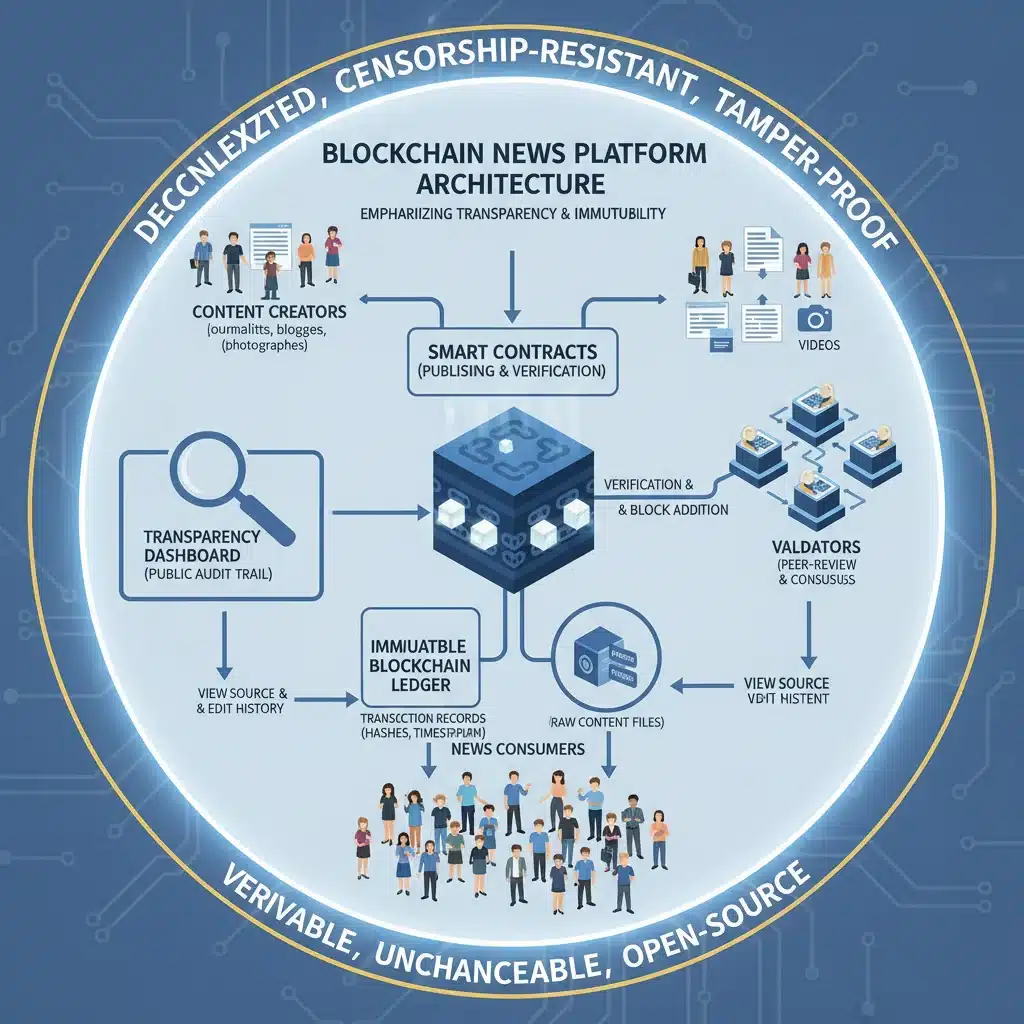
- Immutable Content Ledgers: Implementing systems where published articles and their revisions are recorded on a blockchain, providing an unalterable history.
- Decentralized Publishing Tools: Exploring tools that allow journalists to publish directly to decentralized networks, reducing reliance on centralized servers and platforms.
- NFTs for Journalism: Experimenting with Non-Fungible Tokens (NFTs) to represent unique journalistic works, potentially creating new revenue streams for investigative pieces or iconic photographs, and establishing clear ownership and provenance.
Implementing Decentralized Identity and Reputation Systems
For a decentralized news ecosystem to thrive, trust in individuals is paramount. News organizations should explore implementing decentralized identity (DID) solutions for journalists, editors, and even active community members. These systems can verify credentials and build a verifiable reputation score based on contributions, accuracy, and adherence to journalistic ethics. This helps in distinguishing credible sources and combating anonymous disinformation. Such systems will be integral to the operational effectiveness of decentralized news organizations.
Exploring Decentralized Autonomous Organizations (DAOs) for Governance
For some news organizations, particularly those focused on community-driven or niche topics, forming Decentralized Autonomous Organizations (DAOs) could be a transformative step. A DAO allows a community of token holders (journalists, readers, investors) to collectively govern the organization, making decisions on editorial policies, funding allocations, and strategic direction through smart contracts. This radical shift in governance structure can foster unprecedented levels of transparency and community ownership.
Redefining Monetization Strategies with Web3
This phase is critical for developing sustainable economic models for decentralized news organizations. New strategies could include:
- Token-Gated Content: Offering premium content or exclusive access to communities for holders of specific tokens.
- Creator Tokens: Allowing individual journalists to launch their own tokens, enabling direct support from their audience.
- Decentralized Advertising: Exploring ad networks that are privacy-preserving and reward users for viewing ads, potentially distributing a larger share of revenue to content creators.
- Community-Owned News Funds: Establishing funds where community members contribute cryptocurrency, and the funds are used to commission investigative journalism or support independent reporters, with governance via DAO mechanisms.
The goal is to move away from reliance on traditional ad models and diversify revenue streams, making news organizations more financially robust and independent.
Phase 3: Scaling and Community Engagement (Early 2026 – Beyond)
The final phase of this roadmap focuses on expanding the reach of decentralized initiatives and deeply embedding community engagement into the fabric of the news organization.
Scaling Decentralized Infrastructure
As pilot projects prove successful, the focus shifts to scaling these solutions across the entire news operation. This involves:
- Full Integration of Blockchain for Content: Ensuring all published content is recorded on a blockchain, with clear provenance data.
- Widespread Adoption of Decentralized Storage: Moving towards decentralized storage solutions for archives, sensitive data, and multimedia content, enhancing security and resilience.
- Interoperability: Ensuring that decentralized news platforms can seamlessly interact with other Web3 protocols and platforms, fostering a broader decentralized media ecosystem.
The scalability and interoperability of these solutions will determine the long-term viability and impact of decentralized news organizations.
Empowering Community Journalism and Citizen Reporting
Decentralization inherently empowers individuals. News organizations should actively cultivate and integrate community journalism and citizen reporting into their operations. This could involve:
- Training Programs: Offering training to community members on journalistic ethics, reporting techniques, and the use of decentralized tools.
- Incentivized Reporting Platforms: Creating platforms where citizens can submit verified news tips, eyewitness accounts, and local stories, with token-based rewards for quality contributions.
- Local DAOs for News: Supporting the formation of hyper-local DAOs that focus on reporting and curating news specific to their communities, potentially federating with larger news organizations for broader reach and resources.
This bottom-up approach to news gathering can significantly enhance coverage, particularly in underserved communities, and foster a sense of shared ownership in the news process.
Establishing Transparent Governance and Ethical Frameworks
As decentralized news organizations mature, establishing clear governance structures and ethical frameworks becomes paramount. This includes:
- Community-Driven Editorial Guidelines: Involving the community in the development and evolution of editorial standards.
- Dispute Resolution Mechanisms: Implementing transparent and fair processes for resolving content disputes, addressing misinformation, and managing community moderation.
- On-Chain Ethics: Encoding ethical principles into smart contracts where feasible, to automate certain aspects of accountability and transparency.
These frameworks ensure that decentralization leads to greater accountability, not less, and that the core values of journalism are upheld.
Continuous Innovation and Adaptation
The Web3 space is rapidly evolving. News organizations must commit to continuous learning, experimentation, and adaptation. This means regularly exploring new blockchain technologies, Web3 applications, and decentralized models to stay at the forefront of media innovation. A culture of agility and open-mindedness will be crucial for long-term success in the decentralized landscape.
Challenges and Considerations for Decentralized News Organizations
While the promise of decentralized news is immense, the path is not without its challenges. US news organizations must be prepared to address several key considerations:
Technological Complexity and Adoption Barriers
Blockchain and Web3 technologies are still nascent and can be complex to understand and implement. There’s a steep learning curve for many, and the infrastructure is still maturing. Ensuring user-friendly interfaces and robust backend systems will be critical for widespread adoption by both journalists and readers. The technical overhead can be significant, requiring substantial investment in development and training.
Scalability and Performance
Many existing blockchain networks face challenges with scalability and transaction speed, which could be a bottleneck for high-volume news operations. While layer-2 solutions and new blockchain architectures are emerging to address these issues, news organizations must carefully select technologies that can handle the demands of real-time news dissemination.
Regulatory Uncertainty
The regulatory landscape for cryptocurrencies and decentralized applications is still evolving in the US. News organizations engaging with tokenization, DAOs, or other Web3 financial mechanisms must navigate a complex and often uncertain legal environment. This requires close collaboration with legal experts and a proactive approach to compliance.
Security Risks
While blockchain offers enhanced security in many aspects, decentralized systems are not immune to vulnerabilities. Smart contract bugs, phishing attacks, and other security breaches can pose significant risks. Robust security audits, best practices in development, and continuous monitoring are essential to protect against these threats.
Resistance to Change and Cultural Shifts
Perhaps one of the biggest challenges will be overcoming internal resistance to change within established news organizations. The shift from a centralized, hierarchical structure to a more decentralized, community-driven model requires a significant cultural transformation. This necessitates strong leadership, clear communication, and demonstrated benefits to gain buy-in from staff and stakeholders. The traditional newsroom culture will need to evolve to embrace the collaborative and transparent ethos of decentralized news organizations.
Ensuring Quality and Preventing Misinformation
While decentralization can combat censorship, it also presents challenges in managing misinformation and low-quality content, as there’s no central editor. Robust community moderation, decentralized fact-checking, reputation systems, and algorithmic filtering (without becoming centralized) will be crucial to maintain journalistic standards and prevent the spread of harmful content. The balance between open participation and quality control will be a delicate one.

The Future of News: A Decentralized Vision for 2026 and Beyond
By 2026, the US news landscape will look significantly different for organizations that embrace decentralization. We envision a future where:
- Trust is Rebuilt: News articles come with verifiable provenance, allowing readers to trace sources and understand editorial processes with unprecedented transparency.
- Journalists are Empowered: Reporters have greater editorial independence, direct financial support from their audience, and tools to protect their sources.
- Communities are Engaged: Citizens actively participate in news gathering, fact-checking, and governance, leading to more relevant and representative coverage.
- Revenue Models are Sustainable: News organizations leverage diverse Web3 monetization strategies, reducing reliance on volatile advertising markets and fostering financial independence.
- Censorship is Resilient: News content is distributed across decentralized networks, making it harder for any single entity to suppress information.
The transition to decentralized news organizations is not a silver bullet for all the problems facing journalism, but it offers a powerful framework for addressing many of the systemic issues. It’s a journey that requires courage, innovation, and a commitment to the core values of journalism in a new technological paradigm. The roadmap presented here provides a strategic guide for US news organizations to embark on this transformative journey, securing a more trustworthy, resilient, and democratic future for news.
Embracing decentralization means fundamentally rethinking the relationship between news producers and consumers, moving towards a more symbiotic and transparent ecosystem. It’s about leveraging the power of collective intelligence and distributed networks to create a media landscape that is truly by the people, for the people. The year 2026 marks a crucial juncture, a period where the seeds of decentralized journalism will either take firm root or be overshadowed by the inertia of the past. The choice for US news organizations is clear: adapt, innovate, and decentralize, or risk becoming obsolete in an ever-evolving information age.
Ultimately, the success of decentralized news organizations will hinge on their ability to marry cutting-edge technology with unwavering journalistic ethics. It’s not enough to simply adopt blockchain; the underlying ethos of transparency, accountability, and community empowerment must permeate every aspect of their operations. This holistic approach will ensure that the future of news is not just technologically advanced, but also deeply human and inherently trustworthy.