Smart Appliances 2026: 20% Energy Savings & Financial Impact
Smart Appliances: How New Models in 2026 Promise to Reduce Energy Consumption by 20% (Financial Impact)
The dawn of 2026 promises a revolutionary shift in how we interact with our homes and, more importantly, how our homes interact with the planet. At the forefront of this transformation are smart appliances, poised to deliver unprecedented energy efficiency and substantial financial relief to households worldwide. This isn’t merely about incremental improvements; we’re talking about a projected 20% reduction in average household energy consumption, a figure that carries immense financial and environmental implications. The integration of advanced technologies like Artificial Intelligence (AI), the Internet of Things (IoT), and sophisticated sensor systems is no longer a futuristic dream but a tangible reality rapidly approaching our kitchens, laundry rooms, and living spaces.
For years, the concept of a ‘smart home’ has been evolving, but 2026 marks a pivotal moment where these technologies mature into truly impactful solutions. The focus is increasingly shifting from mere convenience to genuine sustainability and cost-effectiveness. Homeowners are not just looking for devices that can be controlled remotely; they demand appliances that can intelligently optimize their operations, learn usage patterns, and proactively minimize their environmental footprint while maximizing savings. This article delves deep into the technological advancements driving this change, explores the specific appliances leading the charge, quantifies the financial benefits, and provides a roadmap for homeowners looking to embrace this smart, energy-efficient future.
The Core Technology Driving Smart Appliance Energy Savings
The projected 20% reduction in energy consumption by 2026 is not a random estimate; it’s a carefully calculated outcome based on the rapid evolution of several key technologies. Understanding these foundational elements is crucial to appreciating the full potential of smart appliance energy savings.
Artificial Intelligence (AI) and Machine Learning (ML)
At the heart of intelligent energy management lies AI and ML. These technologies enable smart appliances to learn from user behavior, analyze environmental conditions, and predict future needs. For instance, a smart thermostat powered by AI can learn your preferred temperature settings, recognize when you’re away from home, and adjust heating or cooling accordingly to avoid wasted energy. Similarly, smart refrigerators can monitor inventory, suggest optimal defrost cycles based on usage, and even detect when a door is left ajar, alerting you to prevent energy loss. This predictive capability moves beyond simple automation, allowing appliances to make nuanced, energy-saving decisions without constant manual input.
Internet of Things (IoT) Connectivity
The IoT is the connective tissue that allows smart appliances to communicate with each other and with central home hubs. This interconnectedness is vital for holistic energy management. Imagine your smart washing machine communicating with your smart dryer to optimize drying cycles based on the wash load, or your smart oven preheating when your smart doorbell detects you’re almost home. This seamless data exchange facilitates coordinated operation, reducing redundant processes and ensuring that energy is used only when and where it’s most efficient. The ability to monitor and control appliances remotely via smartphone apps is a direct benefit of IoT, empowering users to manage their home’s energy consumption even when they’re not physically present.
Advanced Sensors and Real-time Data Analytics
Modern smart appliances are equipped with an array of sophisticated sensors that gather real-time data on everything from temperature and humidity to occupancy and appliance performance. This data is then fed into AI algorithms for analysis. For example, motion sensors in smart lighting systems ensure lights are only on when a room is occupied. Humidity sensors in smart dryers can detect when clothes are dry, preventing over-drying and unnecessary energy expenditure. This granular data collection allows for hyper-efficient operation, identifying and eliminating even the smallest sources of energy waste.
Energy Management Systems (EMS) Integration
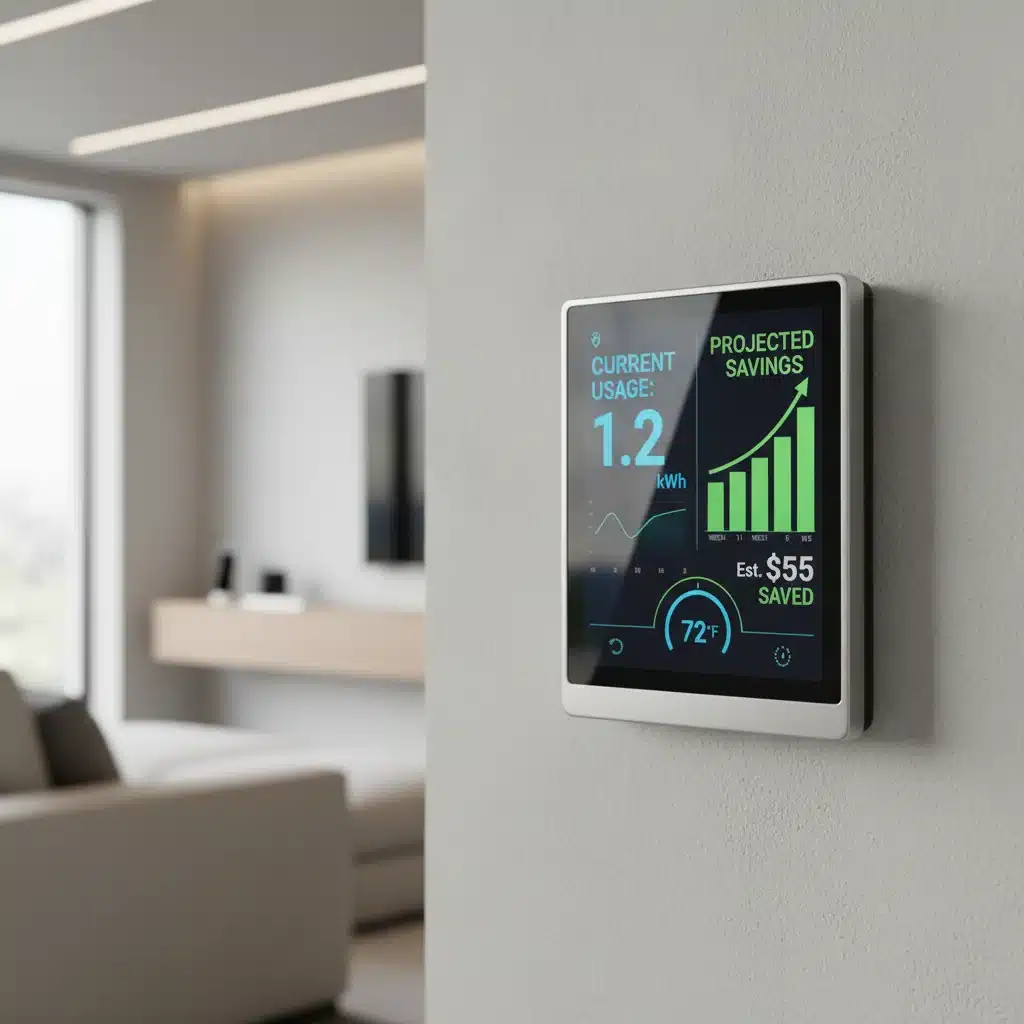
Beyond individual appliance intelligence, the true power of 2026’s smart homes will lie in integrated Energy Management Systems (EMS). These systems act as the central brain, orchestrating all smart devices to work in harmony towards a common goal of energy optimization. An EMS can prioritize appliance usage during off-peak electricity hours, integrate with solar panel systems to maximize self-consumption, and provide homeowners with comprehensive insights into their energy usage patterns. This holistic approach ensures that the entire home operates as an energy-efficient ecosystem, not just a collection of smart devices.
Key Smart Appliances Leading the Energy Revolution in 2026
While almost every appliance is getting a ‘smart’ upgrade, certain categories are poised to make the most significant impact on energy consumption by 2026. These are the workhorses of our homes, and their intelligent optimization will drive the majority of the projected 20% smart appliance energy savings.
Smart Refrigerators and Freezers
Refrigerators are notorious energy hogs, running 24/7. New models in 2026 will feature advanced insulation, variable-speed compressors, and precise temperature controls that adapt to internal and external conditions. AI-driven inventory management systems will help minimize door openings by suggesting what to buy, and sensors will detect food spoilage to reduce waste, which indirectly saves the energy used to produce and transport food. Predictive analytics will also optimize defrost cycles based on actual frost build-up rather than fixed schedules, further reducing energy waste.
Smart HVAC Systems (Heating, Ventilation, and Air Conditioning)
HVAC systems are often the largest energy consumers in a home. By 2026, smart HVAC will fully integrate with external weather forecasts, occupancy sensors, and even personal schedules to pre-condition homes efficiently. Geofencing capabilities will learn when residents are approaching home, adjusting temperatures proactively. Zone-based heating and cooling will ensure only occupied areas are conditioned, leading to significant savings. Furthermore, advanced diagnostic capabilities will monitor system health, recommending maintenance before minor issues escalate into energy-wasting problems.
Smart Washing Machines and Dryers
Laundry appliances are set for a major overhaul. Smart washing machines will use sensors to detect load size, fabric type, and soil level, automatically adjusting water levels, temperature, and cycle duration for optimal efficiency. Smart dryers will employ advanced moisture sensors to stop cycles precisely when clothes are dry, preventing over-drying which wastes energy and damages fabrics. Furthermore, integration with smart grids will allow these appliances to run during off-peak electricity hours when rates are lower, contributing to both energy and cost savings.
Smart Ovens and Cooktops
Even cooking appliances are getting smarter. Smart ovens will feature precision temperature control, rapid preheating functions, and even self-learning capabilities to optimize cooking times for various dishes. Induction cooktops, already highly efficient, will become even smarter with integrated sensors that detect pan size and adjust heating elements accordingly, minimizing wasted heat. Connectivity will allow for remote preheating and monitoring, ensuring meals are ready precisely when needed, reducing idle times and energy consumption.
Smart Lighting Systems
While lighting has already seen significant advancements with LED technology, smart lighting in 2026 will go further. Beyond motion sensors and dimming capabilities, systems will integrate with natural light sensors, automatically adjusting artificial light levels to complement ambient conditions. Personalized lighting profiles will adapt to user preferences and circadian rhythms, while advanced analytics will pinpoint areas of unnecessary illumination, leading to further reductions in energy use.
The Financial Impact: Quantifying the 20% Energy Reduction
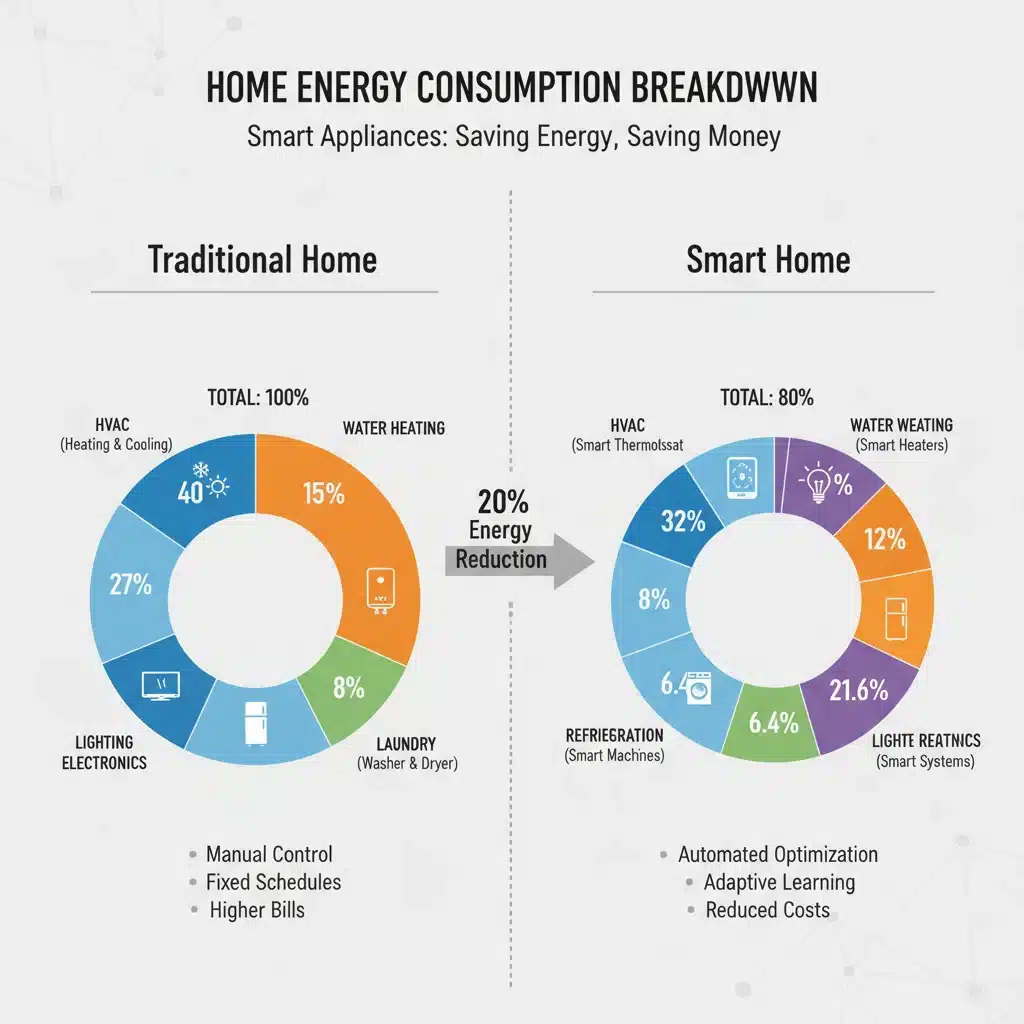
The promise of a 20% reduction in household energy consumption isn’t just an environmental victory; it’s a significant financial boon for homeowners. This figure translates directly into tangible savings on utility bills, freeing up household income for other priorities. Let’s break down the financial implications of these smart appliance energy savings.
Direct Savings on Utility Bills
The most immediate and obvious benefit is the reduction in electricity, gas, and water bills. For an average household, a 20% cut in energy consumption can amount to hundreds, if not thousands, of dollars saved annually. Consider a household with an average annual energy bill of $2,000. A 20% reduction means $400 in savings each year. Over the lifespan of these appliances, these savings accumulate into a substantial sum, often offsetting the initial investment in smart technology.
Increased Home Value and Market Appeal
Homes equipped with state-of-the-art smart appliances and energy management systems are increasingly attractive to potential buyers. Energy efficiency is a top priority for many homebuyers, and a home that can demonstrate significantly lower utility costs holds a distinct advantage in the real estate market. This can translate into a higher resale value and quicker sales, making the investment in smart appliances a wise financial decision.
Eligibility for Rebates and Incentives
As governments and utility companies continue to promote energy efficiency, the adoption of smart, energy-saving appliances often qualifies homeowners for various rebates, tax credits, and incentives. These programs can significantly reduce the upfront cost of purchasing and installing new smart appliances, further enhancing their financial attractiveness. Staying informed about local and national incentive programs is crucial for maximizing these financial benefits.
Reduced Maintenance and Extended Appliance Lifespan
Smart appliances, with their advanced diagnostics and optimized operation, often experience less wear and tear. Predictive maintenance alerts can notify homeowners of potential issues before they become major problems, preventing costly repairs and extending the overall lifespan of the appliance. While not a direct energy saving, the reduction in maintenance costs and replacement frequency contributes to the overall financial benefit of owning smart appliances.
Contribution to a Healthier Environment (Indirect Financial Benefit)
While not a direct financial saving, the environmental benefits of reduced energy consumption have indirect financial implications. A healthier planet leads to fewer climate-related disasters, which in turn reduces the economic burden of recovery and adaptation. For individuals, contributing to environmental sustainability can also align with personal values, offering a sense of responsible stewardship that has its own intrinsic value.
Overcoming Challenges and Ensuring Widespread Adoption
Achieving a 20% reduction in energy consumption through smart appliances by 2026 is an ambitious goal, and it comes with its share of challenges. Addressing these proactively is essential for widespread adoption and realizing the full potential of smart appliance energy savings.
Initial Investment Costs
One of the primary barriers to adoption is the higher upfront cost of smart appliances compared to their traditional counterparts. While the long-term savings are significant, the initial investment can be a deterrent for some households. Manufacturers and policymakers need to continue working on making these technologies more affordable and accessible, perhaps through scaled production, competitive pricing, and continued government incentives.
Data Privacy and Security Concerns
Smart appliances collect and transmit a significant amount of data about household habits and energy usage. Concerns about data privacy and the security of these interconnected devices are legitimate. Manufacturers must prioritize robust cybersecurity measures and transparent data handling policies to build user trust. Clear communication about what data is collected, how it’s used, and how it’s protected will be crucial for consumer confidence.
Interoperability and Standardization
The smart home ecosystem is currently fragmented, with various brands and platforms sometimes struggling to communicate seamlessly. For optimal energy management, all smart devices should be able to work together effortlessly. Industry-wide standardization efforts and open protocols are vital to ensure interoperability, allowing consumers to mix and match devices from different manufacturers without compatibility issues.
User Experience and Complexity
While designed to simplify life, smart technology can sometimes feel overwhelming to users unfamiliar with complex interfaces or setup processes. The success of smart appliances hinges on intuitive design and user-friendly interfaces. Installation, configuration, and daily operation should be straightforward, ensuring that the benefits of energy savings are easily accessible to everyone, regardless of their tech proficiency.
Reliability and Longevity
Consumers expect appliances to be reliable and durable. The added complexity of smart features should not compromise the fundamental functionality and lifespan of the appliance. Manufacturers must ensure that the integrated technology is robust and built to last, providing long-term value and dependable energy savings.
The Future Beyond 2026: Continuous Evolution of Smart Energy Management
The projected 20% reduction in energy consumption by 2026 is merely a stepping stone. The evolution of smart appliances and energy management systems is a continuous journey, with even more exciting advancements on the horizon.
Predictive Maintenance and Self-Repair
Beyond simply alerting users to potential issues, future smart appliances could leverage AI and robotics for limited self-repair capabilities or highly precise predictive maintenance, ordering necessary parts and scheduling technician visits proactively, minimizing downtime and energy waste from malfunctioning units.
Full Integration with Smart Grids and Renewable Energy Sources
The synergy between smart homes and smart grids will deepen. Appliances will not only respond to dynamic electricity pricing but actively participate in grid balancing, potentially selling excess generated energy back to the grid or adjusting consumption during peak demand to prevent blackouts. Integration with home solar, wind, and battery storage systems will become seamless, turning every home into a micro-power plant.
Personalized Energy Profiles and Health Integration
Future smart systems could create highly personalized energy profiles based on individual health metrics and preferences. For example, an HVAC system might adjust temperature and humidity based on occupants’ sleep patterns or health conditions, optimizing comfort and well-being while maintaining energy efficiency.
Advanced Material Science and Manufacturing
Beyond software, advancements in material science will lead to even more energy-efficient appliance designs. Think of refrigerators with vacuum insulation panels that are thinner yet more effective, or ovens that use novel heating elements for ultra-fast, precise cooking with minimal energy loss. Sustainable manufacturing practices will also reduce the embodied energy of the appliances themselves.
Behavioral Nudging and Gamification
To further encourage energy-saving habits, future smart home systems might incorporate behavioral science principles. Gamification elements, friendly competitions with neighbors, or personalized recommendations based on actual usage could empower users to make even smarter choices, reinforcing the benefits of smart appliance energy savings.
Conclusion: Embracing a Smarter, Sustainable Future
The year 2026 represents a significant milestone in the journey towards truly smart and sustainable living. The projected 20% reduction in household energy consumption, driven by advancements in smart appliance technology, is not just an ambitious target but a realistic and achievable goal with profound financial and environmental benefits. As AI, IoT, and advanced sensors continue to evolve, our homes will become more intuitive, efficient, and responsive to our needs, all while minimizing our carbon footprint and maximizing our savings.
For homeowners, the message is clear: investing in smart appliances is no longer a luxury but a strategic decision that pays dividends in the long run. The initial outlay is increasingly offset by substantial utility savings, potential rebates, and increased property value. As the technology becomes more accessible and user-friendly, the transition to a smart, energy-efficient home will become smoother and more appealing to a broader audience.
The future of home energy management is bright, promising a world where convenience, comfort, and sustainability coexist harmoniously. By embracing the innovations in smart appliance energy savings, we are not just upgrading our homes; we are actively contributing to a more sustainable planet and securing a more financially stable future for ourselves and generations to come. The journey to a 20% reduction starts now, and the rewards are well worth the investment.