
Decentralized News Platforms in 2026: Analyzing 5 Key Trends for Trust and Adoption in the US
The media landscape is in a perpetual state of flux, constantly adapting to technological advancements and shifting societal demands. In an era marked by widespread misinformation, declining trust in traditional institutions, and the pervasive influence of social media algorithms, the emergence of Decentralized News Platforms represents a pivotal shift. By 2026, these platforms are poised to redefine how we consume, verify, and interact with news, particularly within the United States. This article delves into five key trends that will shape the trust and adoption of Decentralized News Platforms, offering a glimpse into the future of journalism.
Anúncios
The concept of decentralization, primarily popularized by blockchain technology, promises to address many of the systemic issues plaguing traditional media. By removing central authorities, these platforms aim to foster greater transparency, immutability, and community governance. This shift is not merely technological; it’s a philosophical re-evaluation of who controls the narrative and how information is disseminated. As we approach 2026, several critical trends are converging to accelerate the adoption and solidify the trust in Decentralized News Platforms across the US.
1. Blockchain Integration for Unprecedented Transparency and Immutability
One of the foundational pillars of Decentralized News Platforms is the integration of blockchain technology. By 2026, this integration will move beyond nascent experiments to become a standard feature, offering unparalleled transparency and immutability in news reporting. Every piece of content, from initial draft to final publication, can be timestamped, cryptographically hashed, and recorded on a public ledger. This creates an unalterable record of information, making it incredibly difficult for bad actors to manipulate or censor news.
The implications for trust are profound. Readers will be able to trace the provenance of a news story, verifying its original source, any edits made, and the identities (or pseudonymous identities) of contributors. This level of transparency directly combats the ‘fake news’ epidemic by providing irrefutable evidence of a story’s journey. For journalists, it offers a secure way to publish sensitive information without fear of censorship or retrospective alteration, empowering investigative journalism and protecting whistleblowers.
Furthermore, smart contracts built on blockchain can automate processes like content monetization for creators, ensuring fair compensation and reducing reliance on intermediaries. This economic incentive can attract more high-quality journalists to decentralized ecosystems, further bolstering the credibility and depth of reporting. The US market, increasingly wary of media bias, is ripe for solutions that offer verifiable neutrality and an audit trail for information.
The Role of Distributed Ledgers in Content Verification
Distributed Ledger Technology (DLT), the underlying mechanism of blockchain, provides a robust framework for content verification. Imagine a news article where every fact, quote, and image is linked to its original source on a ledger. This isn’t just about showing where information came from; it’s about proving its integrity. By 2026, sophisticated DLT applications will allow for granular verification, enabling users to click on a statement and see the cryptographic proof of its origin.
This trend extends to multimedia content as well. Deepfakes and manipulated images are a growing concern. Decentralized News Platforms, leveraging blockchain, can embed digital watermarks and authenticity certificates into images and videos at the point of creation, making it easier to detect alterations. This technological safeguard is crucial for rebuilding public trust in visual media, which has been severely eroded by the ease of digital manipulation.
The adoption of these blockchain-powered verification methods will be a significant driver for trust. As traditional media outlets struggle with perceived biases and lack of transparency, Decentralized News Platforms that can demonstrably prove the integrity of their content will gain a considerable advantage. This is particularly relevant in the US, where political polarization often leads to skepticism about mainstream narratives.
2. Community-Driven Content Curation and Fact-Checking
Beyond technological safeguards, the human element of community governance is another critical trend for Decentralized News Platforms. By 2026, these platforms will increasingly rely on their user base for content curation, fact-checking, and moderation, creating a more resilient and trustworthy information ecosystem. This shifts the power dynamic from a centralized editorial board to a distributed network of engaged participants.
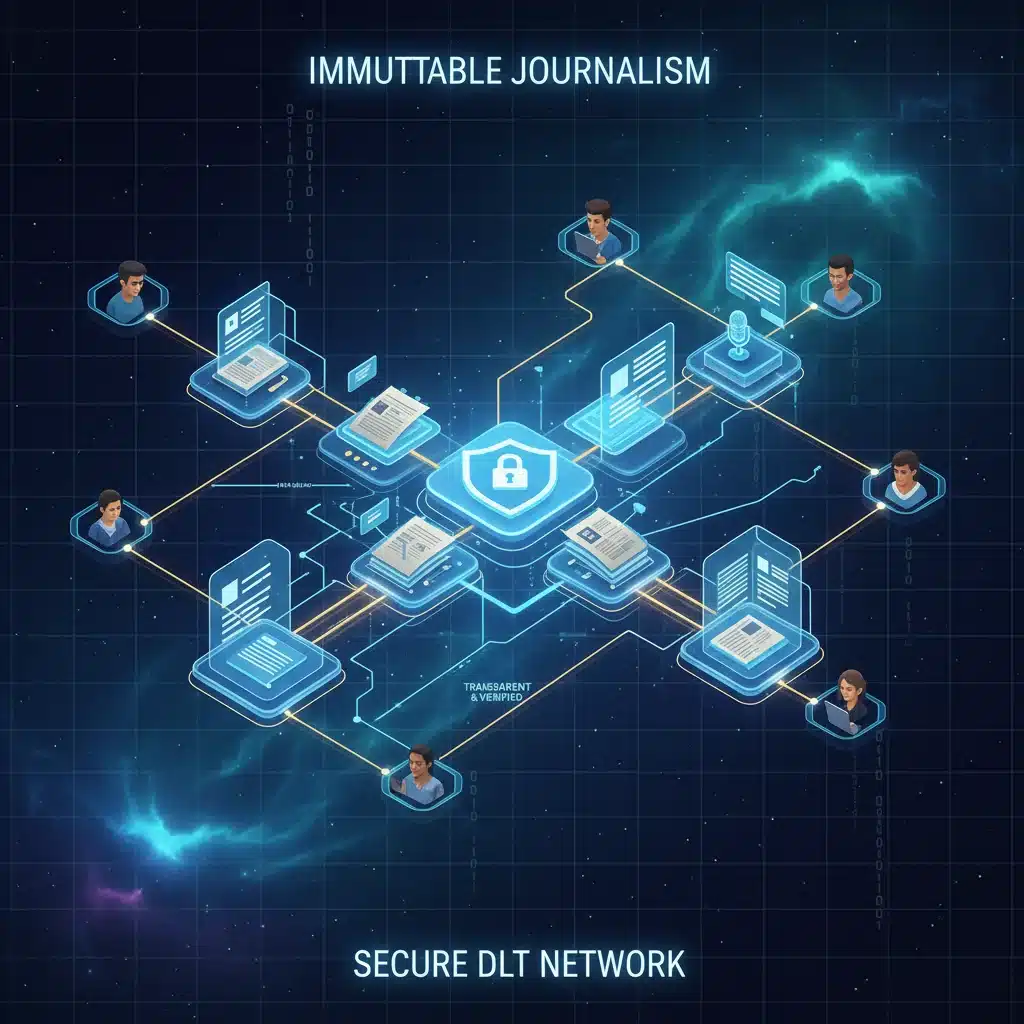
Models such as token-gated access for voting on content quality, reputation systems for contributors, and decentralized autonomous organizations (DAOs) for platform governance will become more sophisticated. Users who actively participate in fact-checking and identifying misinformation can be rewarded with platform tokens, creating a powerful incentive for positive engagement. This distributed responsibility makes it much harder for single points of failure or malicious actors to dominate the narrative.
The strength of community-driven fact-checking lies in its diversity and scale. Unlike a small team of editors, a global community can rapidly assess the veracity of information from multiple perspectives, drawing on collective knowledge and local expertise. This approach is particularly effective in identifying nuanced forms of misinformation that might elude algorithmic detection alone.
The Rise of Reputation-Based Systems
Reputation systems will be paramount in ensuring the quality of community contributions. In Decentralized News Platforms, users will earn reputation points or tokens based on the accuracy of their fact-checks, the quality of their submitted content, and their adherence to community guidelines. This creates a self-regulating mechanism where trusted contributors have more weight in curation and moderation decisions.
This trend will foster a sense of ownership and responsibility among users. When individuals have a direct stake in the integrity of the platform, they are more likely to contribute constructively. For the US audience, accustomed to the often-toxic discourse of centralized social media, a reputation-based, community-moderated news environment could offer a refreshing alternative, promoting civil discourse and evidence-based discussions.
The challenges, of course, include preventing collusion and ensuring fair assessment. However, ongoing innovations in game theory and decentralized identity solutions are actively addressing these concerns, paving the way for robust and scalable community governance models by 2026.
3. AI-Powered Verification and Content Augmentation
While decentralization emphasizes human and community oversight, artificial intelligence (AI) will play a crucial supporting role in enhancing verification and content augmentation on Decentralized News Platforms. By 2026, advanced AI algorithms will be integrated to automate mundane verification tasks, detect patterns of misinformation, and even help journalists generate more comprehensive and accurate reports.
AI can rapidly cross-reference claims against vast databases of verified information, identify logical fallacies, and flag content that exhibits characteristics of propaganda or bias. This doesn’t replace human fact-checkers but rather empowers them, allowing them to focus on complex cases that require nuanced human judgment. AI can act as the first line of defense against the deluge of misinformation, significantly speeding up the verification process.
Furthermore, AI can assist in content augmentation. For instance, it can automatically summarize lengthy reports, translate articles into multiple languages, or even suggest related data points and background information to enrich a news story. This makes information more accessible and comprehensive for a wider audience, enhancing the overall value proposition of Decentralized News Platforms.
Combating Deepfakes and Algorithmic Bias with AI
The fight against deepfakes and manipulated media will be significantly bolstered by AI. Advanced AI models can analyze subtle inconsistencies in images and videos that are imperceptible to the human eye, identifying digitally altered content with high accuracy. When combined with blockchain’s immutable records of content origin, this creates a powerful two-pronged defense against visual misinformation.
Another critical application of AI will be in detecting and mitigating algorithmic bias. While traditional platforms are often criticized for their opaque algorithms that can amplify certain narratives, Decentralized News Platforms can leverage AI to analyze content distribution patterns for unintended biases, ensuring a more equitable and diverse presentation of news. This commitment to algorithmic transparency and fairness will be a key differentiator and trust builder in the US market.
The synergy between decentralized human networks and sophisticated AI will create a dynamic and robust ecosystem for news. AI handles the heavy lifting of data analysis and preliminary verification, freeing up human intelligence for critical thinking, investigative journalism, and nuanced ethical considerations. This hybrid approach promises a future where news is both technologically sound and ethically guided.
4. Enhanced Data Privacy and User Sovereignty
In an age where personal data is often exploited by centralized entities, Decentralized News Platforms offer a compelling alternative: enhanced data privacy and user sovereignty. By 2026, the demand for privacy-preserving news consumption will drive significant adoption of these platforms, particularly in the US where data breaches and privacy concerns are paramount.
Unlike traditional social media and news sites that track user behavior extensively for advertising purposes, decentralized platforms can be designed with privacy by design principles. This means minimizing data collection, using cryptographic techniques to protect user identities, and giving users greater control over their personal information. Features like self-sovereign identity (SSI) will allow users to prove their identity without revealing unnecessary personal details, fostering a more secure and anonymous browsing experience.
The ability to consume news without the constant surveillance and algorithmic manipulation common on centralized platforms is a powerful draw. Users will appreciate the freedom to explore diverse viewpoints without fear of their data being harvested or their feeds being tailored to reinforce existing biases. This shift aligns perfectly with a growing global movement towards digital rights and individual control over personal data.
Monetization Models Respecting User Privacy
One of the biggest challenges for privacy-centric platforms is sustainable monetization. By 2026, Decentralized News Platforms will innovate with novel monetization models that respect user privacy. This could include micro-tipping directly to journalists using cryptocurrencies, subscription models that don’t rely on data tracking, or even advertising models where users explicitly opt-in and receive a share of the revenue generated from their attention.
These models represent a significant departure from the ‘surveillance capitalism’ that underpins much of the traditional digital media landscape. By prioritizing user privacy and offering transparent, consent-based monetization, decentralized platforms can build a deeper level of trust with their audience. For the privacy-conscious American consumer, this will be a crucial factor in choosing where to get their news.
The ongoing regulatory pressures around data privacy, such as GDPR and CCPA, further underscore the importance of this trend. Decentralized News Platforms, by their very nature, are better positioned to comply with and even exceed these privacy standards, making them an attractive option for both users and content creators seeking a more ethical digital environment.
5. Interoperability and Cross-Platform Accessibility
The final key trend for Decentralized News Platforms by 2026 is their increasing interoperability and cross-platform accessibility. For these platforms to achieve widespread adoption, they cannot exist in isolated silos. They must be able to communicate with each other, share data seamlessly (with user consent), and be easily accessible across various devices and interfaces.

Standards for decentralized identity, content formatting, and data exchange will emerge, allowing users to move their reputation, subscriptions, and even content contributions across different decentralized news applications. This open ecosystem approach fosters innovation and prevents vendor lock-in, which is a common issue with centralized platforms.
Furthermore, efforts to make these platforms as user-friendly as traditional news websites and apps will be crucial. Abstraction layers will hide the underlying blockchain complexities, presenting users with intuitive interfaces. Mobile-first design, progressive web apps (PWAs), and integrations with existing digital wallets will lower the barrier to entry, making Decentralized News Platforms accessible to a broader demographic in the US.
Bridging the Gap with Traditional Media
While revolutionary, Decentralized News Platforms are unlikely to completely replace traditional media overnight. A significant trend will be the development of bridges and partnerships between decentralized and traditional news entities. This could involve traditional outlets using decentralized tools for specific verification processes or publishing certain content on decentralized ledgers to enhance credibility.
Such collaborations would allow traditional media to leverage the trust-building features of decentralization, while decentralized platforms could benefit from the established reach and journalistic expertise of legacy organizations. This hybrid approach could accelerate mainstream adoption and familiarize a wider audience with the benefits of decentralized news. By 2026, we may see major news organizations experimenting with decentralized distribution channels to combat misinformation and rebuild reader trust.
The ultimate goal is to create a more robust, transparent, and trustworthy global information network. Interoperability ensures that the benefits of decentralization are not confined to a niche audience but become a fundamental aspect of how information is produced and consumed worldwide.
Conclusion: The Dawn of a Trustworthy News Era
The journey towards widespread adoption of Decentralized News Platforms in the US by 2026 is multifaceted, driven by a convergence of technological innovation, shifting user demands, and a growing imperative for trust. Blockchain integration will provide the immutable backbone, while community-driven curation and AI-powered verification will ensure content integrity and efficiency. Enhanced data privacy will empower users, and interoperability will ensure accessibility and broad appeal.
As these five key trends mature, Decentralized News Platforms are set to offer a powerful antidote to the challenges of misinformation and declining media trust. They promise a future where information is transparent, verifiable, and governed by the collective, rather than controlled by a few. The next few years will be crucial in shaping this new era of journalism, one where trust is not assumed, but cryptographically proven and communally maintained.
For readers, this means a more reliable source of information. For journalists, it means greater freedom and fair compensation. And for society, it means a more informed and resilient public discourse. The future of news is decentralized, and 2026 will mark a significant milestone in its evolution within the United States.