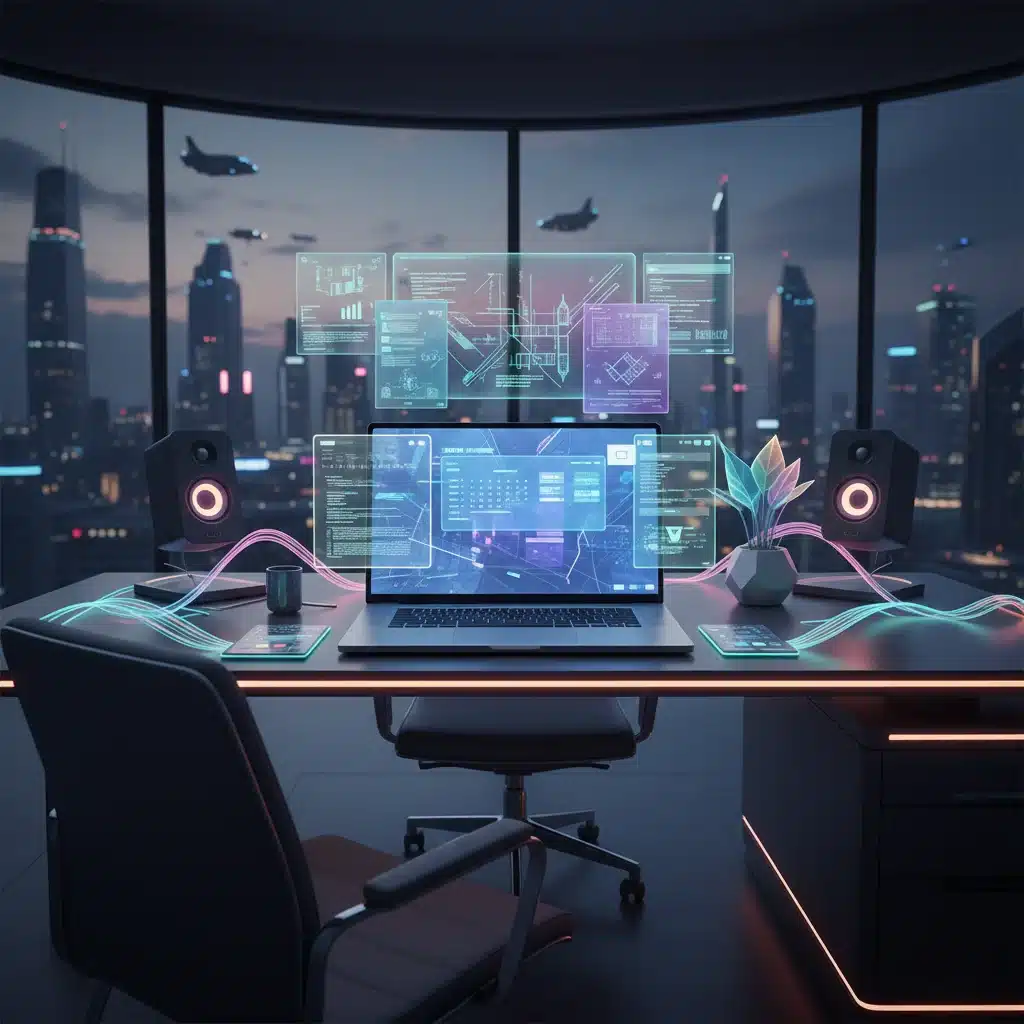
In an era defined by rapid technological advancement, the way we interact with our digital tools is constantly evolving. The landscape of personal computing, particularly concerning laptops and tablets, is on the cusp of a transformative leap. We are not just talking about incremental improvements; we are anticipating fundamental shifts that will redefine efficiency, creativity, and connectivity. This article delves into the exciting realm of the future personal computing experience, exploring four groundbreaking innovations in laptops and tablets that are projected to collectively boost user productivity by an astounding 25% by mid-2026.
Anúncios
The demand for more powerful, intuitive, and seamlessly integrated devices has never been higher. Professionals, students, and everyday users alike seek tools that can keep pace with their dynamic lives, offering not just raw processing power but also intelligent assistance, adaptive interfaces, and truly immersive experiences. The innovations we will discuss are not merely futuristic concepts; they are already in advanced stages of development, promising to reshape our digital workflows and enhance our capabilities in unprecedented ways. Understanding these trends is crucial for anyone looking to stay ahead in the rapidly advancing world of technology.
The cornerstone of this revolution lies in the convergence of artificial intelligence, advanced materials, and sophisticated software design. These elements are coming together to create a new generation of devices that are not just smarter but also more attuned to individual user needs. The promise of a 25% productivity boost is not an arbitrary figure; it’s a conservative estimate based on the cumulative impact of these innovations on task completion times, cognitive load reduction, and enhanced creative output. Let’s embark on this journey to explore the exciting future of personal computing.
1. AI-Powered Adaptive Interfaces and Predictive Computing
One of the most significant advancements in the future personal computing landscape will be the widespread integration of AI-powered adaptive interfaces and predictive computing. Imagine a laptop or tablet that not only understands your commands but anticipates your needs, learning your work patterns, preferences, and even your mood. This isn’t just about voice assistants; it’s about an operating system and application suite that dynamically adjusts to optimize your workflow.
These adaptive interfaces will go far beyond simple personalization. They will leverage sophisticated machine learning algorithms to analyze your usage data in real-time, identifying repetitive tasks, suggesting shortcuts, and even proactively opening applications or documents you’re likely to need next. For instance, if you regularly start your day by checking emails, reviewing a specific project management tool, and then drafting reports, your device could pre-load these applications and even surface relevant data before you even click a button. This proactive assistance dramatically reduces the time spent on mundane setup tasks and cognitive switching, allowing users to dive directly into productive work.
Predictive computing will also extend to content creation and data analysis. AI will assist in drafting emails, summarizing lengthy documents, generating code snippets, or even creating initial design layouts based on minimal input. For data-intensive tasks, it could highlight critical trends, suggest visualizations, or identify anomalies that might otherwise be missed. This augmentation of human intelligence by AI will not replace human creativity or critical thinking but rather amplify it, freeing up valuable mental resources for higher-level problem-solving and innovation.
Furthermore, adaptive interfaces will extend to the physical interaction with devices. Keyboards could dynamically reconfigure for different applications, touchscreens could offer haptic feedback tailored to the content, and even display settings (brightness, color temperature, refresh rate) could adjust based on ambient light, user fatigue, and the type of content being viewed. This level of environmental and user-centric adaptation ensures optimal comfort and reduces eye strain, contributing to sustained productivity throughout the workday. The impact of such intelligent systems on daily tasks is expected to be profound, streamlining operations and significantly cutting down on wasted time.
2. Dynamic, Multi-Modal Displays and Haptic Feedback Systems
The visual and tactile experience of interacting with laptops and tablets is set for a major overhaul, marking another pivotal step in the future personal computing evolution. We are moving beyond static screens to dynamic, multi-modal displays that can adapt their characteristics based on content and user interaction, coupled with advanced haptic feedback systems that add a new dimension to digital touch.
Imagine a display that can instantly switch between a high-refresh-rate, vibrant color mode for video editing, a low-power, paper-like e-ink mode for reading long documents, and a tactile, textured surface for drawing or 3D modeling. These ‘chameleon’ displays will integrate technologies like electrochromic layers, micro-LEDs, and flexible substrates to offer unparalleled versatility. This means a single device can serve multiple purposes with optimized visual fidelity and user comfort, eliminating the need for specialized external monitors or devices. For creative professionals, this translates to seamless transitions between different tasks without compromising visual quality or ergonomic needs.
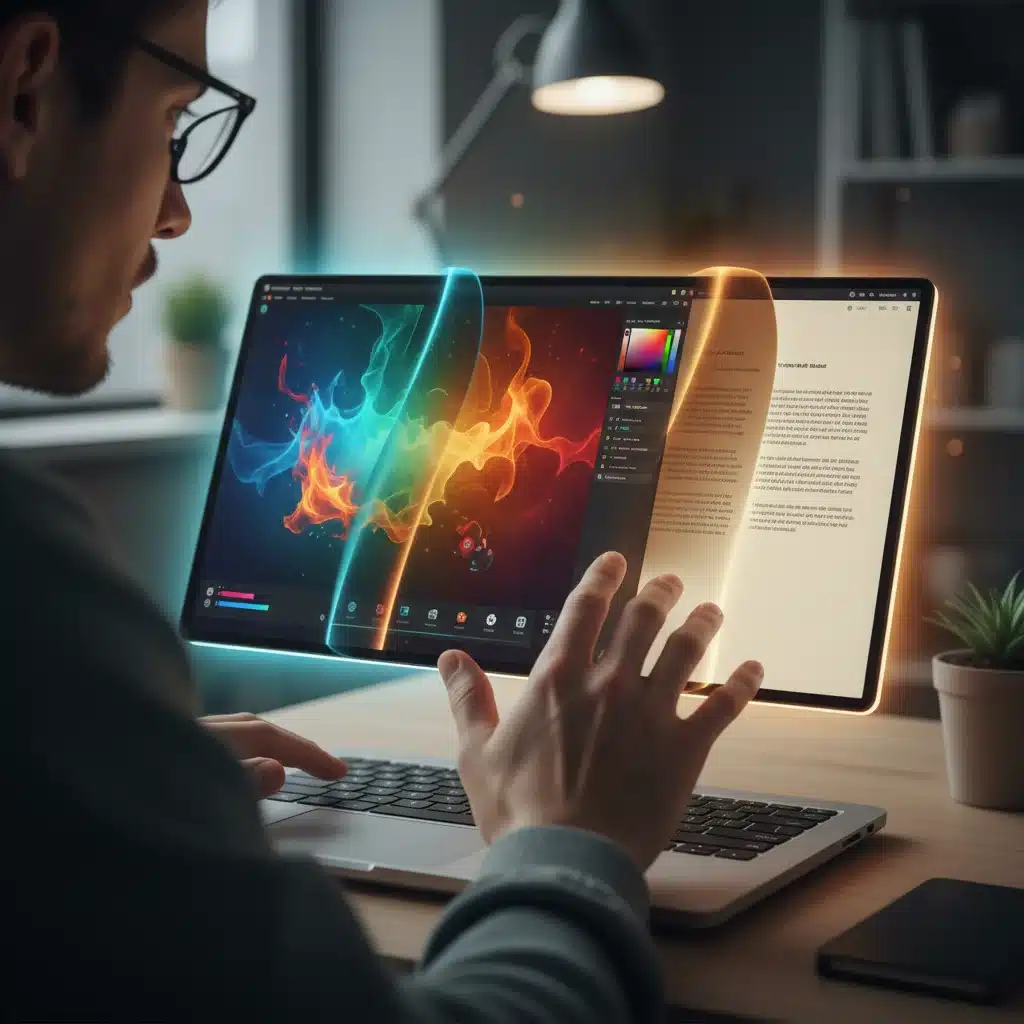
Complementing these dynamic visuals will be sophisticated haptic feedback systems. Current haptics are often limited to simple vibrations, but the next generation will simulate a wide range of textures, forces, and sensations. Imagine feeling the ‘click’ of a virtual button, the texture of digital fabric, or the resistance of a virtual slider. This tactile feedback will enhance precision in tasks requiring fine motor control, such as graphic design, surgical simulations, or even gaming. For accessibility, it opens up new avenues for users with visual impairments to interact more intuitively with digital content, feeling shapes, graphs, and textual elements.
These multi-modal displays will also be crucial for augmented and mixed reality integration. Instead of just viewing content, users will be able to interact with digital objects that appear to have physical properties, making collaboration and creative work far more immersive. For example, architects could ‘feel’ the structural integrity of a virtual building model, or engineers could ‘manipulate’ virtual components with tactile feedback, significantly reducing errors and accelerating design cycles. The combination of adaptive visuals and rich haptics will make digital interactions feel more natural and intuitive, bridging the gap between the physical and virtual worlds and boosting productivity by reducing cognitive load and improving accuracy.
3. Ultra-Efficient, Long-Lasting Power Architectures and Sustainable Design
The Achilles’ heel of mobile computing has long been battery life. However, the future personal computing paradigm will see revolutionary advancements in ultra-efficient power architectures and sustainable design, liberating users from constant charging anxieties and promoting environmental responsibility. This isn’t just about bigger batteries; it’s about smarter power management and innovative energy harvesting.
Next-generation laptops and tablets will feature processors built on incredibly efficient architectures (e.g., advanced ARM-based chips, neuromorphic processors) that consume significantly less power while delivering superior performance. This efficiency will be coupled with intelligent power management systems that dynamically allocate resources, putting components to sleep when not in use and optimizing task execution for minimal energy consumption. We can expect devices that routinely offer multi-day battery life on a single charge, even under heavy usage scenarios.
Beyond traditional batteries, we will see the integration of novel energy harvesting technologies. This could include highly efficient solar panels embedded into device casings, kinetic energy harvesting from movement, or even passive wireless charging over short distances. These supplementary power sources will extend operational times and reduce reliance on wall outlets, offering unprecedented freedom and flexibility for users on the go. Imagine a tablet that slowly recharges itself while sitting on your desk or in your bag, ready for use whenever you need it.
Sustainability will also move to the forefront of design. Devices will be built with modular components that are easily repairable and upgradeable, reducing electronic waste. Materials will be sourced responsibly, with a focus on recycled content and non-toxic alternatives. Furthermore, manufacturers will implement circular economy principles, designing products for disassembly and material recovery at the end of their lifecycle. This commitment to sustainability will not only benefit the environment but also offer users more durable, long-lasting products, reducing the frequency of replacements and associated costs.
The combination of extended battery life and sustainable design means users can focus more on their work and less on finding a power outlet or worrying about their device’s environmental footprint. This increased reliability and reduced downtime directly translate to a significant boost in continuous productivity, especially for professionals who rely on their devices in diverse and challenging environments.
4. Seamless Integration with Mixed Reality and Spatial Computing
The ultimate frontier in the future personal computing experience is the seamless integration with mixed reality (MR) and spatial computing. This innovation transcends traditional screen-based interaction, allowing users to blend digital content with their physical environment in a truly immersive and intuitive way. Laptops and tablets will evolve from mere windows to digital worlds into powerful gateways to expansive spatial computing environments.
Instead of being confined to a laptop screen, imagine your digital workspace extending into your entire room. Holographic displays projected from your device could present multiple virtual monitors, interactive 3D models, or collaborative whiteboards that you can manipulate with gestures, voice commands, or even direct eye gaze. Your tablet could become a ‘magic window,’ allowing you to see and interact with digital overlays on real-world objects, providing contextual information or enabling remote assistance in a highly visual manner.
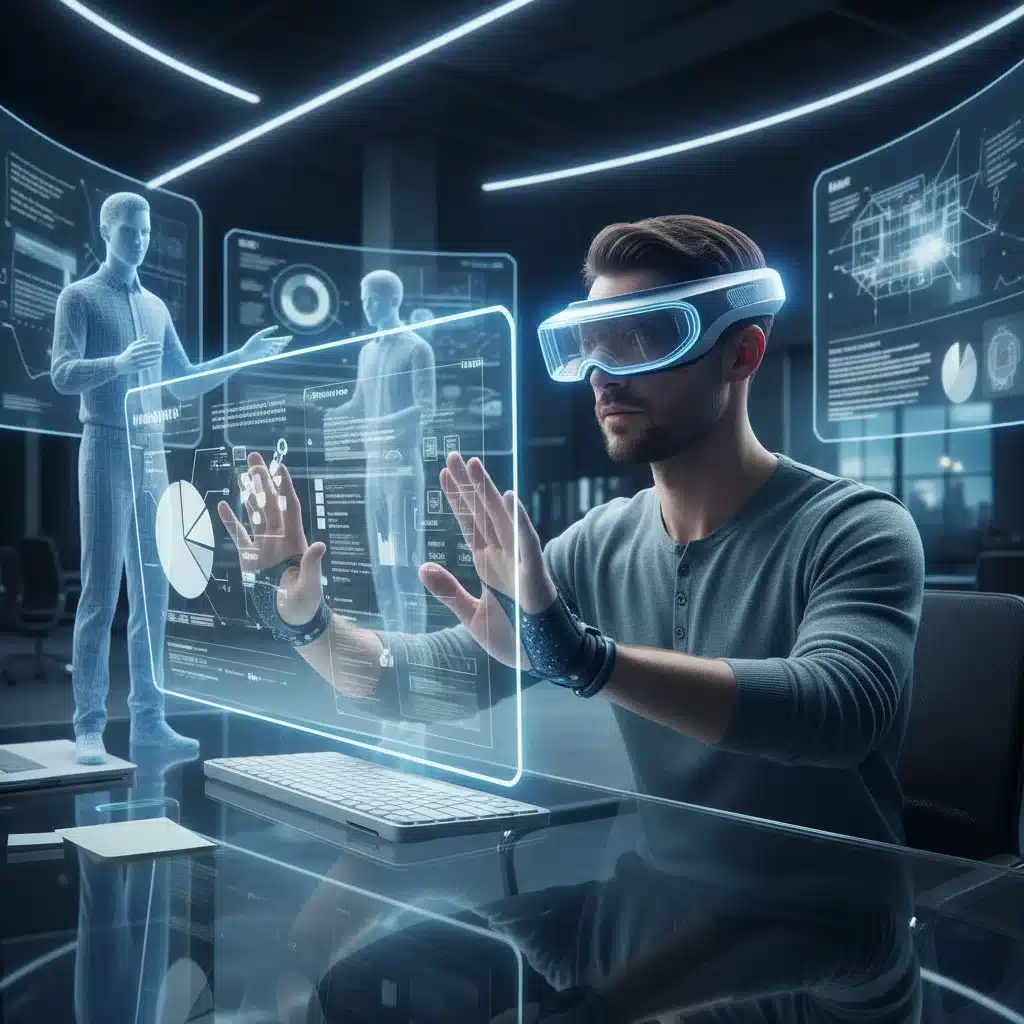
This means that collaboration will become incredibly immersive. Remote teams could share a virtual meeting room where everyone’s digital avatars interact with shared holographic documents and 3D models, feeling as if they are in the same physical space. Designers could walk around their virtual creations, architects could virtually tour buildings before they are built, and educators could bring complex scientific phenomena to life in a student’s living room.
The integration of spatial computing will also revolutionize productivity for highly specialized tasks. Field technicians could overlay repair instructions directly onto machinery, surgeons could visualize patient data in 3D during operations, and retail workers could instantly access product information by simply looking at items on a shelf. This ‘contextual computing’ reduces the need to constantly switch focus between physical tasks and digital information, streamlining complex workflows and significantly reducing errors.
Laptops and tablets will act as the processing hubs and input devices for these MR experiences, offloading heavy computational tasks to the cloud and displaying the results through lightweight, comfortable headsets or advanced projection technologies. The ability to fluidly move between traditional screen-based work and immersive spatial environments will offer unparalleled flexibility and efficiency, allowing users to choose the most effective interface for any given task. This shift represents a paradigm change, moving from interacting with a computer to interacting within a computer-augmented reality, promising a substantial leap in overall productivity and creative potential.
Conclusion: The Dawn of a New Productivity Era in Personal Computing
The future personal computing landscape is incredibly bright, promising a transformative era where our devices are not just tools but intelligent partners in our daily endeavors. The four innovations discussed – AI-powered adaptive interfaces, dynamic multi-modal displays with advanced haptics, ultra-efficient power architectures, and seamless integration with mixed reality and spatial computing – are not isolated advancements but interconnected pillars supporting a new foundation of productivity.
By mid-2026, the cumulative effect of these innovations is projected to deliver a remarkable 25% boost in user productivity. This isn’t merely about faster processing or thinner designs; it’s about creating a computing experience that is more intuitive, more adaptive, more immersive, and ultimately, more human-centric. Users will spend less time managing their technology and more time engaging with their work, fostering creativity, and achieving their goals.
From anticipating our next move with predictive AI to extending our digital workspace into the physical world through mixed reality, laptops and tablets are evolving into sophisticated extensions of our minds and hands. The focus is shifting from simply providing information to enhancing our ability to process, create, and collaborate in ways previously unimaginable. Businesses will benefit from more efficient workflows, individuals will gain more time for meaningful tasks, and the overall quality of digital interaction will be elevated.
As these technologies mature and become more accessible, the distinction between our physical and digital lives will continue to blur, paving the way for a more integrated and productive existence. The future of personal computing is not just about what our devices can do, but what they empower us to achieve. Get ready for a future where your laptop and tablet don’t just keep up with you; they actively propel you forward.