Tokenized News Models: Financial Opportunities for US Creators

Tokenized news models are poised to revolutionize how US content creators monetize their work, offering direct financial opportunities and enhanced ownership through blockchain technology and decentralized platforms in the coming three years.
Tokenized news models are rapidly emerging as a transformative force, reshaping the financial landscape for US content creators. This shift isn’t merely theoretical; it’s a tangible evolution presenting significant opportunities for those ready to embrace the future of journalism.
understanding tokenized news models
Tokenized news models represent a paradigm shift from traditional media structures. At its core, tokenization involves converting rights or assets into digital tokens on a blockchain, bringing transparency and new monetization avenues to content creation. For news, this means creators can directly own, distribute, and monetize their work without intermediaries.
This approach moves beyond simple subscription models, introducing dynamic ways for content to generate value. Instead of relying solely on advertising or platform fees, creators can engage with their audience through direct token payments, governance tokens, and even fractional ownership of their intellectual property. The underlying blockchain technology ensures immutable records and verifiable transactions, building a layer of trust previously unseen in digital content.
The impact of this shift is profound, empowering individual journalists and small news organizations to compete on a more level playing field. It fosters a more equitable distribution of revenue, rewarding quality content and direct audience engagement. This foundational understanding is crucial for any creator looking to navigate and benefit from this evolving ecosystem.
the financial shift for US content creators
The financial prospects for US content creators in this tokenized landscape are substantial and diverse. Traditional revenue streams have often been volatile and controlled by large platforms, but tokenization introduces new, more stable, and creator-centric models. This shift offers a direct path to economic sustainability.
One primary opportunity lies in direct value exchange. Audiences can directly pay creators with tokens for exclusive content, early access, or even as a show of support, bypassing traditional payment processors that often take a significant cut. This direct relationship fosters stronger community bonds and ensures a larger portion of revenue goes directly to the creator.
direct monetization pathways
- Content NFTs: Creators can mint unique news articles, investigative reports, or multimedia pieces as Non-Fungible Tokens (NFTs), selling them as collectibles or premium access passes.
- Subscription Tokens: Offering access to exclusive content or communities via fungible tokens, where holding a certain amount grants membership.
- Micropayments: Enabling readers to pay tiny sums for individual articles or specific insights, making content more accessible while still rewarding creators proportionally.
Beyond direct payments, creators can also benefit from decentralized advertising networks that use tokens to reward both advertisers and content producers more fairly. Furthermore, governance tokens can give creators a say in platform development and revenue sharing, aligning incentives across the ecosystem.
navigating blockchain technology and web3 platforms
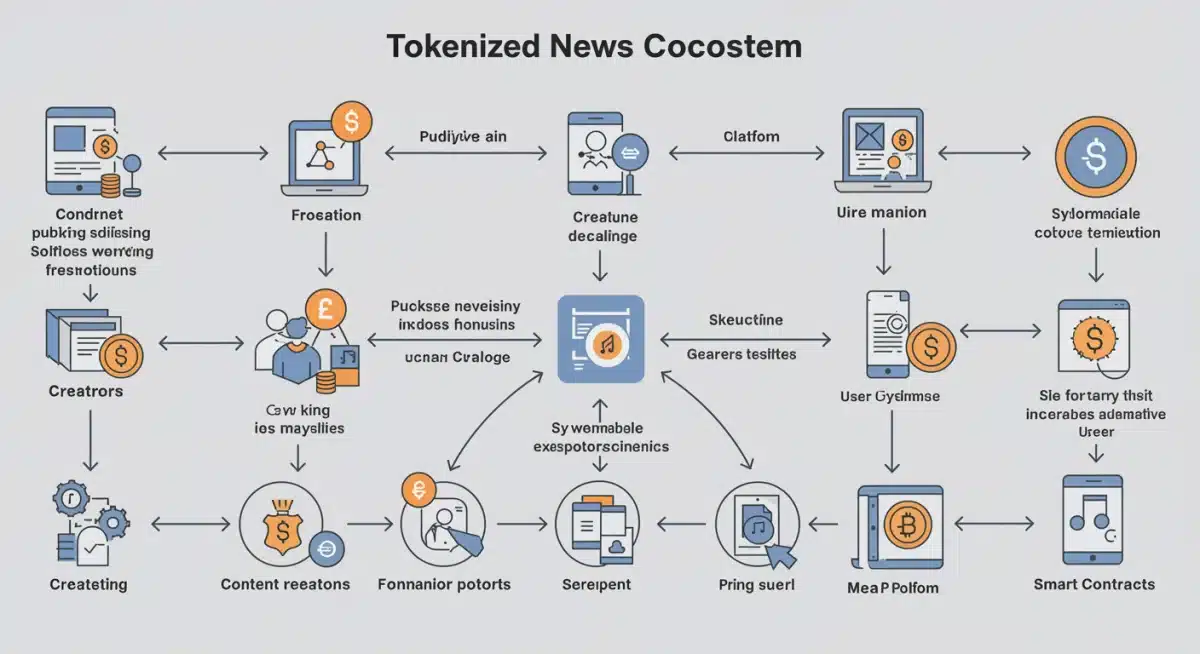
Understanding the underlying technology is key to leveraging tokenized news models effectively. Blockchain provides the secure, transparent, and decentralized infrastructure upon which these new financial opportunities are built. Web3 platforms are the applications and interfaces that make this technology accessible to creators and consumers.
For US content creators, familiarity with basic blockchain concepts, such as wallets, smart contracts, and token standards (e.g., ERC-20 for fungible tokens, ERC-721 for NFTs), will be invaluable. Many platforms are emerging that abstract away much of the technical complexity, allowing creators to focus on their core competency: producing high-quality news and analysis.
key web3 platforms for creators
- Decentralized Content Networks: Platforms like Mirror.xyz or Substack alternatives built on blockchain allow creators to publish and tokenize their work directly, often with built-in monetization features.
- Creator DAOs: Decentralized Autonomous Organizations where creators and their communities collectively govern content creation, funding, and distribution, using tokens for voting rights.
- NFT Marketplaces: OpenSea, Rarible, and other marketplaces provide avenues for selling unique news artifacts as NFTs, creating new revenue streams from archival content or exclusive reports.
The learning curve for these technologies is becoming increasingly gentle, with more user-friendly tools and educational resources emerging. Creators who invest time in understanding these platforms will be better positioned to capitalize on the financial opportunities available.
case studies and early adopters in the US
The transition to tokenized news models isn’t just theoretical; several US-based creators and organizations are already experimenting and finding success. These early adopters provide valuable insights into the practical application and potential of these new financial ecosystems.
One notable example involves independent journalists who have successfully funded investigative reports through crowdfunding campaigns utilizing cryptocurrencies and NFTs. By offering exclusive updates or behind-the-scenes content as NFTs, they’ve cultivated a dedicated patron base that directly supports their work, bypassing traditional grant systems or media conglomerates.
successful tokenized news initiatives
- NFT-Gated Communities: Some news outlets are creating token-gated communities where holding a specific NFT grants access to premium content, special events, or direct interaction with journalists.
- Journalism DAOs: Projects like Decentralized Journalism Foundation (hypothetical, but representative of emerging models) aim to pool resources and fund journalistic endeavors collectively, with token holders voting on which stories to pursue.
- Creator-Owned Platforms: Independent writers are migrating to platforms that allow them to mint their articles as NFTs, giving them full ownership and control over monetization and distribution, often earning a higher percentage of revenue compared to traditional platforms.
These examples demonstrate that the technology is mature enough for practical application and that audiences are willing to engage with news in new, tokenized ways. Their successes offer a blueprint for other creators looking to explore similar paths.
challenges and considerations for creators
While the opportunities are significant, US content creators must also be aware of the challenges and considerations inherent in adopting tokenized news models. Navigating this new terrain requires careful planning and an understanding of potential pitfalls.
One major challenge is the volatility of cryptocurrencies, which can impact the value of tokens received as payment or investment. Creators need to develop strategies for managing this volatility, perhaps by converting tokens to stablecoins or fiat currency promptly. Regulatory uncertainty also poses a consideration, as governments continue to develop frameworks for digital assets and blockchain technology.
key challenges to address
- Market Volatility: Fluctuations in cryptocurrency prices can affect income stability; diversification and risk management are crucial.
- Regulatory Landscape: Evolving regulations around digital assets and NFTs require creators to stay informed about compliance and tax implications.
- Audience Education: A significant portion of the audience may not be familiar with blockchain or crypto, necessitating efforts to simplify access and understanding.
Furthermore, the technical complexity, while diminishing, can still be a barrier for some. Creators may need to invest time in learning new tools or collaborating with developers. Despite these hurdles, the long-term benefits of enhanced ownership, direct monetization, and community building often outweigh the initial challenges, making it a worthwhile endeavor for forward-thinking creators.
the future outlook: 2026 and beyond
Looking ahead to 2026 and beyond, the trajectory for tokenized news models in the US is one of continued growth and integration. The initial experimental phase is giving way to more robust and user-friendly platforms, making these models increasingly accessible to a broader range of content creators.
We can anticipate greater mainstream adoption as payment rails become more seamless and regulatory clarity improves. This will likely lead to an explosion of niche news organizations and independent journalists leveraging these tools to build sustainable businesses. The focus will shift from mere novelty to established, efficient, and equitable systems for news creation and consumption.
projected trends and developments
- Increased Platform Interoperability: News tokens and NFTs will become more easily transferable across different platforms and blockchains, enhancing liquidity and utility.
- Advanced AI Integration: AI will assist creators in tokenizing content, managing communities, and even generating personalized news experiences, all within a tokenized framework.
- Decentralized Identity: Verifiable digital identities will enhance trust and reputation for both creators and consumers in tokenized news ecosystems.
The next three years will be pivotal in solidifying tokenized news models as a standard component of the digital media landscape. Creators who position themselves now will be at the forefront of this revolution, reaping the financial and creative rewards of a more decentralized and creator-centric future.
| Key Aspect | Brief Description |
|---|---|
| Direct Monetization | Creators receive payments directly from audiences via tokens, bypassing traditional intermediaries. |
| Content Ownership | Blockchain ensures verifiable ownership of content through NFTs, offering new intellectual property rights. |
| Community Engagement | Tokens foster stronger audience-creator bonds through governance and exclusive access. |
| Decentralized Platforms | Web3 platforms offer infrastructure for publishing, distributing, and monetizing tokenized news securely. |
Frequently Asked Questions about Tokenized News Models
Tokenized news models leverage blockchain technology to represent news content, subscriptions, or governance rights as digital tokens. This allows creators direct monetization, verifiable ownership, and new ways to engage with their audience, moving beyond traditional media structures.
US content creators can benefit through direct payments from readers using tokens, selling unique content as NFTs, or offering token-gated subscriptions. This cuts out intermediaries, allowing creators to retain a larger share of revenue and fostering stronger community support for their work.
NFTs (Non-Fungible Tokens) can represent unique pieces of news content, such as articles or investigative reports. Creators can sell these NFTs as digital collectibles, premium access passes, or even as a way for patrons to own a piece of journalistic history, creating new revenue streams.
Yes, risks include cryptocurrency market volatility, which can affect the value of earnings, and the evolving regulatory landscape for digital assets. Creators also need to consider the technical learning curve and the necessity of educating their audience about these new payment methods.
The outlook is positive, with increasing adoption and improved user-friendliness of Web3 platforms. We anticipate more mainstream integration, clearer regulations, and diverse monetization strategies, making tokenized news a significant and sustainable model for US content creators.
Conclusion
The landscape of news consumption and creation is undergoing a profound transformation, with tokenized news models leading the charge. For US content creators, this seismic shift presents not just a technological curiosity, but a tangible pathway to unprecedented financial opportunities and greater autonomy over their work. By embracing blockchain technology and Web3 platforms, creators can forge direct relationships with their audiences, unlock diverse monetization avenues, and secure verifiable ownership of their intellectual property. While challenges like market volatility and regulatory uncertainty exist, the trajectory for tokenized news in the next three years points towards widespread adoption and maturation. Those who position themselves strategically now will be at the forefront of this revolution, reaping the financial and creative rewards of a more decentralized and creator-centric future for journalism, ensuring sustainable growth and innovation in the digital age.