Tokenized News Models: Boosting U.S. Media Revenue by 15% by 2027

The landscape of media consumption and monetization is undergoing a profound transformation. Traditional advertising and subscription models, while still prevalent, face increasing challenges from ad blockers, content saturation, and evolving consumer expectations. In this dynamic environment, U.S. media companies are on the cusp of a new era, one defined by innovation and the strategic adoption of cutting-edge technologies. Among these, tokenized news models stand out as a particularly promising avenue for sustainable growth and enhanced revenue. This comprehensive guide will delve into the insider strategies U.S. media companies can employ to integrate tokenized news models by 2027, with a clear objective: achieving a projected 15% revenue growth.
The concept of tokenization, rooted in blockchain technology, offers a paradigm shift in how digital assets are created, distributed, and monetized. For the news industry, this translates into unprecedented opportunities to redefine content ownership, reward creators, engage audiences, and unlock new revenue streams. By 2027, the early adopters of these tokenized news models will likely be the ones to reap significant financial benefits, setting new benchmarks for the entire sector.
Understanding Tokenized News Models: The Foundation of Future Revenue
Before diving into strategies, it’s crucial to grasp the fundamental principles of tokenized news models. At its core, tokenization involves representing real-world or digital assets as tokens on a blockchain. In the context of news, these tokens can represent various forms of value, from individual articles and exclusive content access to fractional ownership of media intellectual property or even voting rights in editorial decisions.
Blockchain technology provides the immutable ledger and transparent framework necessary for these models to thrive. Smart contracts, self-executing agreements stored on the blockchain, automate the rules and transactions associated with these tokens, ensuring trust and efficiency without intermediaries. This technological backbone is what makes tokenized news models not just feasible, but highly advantageous.
Types of Tokens in News Media
- Utility Tokens: These grant access to specific services or features within a news platform. For instance, a utility token might allow a reader to access premium articles, participate in exclusive Q&A sessions with journalists, or vote on future content topics.
- Security Tokens: Representing actual ownership stakes or financial rights, security tokens could allow investors to own a fractional share of a news outlet’s future revenue or intellectual property, similar to traditional stock ownership but with the added benefits of blockchain’s transparency and liquidity.
- Non-Fungible Tokens (NFTs): Unique and indivisible, NFTs are perfect for representing one-of-a-kind digital assets. In news, this could mean selling ownership of iconic photographs, historically significant articles, or exclusive multimedia reports as collectibles.
- Social Tokens: These tokens are often tied to an individual creator or a community, allowing fans to support their favorite journalists or publications directly and gain exclusive benefits or influence.
Why U.S. Media Companies Need Tokenized News Models
The urgency for U.S. media companies to adopt tokenized news models stems from several critical factors:
Diversified Revenue Streams
Reliance on advertising and subscriptions alone is becoming increasingly precarious. Tokenization opens up novel revenue channels: direct sales of NFTs of journalistic works, micropayments for individual articles, fractional ownership opportunities, and community-driven funding models. This diversification reduces financial vulnerability and creates more resilient business models.
Enhanced Reader Engagement and Loyalty
Tokenized incentives can transform passive readers into active participants. By offering utility tokens for engagement (e.g., commenting, sharing, curating content), media companies can foster a more vibrant and loyal community. NFTs can serve as digital collectibles, deepening the connection between readers and the content they value.
Empowerment of Journalists and Creators
Blockchain-based models can ensure fairer compensation for journalists. Smart contracts can automatically distribute royalties to creators whenever their content is accessed or resold, cutting out intermediaries and providing greater transparency in earnings. This can attract and retain top talent in an increasingly competitive industry.
Transparency and Trust in an Era of Misinformation
Blockchain’s inherent transparency can help combat misinformation. By immutably recording the origin and changes to news content, tokenized systems can provide verifiable proof of authenticity, building greater trust with audiences. This is a significant competitive advantage in a media landscape riddled with fake news.
Data Ownership and Privacy
Tokenized models can give users more control over their data. Instead of media companies unilaterally collecting and monetizing user data, individuals could be compensated for sharing their data or choose to keep it private, fostering a more ethical and user-centric data economy.
Insider Strategies for Adoption by 2027: A Roadmap to 15% Revenue Growth
Achieving a 15% revenue growth by 2027 through tokenized news models requires a strategic, phased approach. Here are key insider strategies:
Strategy 1: Pilot Programs with Niche Content and NFTs
Instead of a full-scale overhaul, U.S. media companies should begin with targeted pilot programs. Focus on niche content areas or special investigative reports that have a dedicated audience and high perceived value. These are ideal candidates for NFT sales.
- Identify Unique Assets: Curate a selection of iconic photographs, historically significant articles, exclusive interviews, or multimedia packages. These one-of-a-kind digital assets are perfect for being minted as NFTs.
- Partner with NFT Marketplaces: Collaborate with established NFT marketplaces (e.g., OpenSea, Rarible) to host and promote these digital collectibles. This provides immediate access to a crypto-savvy audience.
- Limited Edition Drops: Create scarcity by releasing NFTs in limited editions. This drives demand and increases perceived value.
- Bundle Experiences: Offer exclusive perks with NFT ownership, such as behind-the-scenes access, virtual meet-and-greets with journalists, or inclusion in future editorial decisions.
Projected Impact: Initial revenue generation from direct NFT sales and brand building among a new demographic of digital collectors. This strategy also serves as a valuable learning experience for internal teams.
Strategy 2: Implement Micropayment Systems for Premium Content
Many readers are unwilling to commit to full subscriptions but might pay a small fee for individual articles or specific pieces of premium content. Tokenized micropayment systems, powered by blockchain, can make this economically viable by drastically reducing transaction fees.
- Choose a Suitable Blockchain: Select a blockchain known for low transaction costs and high scalability (e.g., Polygon, Solana, or a Layer 2 solution on Ethereum).
- Develop a User-Friendly Wallet Integration: Ensure that readers can easily acquire and spend tokens for content. This could involve direct in-app purchases or seamless integration with popular crypto wallets.
- Tiered Access Models: Offer different levels of access: free for basic news, token-gated for in-depth analysis, and higher token cost for exclusive investigative pieces or data sets.
- Content Metering with Tokens: Implement a system where a certain number of free articles are allowed before tokens are required, similar to existing paywalls but with the flexibility and efficiency of token payments.
Projected Impact: Increased revenue from casual readers who would otherwise bypass subscription models, leading to a broader monetization base.
Strategy 3: Develop Community Tokens for Enhanced Engagement
Foster a stronger community around your news brand by issuing utility tokens that reward engagement and grant special privileges.
- Reward Engagement: Distribute tokens to users for contributing high-quality comments, sharing articles, participating in polls, or submitting user-generated content.
- Governance and Voting Rights: Allow token holders to vote on editorial priorities, suggest topics, or even participate in content moderation decisions. This gives readers a tangible stake in the news organization.
- Exclusive Access: Use tokens to gate access to members-only forums, live Q&A sessions with journalists, or early access to new features and content.
- Staking for Premium Features: Allow users to ‘stake’ (lock up) their tokens for a period to unlock premium features or ad-free experiences, creating a loyal user base.
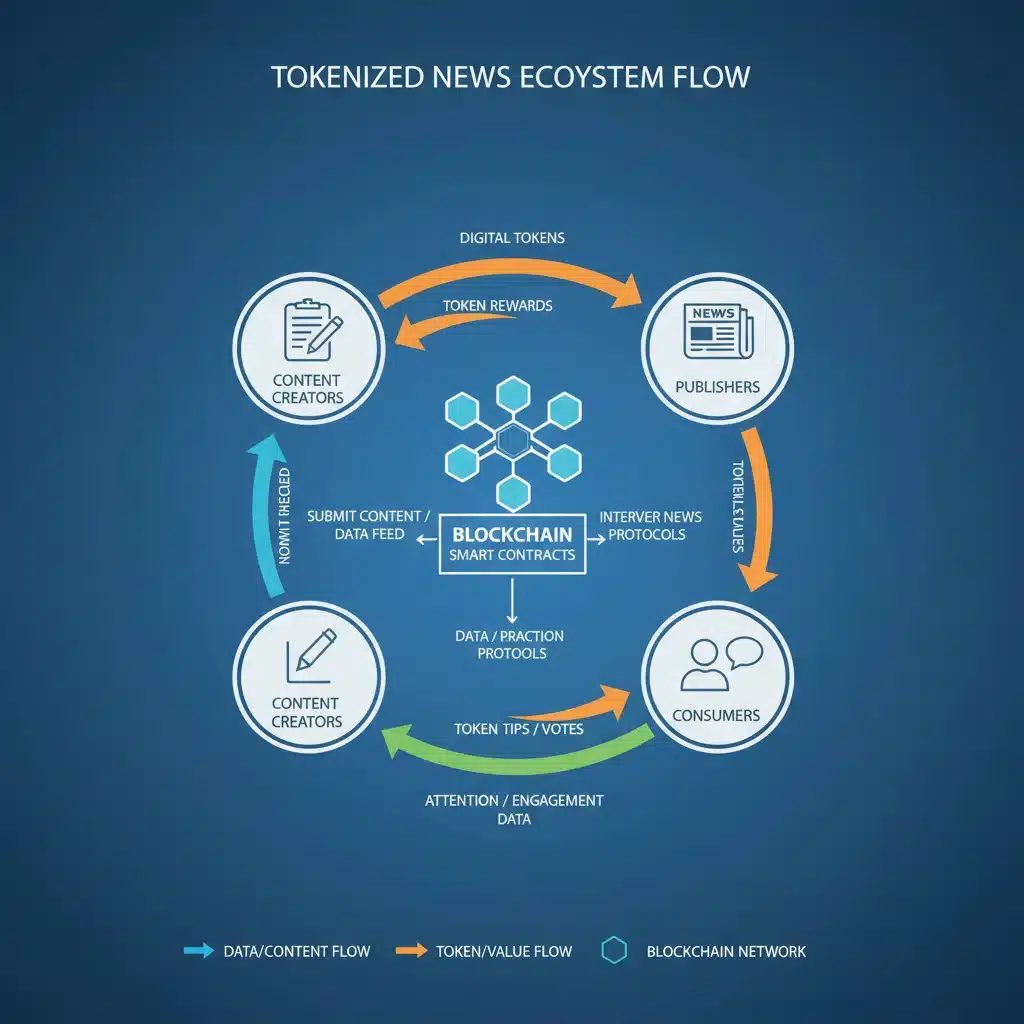
Projected Impact: Increased reader loyalty, lower churn rates, and a more engaged community that can also serve as a valuable source of feedback and content ideas.
Strategy 4: Explore Decentralized Autonomous Organizations (DAOs) for Content Curation and Funding
For more innovative U.S. media companies, forming a DAO around specific journalistic initiatives or even the entire newsroom can be a revolutionary step. DAOs are organizations governed by smart contracts and token holders, offering a truly decentralized and transparent model.
- Crowdfund Investigative Journalism: Use a DAO structure to allow token holders to collectively fund specific investigative projects. Contributors receive tokens that grant them a say in the direction of the project and potentially a share of any future revenue generated (e.g., from syndication or documentaries).
- Decentralized Content Curation: Token holders could vote on which stories get priority, fact-check submissions, or even approve new journalists joining the platform.
- Transparent Treasury Management: All financial decisions within the DAO (e.g., journalist salaries, operational costs) are recorded on the blockchain and voted upon by token holders, ensuring complete transparency.
Projected Impact: Attracting new funding sources, building unparalleled trust and transparency, and fostering a highly engaged, community-driven journalistic endeavor.
Strategy 5: Data Monetization with User Consent
Tokenized news models can revolutionize how user data is collected and monetized, shifting power back to the individual.
- Opt-in Data Sharing with Rewards: Allow users to explicitly opt-in to share their browsing data or demographic information in exchange for tokens. This creates a transparent value exchange.
- Data Marketplaces: Explore creating a blockchain-based marketplace where users can sell their anonymized data directly to advertisers or researchers, with a cut going to the media company for facilitating the transaction.
- Privacy-Preserving Technologies: Integrate zero-knowledge proofs or other privacy-enhancing technologies to ensure that user data can be monetized without compromising personal identifiable information.
Projected Impact: New revenue streams from ethical data monetization, improved user trust, and compliance with evolving data privacy regulations.
Technological Considerations and Implementation Challenges
While the potential of tokenized news models is immense, their implementation is not without challenges. U.S. media companies must carefully consider the technological infrastructure and regulatory landscape.
Blockchain Selection
Choosing the right blockchain is paramount. Factors to consider include transaction speed, cost, scalability, security, and developer community support. Ethereum, Polygon, Solana, Avalanche, and Flow are leading contenders, each with distinct advantages.
Smart Contract Development and Auditing
Robust and secure smart contracts are the backbone of any tokenized system. Media companies will need to invest in skilled blockchain developers or partner with specialized firms. Regular security audits are essential to prevent vulnerabilities.
Wallet Integration and User Experience
For mass adoption, the user experience of interacting with tokens and crypto wallets must be seamless. This means simplifying the onboarding process for non-crypto-native users and providing clear instructions and support.
Regulatory Compliance
The regulatory environment for digital assets, particularly security tokens, is still evolving. U.S. media companies must stay abreast of SEC guidelines and other relevant financial regulations to ensure compliance. Legal counsel specializing in blockchain will be crucial.
Education and Talent Acquisition
A significant challenge will be educating internal teams and acquiring talent with expertise in blockchain, cryptocurrency, and decentralized finance (DeFi). Training programs and strategic hires will be necessary.
Measuring Success: KPIs for 15% Revenue Growth
To accurately track the 15% revenue growth target, U.S. media companies need to establish clear Key Performance Indicators (KPIs) for their tokenized news models:
- Token Sales Revenue: Track direct revenue from NFT sales, utility token purchases, and any security token offerings.
- Micropayment Volume: Monitor the number and value of individual content purchases made with tokens.
- Community Token Engagement: Measure the active token holders, staking rates, governance participation, and the volume of token-rewarded interactions.
- New User Acquisition: Track the number of new users attracted specifically by tokenized offerings.
- Churn Reduction: Analyze whether tokenized incentives lead to lower subscriber churn rates.
- Cost Savings: Evaluate any reductions in transaction fees or intermediary costs compared to traditional payment systems.
- Brand Sentiment: Monitor public perception and media coverage related to the company’s innovative tokenized initiatives.

Case Studies and Early Adopters (Illustrative Examples)
While the full potential of tokenized news models is still emerging, several projects and early adopters provide valuable insights:
- The Associated Press (AP): AP has minted some of its iconic photojournalism as NFTs, selling them as digital collectibles. This demonstrates a direct revenue stream from unique journalistic assets.
- Decentralized Journalism Platforms: Projects like Civil (though ultimately unsuccessful in its original form, it paved the way for ideas) and Substack (integrating crypto payments) explore direct creator-to-consumer models, albeit not fully tokenized in the sense discussed here, they hint at the shift.
- NFT-Gated Content: Some independent journalists and creators are experimenting with using NFTs as access passes to exclusive newsletters or communities, showcasing the utility token aspect.
These examples, though varied, underscore the growing interest and nascent success in leveraging blockchain and tokenization within the broader content creation industry. U.S. media companies can learn valuable lessons from these pioneers, adapting strategies to their specific contexts.
The Future of News: Beyond 2027
The adoption of tokenized news models by 2027 is not merely about achieving a 15% revenue increase; it’s about future-proofing the news industry. Beyond this initial phase, we can anticipate even more sophisticated applications:
- Personalized News Feeds with Tokenized Preferences: Users could own tokens that represent their content preferences, allowing for highly personalized and privacy-preserving news delivery.
- Journalism-as-a-Service (JaaS): Independent journalists could offer their reporting skills as a service, funded and managed through tokenized platforms, bidding on projects and receiving payments via smart contracts.
- Cross-Media Tokenization: Integration of news tokens with other forms of media (e.g., film, music, gaming) to create interconnected digital economies.
- AI-Powered Content Curation and Verification with Token Incentives: AI models could be incentivized with tokens to curate content or verify facts, with human oversight.
Conclusion: Seizing the Tokenized Opportunity
The imperative for U.S. media companies is clear: embrace tokenized news models now to secure a competitive edge and drive substantial revenue growth. The projected 15% increase by 2027 is an attainable goal for those willing to innovate, experiment, and strategically integrate blockchain technology. This transformation is not just about adopting new tech; it’s about redefining the relationship between news organizations, journalists, and their audiences, building more transparent, engaging, and financially resilient ecosystems. The future of news is decentralized, tokenized, and brimming with potential for those brave enough to lead the charge.