Wearable Tech: Reshaping U.S. News Delivery by 2027

The landscape of news consumption is in a constant state of flux, driven by relentless technological innovation. From broadsheets to broadcasts, from desktops to smartphones, each new platform has fundamentally reshaped how information is gathered, disseminated, and absorbed. Now, as we approach the mid-point of the decade, a new frontier is emerging with the potential to catalyze the most profound transformation yet: next-generation wearable technology. By 2027, these smart devices will not merely be accessories but integral conduits, fundamentally reshaping U.S. news delivery and indeed, the very fabric of journalism.
Our focus today is on understanding this imminent shift, providing a six-month forecast into how wearable tech will redefine news consumption, creation, and interaction for the American public. The evolution of wearable news delivery isn’t a distant fantasy; it’s an accelerating reality that demands immediate attention from media organizations, technologists, and consumers alike.
The Current State of Wearable Technology and News Consumption
Before we delve into the future, it’s crucial to acknowledge the current baseline. Wearable technology, while still in its relative infancy concerning mass news adoption, has already laid significant groundwork. Smartwatches, fitness trackers, and even some early iterations of smart glasses have introduced the concept of ‘ambient information’ – data delivered discreetly and contextually, often without requiring direct user interaction beyond a glance or a subtle vibration.
Smartwatches: The First Wave of Ubiquitous News Alerts
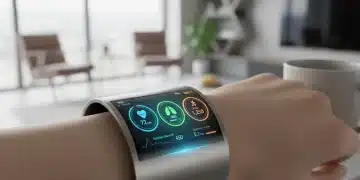
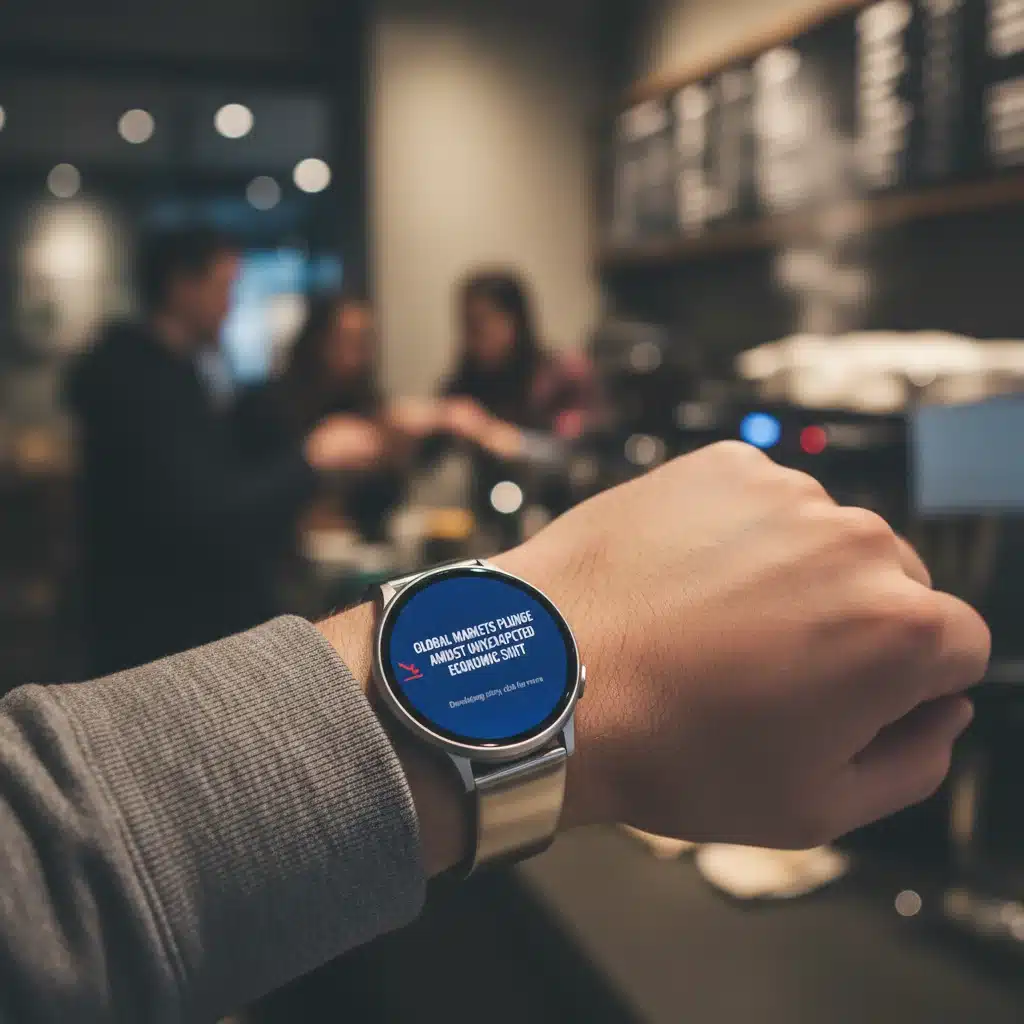
Smartwatches have been the most successful wearable category to date. Their primary function in news delivery has been twofold: push notifications for breaking news and glanceable headlines. Users can receive alerts directly on their wrists, often with a brief summary, and sometimes even scroll through an article’s opening paragraphs. This has introduced an unprecedented level of immediacy and convenience, allowing users to stay informed without pulling out their smartphones. The haptic feedback of a smartwatch alert has become a subtle, yet effective, signal for urgent information. While not ideal for deep dives, smartwatches excel at keeping users abreast of critical developments in real-time, making them a key player in wearable news delivery.
Fitness Trackers: Peripheral Information Access
While less directly involved in traditional news, fitness trackers have contributed to the wearable ecosystem by normalizing the concept of a device constantly monitoring and delivering data. This has acclimated users to the idea of always-on information streams, paving the way for more sophisticated news delivery mechanisms.
Early Smart Glasses: The Glimmer of Immersive News
Though consumer adoption has been limited, early smart glasses (like Google Glass) offered a glimpse into augmented reality (AR) news overlays. Imagine walking down the street and seeing relevant headlines or contextual information about landmarks projected directly into your field of vision. While these early attempts faced challenges, they established a conceptual framework for how visual and spatial news delivery could evolve.
Drivers of Change: What’s Fueling the Wearable News Revolution?
Several converging factors are accelerating the integration of wearables into the news ecosystem. Understanding these drivers is key to anticipating the transformation of wearable news delivery.
Technological Advancements: Miniaturization and Power Efficiency
The continuous improvement in microprocessors, battery life, and display technology is making wearables more powerful, smaller, and more comfortable. This enables richer content experiences without sacrificing form factor or daily usability. Advances in haptic feedback, voice assistants, and context-aware sensors are also enhancing the potential for intuitive news interaction.
5G and Beyond: Low-Latency, High-Bandwidth Connectivity
The rollout of 5G networks, and the impending development of 6G, provides the necessary infrastructure for seamless, high-speed data transfer to and from wearables. This means instant loading of rich media, real-time updates, and the ability to stream high-quality audio and video directly to even the smallest devices, opening up new avenues for wearable news delivery.
Artificial Intelligence and Personalization
AI is the engine driving hyper-personalization. Machine learning algorithms can analyze user preferences, location data, biometric information, and even emotional states (via future sensor tech) to deliver news that is not only relevant but also presented in the most digestible format for the individual at that precise moment. This goes beyond simple topic preferences; it’s about delivering the ‘right news, right now, right here, right way.’
Changing Consumer Habits: Demand for Instant, Contextual Information
Modern consumers expect immediate access to information. The smartphone has conditioned us to a world of instant gratification, and wearables take this a step further by offering even less friction. The desire for hands-free, glanceable updates, especially during activities where phone interaction is inconvenient or unsafe (e.g., driving, exercising), fuels the demand for advanced wearable news delivery solutions.
The Six-Month Forecast: How Wearables Will Reshape U.S. News Delivery by 2027
Looking ahead to the next few years, we can anticipate several key shifts in how news is consumed and created, largely thanks to the burgeoning capabilities of wearable technology.
Phase 1: Enhanced Smartwatch Integration (Next 6-12 Months)
The immediate future will see smartwatches evolve beyond simple notifications. Expect more sophisticated app integration from major news outlets, offering:
- Audio News Digests: Short, AI-generated audio summaries of top stories, playable directly from the watch, perfect for commutes or quick updates.
- Interactive Notifications: The ability to quickly react to a breaking story (e.g., ‘like,’ ‘save for later,’ ‘share’) directly from the watch face.
- Location-Aware Alerts: News relevant to your immediate surroundings, such as traffic incidents on your route, local government updates when you’re near a civic building, or cultural event news when you’re in a specific district.
- Biometric-Contextual News: While nascent, imagine news presented in a less alarming tone if your heart rate is elevated, or a suggestion to take a break if stress levels are high, integrating mental well-being with news consumption.
Phase 2: The Rise of Smart Audio and Hearables (12-24 Months)
Smart earbuds and hearables will become increasingly important, moving beyond music and calls to deliver personalized, auditory news experiences. This will be a significant leap for wearable news delivery, offering a truly hands-free experience.
- Personalized News Radio: AI-curated news streams based on your interests, delivered directly to your ears, similar to a personalized podcast.
- Real-time Translation and Summarization: Imagine listening to a foreign news broadcast with real-time translation, or having lengthy articles summarized into concise audio snippets while you’re on the go.
- Immersive Audio Journalism: News organizations will experiment with 3D audio to create more immersive storytelling experiences, placing listeners ‘at the scene’ of events.
- Voice-Activated News Queries: Simply ask your hearable for the latest headlines on a specific topic, and receive an instant audio briefing.
Phase 3: Augmented Reality (AR) Glasses and Spatial News (24-36 Months)
As AR glasses become more compact, stylish, and powerful, they will unlock a truly transformative dimension for news delivery. This is where wearable news delivery becomes truly spatial and interactive.
- Contextual Overlays: Walking past a landmark and seeing a historical news report about it, or passing a building and seeing headlines related to the company housed within.
- Interactive Data Visualizations: Complex data, like election results or climate change models, could be projected as interactive 3D graphics in your environment, allowing for intuitive exploration.
- Holographic News Avatars: Imagine a virtual news anchor delivering headlines directly to you, or a reporter appearing as a hologram to provide on-the-spot analysis.
- Blended Reality Reporting: Journalists could use AR to create mixed-reality reports, overlaying digital information onto real-world scenes for enhanced understanding.

Implications for News Organizations and Journalists
The shift towards wearable news delivery presents both immense opportunities and significant challenges for the media industry.
Content Strategy Reimagined
News organizations will need to adapt their content strategies for glanceable, audible, and spatial formats. This means:
- Micro-Content Creation: Developing ultra-short, impactful headlines and summaries optimized for small screens and quick audio consumption.
- Audio-First Approach: Investing in audio journalism, podcasts, and AI-driven narration tools.
- Visual and Spatial Storytelling: Exploring new ways to visualize data and narratives for AR environments.
- Contextual Relevance: Prioritizing location-aware and personalized content delivery.
New Revenue Models
Traditional advertising models may not translate directly to wearable interfaces. News organizations will need to explore:
- Subscription Models: Premium, ad-free, or enhanced wearable news experiences.
- Contextual Advertising: Non-intrusive, highly relevant ads that appear only when appropriate (e.g., a restaurant ad after a food review in an AR overlay).
- Partnerships: Collaborating with wearable device manufacturers for exclusive content or integrated features.
Ethical Considerations and Trust
The intimate nature of wearables raises critical ethical questions:
- Privacy Concerns: How much personal data (location, biometrics, preferences) can news organizations collect and use? Transparency and user control will be paramount.
- Algorithmic Bias: Ensuring that AI-driven personalization doesn’t create echo chambers or reinforce existing biases.
- Misinformation: The speed and ubiquity of wearable news could accelerate the spread of fake news. Verification and trusted sources will be more important than ever.
- Attention Overload: How to deliver news effectively without overwhelming users with constant notifications and information.
The Role of the Journalist
Journalists will need to develop new skill sets:
- Multi-Platform Storytelling: Crafting narratives that can seamlessly transition between text, audio, and visual formats for different wearable devices.
- Data Journalism for AR: Presenting complex data in intuitive, interactive 3D visualizations.
- Ethical AI Use: Understanding and mitigating biases in algorithms used for news curation.
- Engaging with Ambient Information: Learning how to create compelling content that fits into the ‘ambient’ nature of wearable information.
Challenges and Potential Roadblocks
While the potential of wearable news delivery is vast, several challenges must be addressed for widespread adoption and success.
Device Fragmentation and Interoperability
The wearable market is fragmented, with various operating systems and hardware platforms. News organizations will face the challenge of developing content that works seamlessly across different devices without requiring excessive development resources.
User Adoption Rates
While smartwatches are popular, widespread adoption of more advanced wearables like AR glasses is still some years away. The ‘killer app’ for news on these devices needs to emerge to drive mainstream consumer interest.
Battery Life and Connectivity Reliance
Reliable battery life and constant, high-speed connectivity are crucial for an optimal wearable news experience. Any interruptions can quickly lead to user frustration.
Information Overload and Notification Fatigue
The constant stream of information from wearables could lead to notification fatigue. News organizations must be judicious in their delivery, prioritizing relevance and user-controlled settings to avoid overwhelming consumers.
Monetization Hurdles
Developing sustainable revenue models for wearable news content will require innovative thinking. Traditional ad formats may not be suitable, necessitating new approaches to sponsorship, subscriptions, and native advertising.
Conclusion: A Future of Seamless, Contextual News
By 2027, the U.S. news landscape will be profoundly altered by the advancements in wearable technology. We are moving towards a future where news is no longer something we seek out actively on a dedicated screen, but rather an ambient, contextual, and personalized stream of information that seamlessly integrates into our daily lives. From glanceable headlines on smartwatches to immersive AR visualizations and personalized audio digests, wearable news delivery promises a more immediate, relevant, and engaging way to stay informed.
News organizations that embrace these changes, invest in new content formats, and prioritize ethical considerations will be best positioned to thrive in this evolving environment. The next six months will be critical for laying the groundwork, experimenting with new delivery methods, and understanding the nuanced preferences of a wearable-equipped audience. The future of journalism is hands-free, always-on, and deeply personal, and it’s arriving faster than we think.