Decentralized Social Graphs: News Discovery 2026 US Outlook
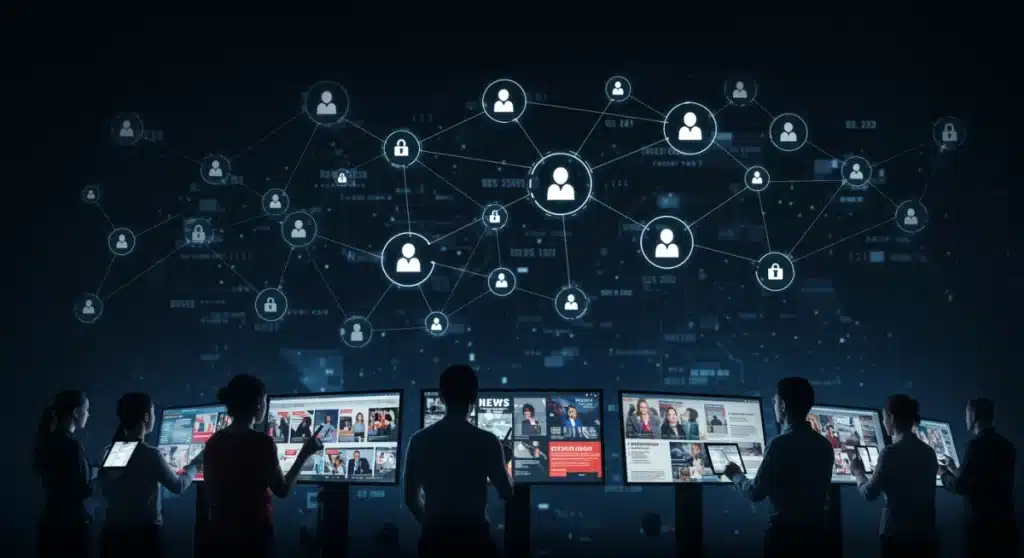
In 2026, decentralized social graphs will fundamentally transform news discovery for US audiences by empowering individuals with greater control over their information streams and fostering more resilient, transparent media ecosystems.
The digital landscape is in constant flux, and the way we consume news is no exception. As we look towards 2026, a profound shift is on the horizon, driven by the emergence of decentralized social graphs. This innovative approach promises to redefine how US audiences discover, verify, and interact with news, moving away from the centralized platforms that currently dominate our information diets. Imagine a world where your news feed isn’t dictated by opaque algorithms or corporate interests, but by your own trusted connections and transparent, verifiable sources. This isn’t a distant dream; it’s the near-future reality that decentralized social graphs are building.
Understanding Decentralized Social Graphs
To grasp their impact on news discovery, it’s crucial to first understand what decentralized social graphs are. At their core, they represent a paradigm shift from traditional social media platforms. Instead of a single entity owning your data and connections, decentralized graphs distribute this information across a network, often leveraging blockchain technology.
The Core Principles of Decentralization
Decentralization in this context means no single point of control or failure. User data, profiles, and connections reside on a distributed ledger or peer-to-peer network, rather than a corporate server. This architecture empowers users with true data ownership and portability, a stark contrast to the current Web2 model.
- User Data Ownership: Individuals fully control their digital identity and personal information.
- Censorship Resistance: Without a central authority, content is less susceptible to arbitrary removal or suppression.
- Interoperability: Social graphs can be portable across various applications and services, breaking down platform silos.
- Transparency: Network rules and data handling are often open-source and auditable.
This fundamental shift has profound implications for how information, particularly news, flows through digital channels. The power moves from platform custodians to the users themselves, fostering a more robust and democratic information environment.
The Current Challenges in News Discovery
Before diving into the solutions offered by decentralized social graphs, it’s important to acknowledge the pressing issues facing news discovery today. Centralized social media platforms, while convenient, have introduced significant vulnerabilities and biases into our information consumption habits.
Algorithmic Echo Chambers and Filter Bubbles
The algorithms employed by platforms like Facebook and X (formerly Twitter) are designed to maximize engagement. While this can personalize content, it often leads to users being exposed primarily to information that confirms their existing beliefs, creating echo chambers. This phenomenon, known as a filter bubble, severely limits exposure to diverse perspectives and critical thinking.
Furthermore, these algorithms prioritize sensationalism and engagement over accuracy or journalistic integrity. This can inadvertently amplify misinformation and divisive narratives, making it increasingly difficult for US audiences to discern credible news from false or misleading content. The economic incentives of these platforms often run counter to the public’s need for balanced, factual reporting.
Data Exploitation and Privacy Concerns
Another major challenge is the extensive data collection and exploitation by centralized platforms. User data, including news consumption habits, is often harvested, analyzed, and sold to advertisers, or used to manipulate user behavior. This erosion of privacy undermines trust and leaves users feeling exploited, knowing their digital footprint is a commodity.
The lack of transparency regarding how data is used, combined with frequent data breaches, has made privacy a paramount concern for many. Decentralized social graphs offer a compelling alternative by putting data ownership back into the hands of the individual, thereby mitigating these pervasive privacy risks.
How Decentralized Social Graphs Will Transform News Discovery
By 2026, the influence of decentralized social graphs on news discovery for US audiences will be palpable. The shift will be characterized by enhanced trust, greater personalization without privacy compromise, and a more resilient news ecosystem.
Empowering User-Centric Curation
One of the most significant transformations will be the move towards user-centric news curation. Instead of relying on a central algorithm, individuals will curate their news feeds based on their own network of trusted connections. This could involve following specific journalists, independent media organizations, or even ‘curation DAOs‘ (Decentralized Autonomous Organizations) that specialize in specific topics.
This model allows users to build a personalized news experience that aligns with their values and interests, free from the manipulative influence of engagement-driven algorithms. The emphasis shifts from passive consumption to active, informed selection, fostering a more discerning news audience.
Enhanced Trust and Verifiability
Blockchain technology, often underpinning decentralized social graphs, introduces unprecedented levels of trust and verifiability to news. Content creators can timestamp and immutably record their articles, making it easier to track provenance and detect alterations. This creates a powerful deterrent against plagiarism and misinformation.
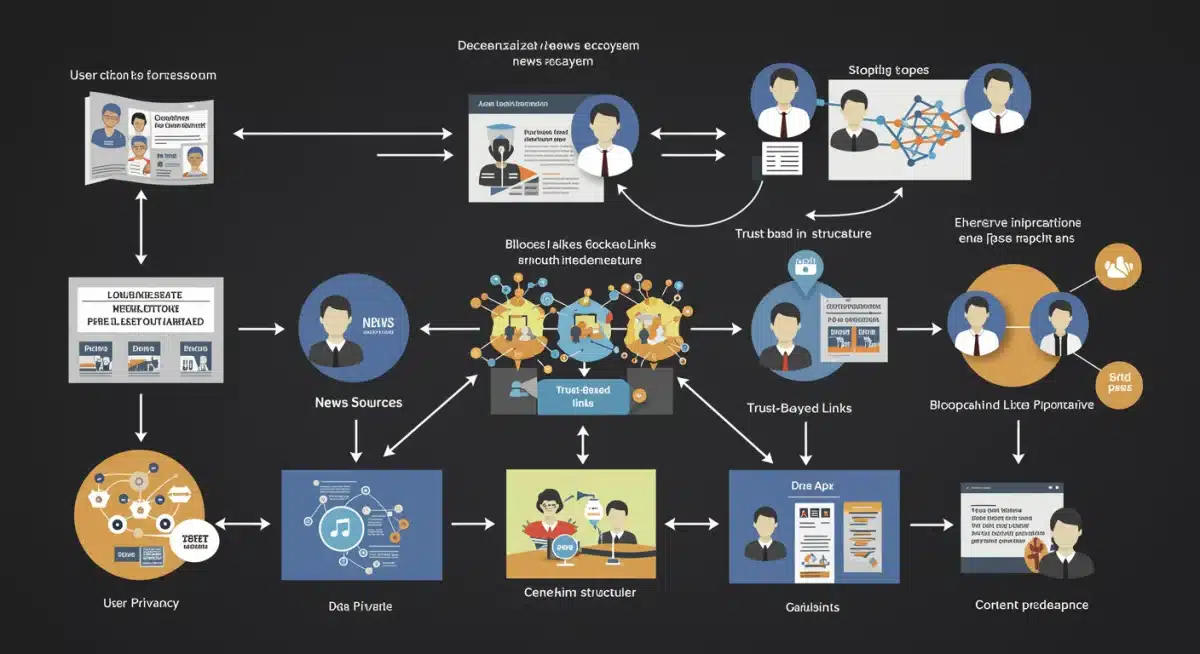
Reputation systems built on decentralized identifiers (DIDs) can also emerge, allowing readers to assess the credibility of sources and individuals based on transparent, on-chain interactions rather than opaque platform ratings. This fosters a more accountable and trustworthy journalistic environment, crucial for combating the spread of fake news.
The Role of Web3 and Tokenization in News
The integration of Web3 principles and tokenization strategies will further amplify the impact of decentralized social graphs on news discovery. These technologies introduce new economic models and incentive structures that can revolutionize how news is produced, distributed, and consumed.
Incentivizing Quality Journalism
Tokenization can create direct economic incentives for quality journalism. Readers might directly reward journalists or news organizations with crypto tokens for valuable content, bypassing traditional advertising models. This can foster independent journalism and reduce reliance on ad revenue, which often compromises editorial integrity.
- Content Monetization: Journalists can receive micropayments or subscriptions directly from readers.
- Reputation Tokens: Tokens can signify a journalist’s expertise or a news outlet’s credibility.
- Community Governance: Token holders might participate in editorial decisions or content moderation.
This shift empowers content creators and consumers, aligning incentives towards producing and valuing high-quality, truthful information. It creates a more equitable distribution of value within the news ecosystem.
Decentralized Content Distribution Networks
Alongside social graphs, decentralized content distribution networks (CDNs) will ensure news articles are resilient to censorship and platform shutdowns. By storing content on distributed file systems like IPFS (InterPlanetary File System), news becomes accessible even if a central server or platform is taken offline. This enhances the availability and robustness of information.
Such networks ensure that critical information remains accessible to the public, particularly during times of crisis or political upheaval. This resilience is a cornerstone of a truly free and open press, vital for a healthy democracy in the US and beyond.
Challenges and Adoption Hurdles for US Audiences
While the vision for decentralized social graphs in news discovery is compelling, their widespread adoption by US audiences by 2026 will not be without challenges. Several hurdles must be overcome for these technologies to truly go mainstream.
Usability and User Experience
Current decentralized applications (dApps) often suffer from complex user interfaces and a steep learning curve. For mass adoption in news discovery, these platforms must become as intuitive and user-friendly as their centralized counterparts. Simplifying wallet management, onboarding processes, and overall navigation will be crucial.
The average news consumer in the US is accustomed to immediate, seamless access to information. Any friction in the user experience could deter widespread adoption, regardless of the underlying technological benefits. Developers must prioritize design and accessibility to bridge this gap.
Scalability and Performance
Blockchain networks, while secure, have historically faced scalability challenges. Processing large volumes of user interactions and news content efficiently is paramount for a global news discovery platform. Solutions like layer-2 scaling and sharding are evolving, but their maturity and widespread implementation will be key factors by 2026.
Slow transaction speeds or high network fees could hinder the real-time consumption of news that users expect. Continuous advancements in blockchain technology will be necessary to ensure decentralized social graphs can handle the demands of a dynamic news cycle and a large user base.
The 2026 Projection: A Hybrid Future
Looking ahead to 2026, it’s likely that news discovery for US audiences will feature a hybrid model. While decentralized social graphs will gain significant traction, completely displacing established platforms within such a short timeframe is improbable. Instead, we anticipate a period of coexistence and integration.
Interoperability and Seamless Transitions
The most successful decentralized news discovery platforms will likely offer seamless interoperability with existing Web2 services, allowing users to gradually transition their digital identities and social graphs. APIs and bridges that connect centralized and decentralized ecosystems will play a vital role in this transition, making it easier for users to experiment without fully abandoning familiar platforms.
This approach minimizes disruption while introducing the benefits of decentralization. US audiences will increasingly value platforms that offer the best of both worlds: the convenience of Web2 with the privacy and control of Web3.
Increased Awareness and Education
A critical factor for adoption will be increased public awareness and education regarding the benefits of decentralized technologies. As more high-profile data breaches occur and concerns about algorithmic manipulation grow, the appeal of user-owned and transparent news discovery will become more evident to the general public.
Media literacy initiatives, combined with accessible explanations of Web3 concepts, will empower US citizens to make informed choices about where and how they consume their news. By 2026, a growing segment of the population will actively seek out decentralized alternatives, driving further innovation and adoption in this space.
| Key Aspect | Impact on News Discovery by 2026 |
|---|---|
| User Control | Individuals gain direct control over data and news sources, moving away from centralized algorithms. |
| Trust & Transparency | Blockchain ensures content provenance and verifiable reputation systems for news sources. |
| Economic Models | Tokenization enables direct reader-to-journalist payments, fostering independent journalism. |
| Censorship Resistance | Distributed networks make news content more resilient to censorship and platform shutdowns. |
Frequently Asked Questions About Decentralized News
Decentralized social graphs are social networks where user data and connections are stored across a distributed network, rather than on a single company’s servers. This gives users ownership and control over their digital identity and interactions, fostering greater privacy and censorship resistance compared to traditional platforms.
They will improve news discovery by enabling user-centric curation, allowing individuals to build news feeds based on trusted connections rather than algorithmic biases. Additionally, blockchain integration will enhance content verifiability and transparency, making it easier to identify credible sources and combat misinformation effectively.
Some traditional news outlets may begin experimenting with decentralized models, particularly for content distribution and reader engagement. However, widespread adoption across the entire industry by 2026 is unlikely. A hybrid approach, integrating decentralized tools while maintaining existing infrastructure, is a more probable scenario for many.
US audiences will benefit from increased privacy, reduced algorithmic manipulation, and access to a more diverse range of perspectives. They will also gain greater control over their news consumption, fostering a more informed and engaged citizenry less susceptible to filter bubbles and misinformation campaigns.
Key challenges include ensuring user-friendliness and intuitive interfaces, as current decentralized applications can be complex. Scalability issues on blockchain networks, transaction costs, and the need for greater public awareness and education about these technologies are also significant hurdles to overcome for mass adoption.
Conclusion
The journey towards a more decentralized news landscape, driven by the innovations of decentralized social graphs, represents a crucial evolution for US audiences. By 2026, we anticipate a significant shift towards greater user control, enhanced transparency, and more resilient information ecosystems. While challenges in usability and scalability persist, the undeniable benefits of data ownership, censorship resistance, and verifiable content will propel these technologies forward. The future of news discovery is poised to be more democratic, empowering individuals to curate their own information diets and fostering a healthier, more trustworthy media environment for all.