Sustainable Tech Innovations: 4 Emerging Trends for Greener Consumer Electronics by 2026

The landscape of consumer electronics is undergoing a profound transformation, driven by an urgent global imperative for sustainability. As consumers become increasingly aware of the environmental footprint of their devices, manufacturers are responding with groundbreaking sustainable tech trends that promise a greener future. By 2026, these innovations are projected to usher in a new era of eco-conscious gadgets, with a significant focus on achieving at least 15% energy efficiency improvements across the board. This article delves into four pivotal emerging trends shaping the sustainable evolution of consumer electronics, exploring how they are redefining product lifecycles, material sourcing, and energy consumption.
The journey towards truly sustainable electronics is complex, involving every stage from raw material extraction to end-of-life disposal. Historically, the industry has been characterized by rapid innovation, planned obsolescence, and a linear ‘take-make-dispose’ model. However, growing environmental concerns, regulatory pressures, and shifting consumer values are compelling a paradigm shift. The focus is no longer solely on performance and aesthetics but also on ecological impact. These sustainable tech trends are not just buzzwords; they represent concrete advancements aimed at mitigating climate change, reducing waste, and conserving precious resources. Understanding these trends is crucial for both consumers seeking responsible choices and industry stakeholders aiming to stay ahead in a rapidly evolving market.
From the smartphones in our pockets to the smart home devices that manage our lives, every piece of technology has an environmental story. The goal of these emerging trends is to ensure that this story becomes one of responsibility, regeneration, and efficiency. We are moving towards a future where high-performance electronics can coexist harmoniously with a thriving planet. Let’s explore the innovations that are making this vision a reality.
1. The Rise of Eco-Conscious Materials: Beyond Recycled Plastics
One of the most significant shifts in sustainable consumer electronics is the relentless pursuit of eco-conscious materials. For years, the industry has relied heavily on virgin plastics, rare earth minerals, and other resource-intensive components. However, the future is being built with a new palette of sustainable materials, moving far beyond simply incorporating recycled plastics. This trend is multifaceted, encompassing bio-based polymers, responsibly sourced minerals, and novel composite materials that offer both performance and environmental benefits.
Manufacturers are increasingly investing in research and development to find alternatives to traditional petroleum-based plastics. Bio-based plastics, derived from renewable sources like corn starch, sugarcane, and algae, are gaining traction. These materials often have a lower carbon footprint during production and can be biodegradable or compostable, offering a more benign end-of-life scenario. Companies are experimenting with these materials in device casings, internal components, and packaging, demonstrating that sustainability doesn’t have to compromise design or durability. For instance, some brands are now using bioplastics derived from plant waste, turning what would typically be discarded into valuable product components.
Beyond plastics, the focus extends to metals and minerals. The mining of rare earth elements and other essential metals often comes with significant environmental degradation and social costs. The sustainable tech trend here involves increasing the use of recycled metals, designing products for easier material recovery, and exploring alternative material compositions that reduce reliance on critical raw materials. Furthermore, certifications for ethically sourced minerals are becoming more prevalent, pushing supply chains towards greater transparency and accountability. This includes initiatives to ensure minerals are not sourced from conflict zones and that mining practices adhere to strict environmental and labor standards.
Novel composite materials are also emerging, combining different sustainable elements to achieve desired properties. Think of materials made from recycled wood fibers, hemp, or even agricultural waste blended with recycled polymers to create durable, lightweight, and aesthetically pleasing device bodies. These innovations not only reduce the demand for virgin resources but also offer unique textures and appearances that can differentiate products in the market. The challenge lies in scaling these materials for mass production while maintaining cost-effectiveness and performance standards, but significant progress is being made. This push for advanced eco-materials is a cornerstone of achieving the broader goal of 15% energy efficiency, as the energy embodied in materials contributes significantly to a product’s overall environmental impact.
2. Circular Economy Models: Design for Longevity, Repair, and Recycling
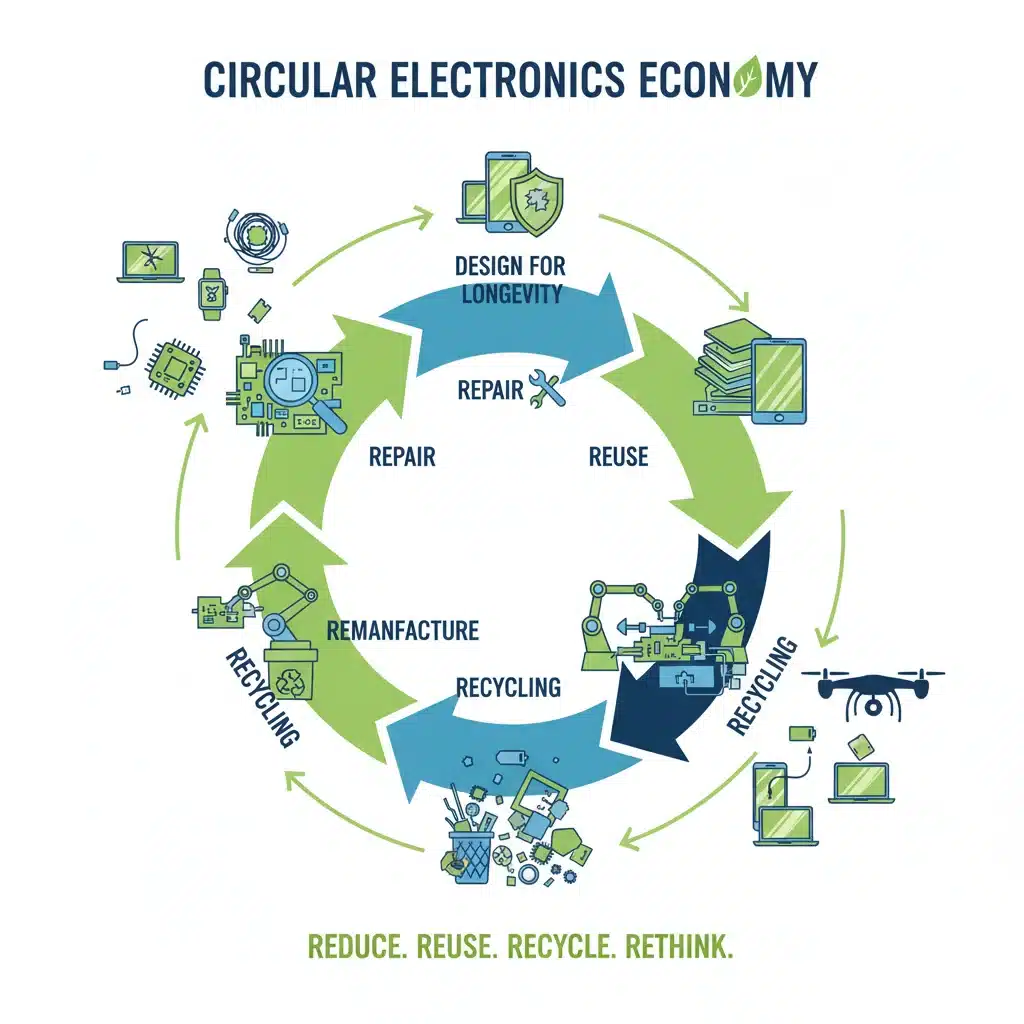
The traditional linear economic model of ‘take-make-dispose’ is fundamentally unsustainable for consumer electronics. The second major sustainable tech trend is the widespread adoption of circular economy principles. This paradigm shift focuses on designing products for longevity, ease of repair, reuse, remanufacturing, and ultimately, effective recycling. The goal is to keep materials in use for as long as possible, minimizing waste and maximizing resource efficiency. By 2026, we expect to see a significant uptick in products explicitly designed with circularity in mind, directly contributing to energy savings by reducing the need for new production.
Design for Longevity: This involves creating devices that are built to last, both physically and functionally. Manufacturers are moving away from planned obsolescence by using more durable components, offering robust software support for extended periods, and providing modular designs that allow for upgrades rather than full replacements. This reduces the frequency of new purchases, thereby cutting down on manufacturing energy and raw material consumption. For instance, some laptops are now designed with user-replaceable RAM and storage, extending their useful life significantly.
Repairability: A key pillar of the circular economy is making products easier to repair. This means providing spare parts, accessible repair manuals, and designing devices that can be disassembled and reassembled without specialized tools or proprietary knowledge. The ‘right to repair’ movement is gaining momentum globally, influencing legislation and pushing manufacturers to adopt more repair-friendly practices. Companies that offer comprehensive repair services or facilitate third-party repairs will gain a competitive edge and reduce electronic waste. This also empowers consumers to extend the life of their devices, saving money and resources.
Reuse and Remanufacturing: Beyond repair, the circular model emphasizes reusing entire devices or their components. This includes robust trade-in programs, certified refurbished product lines, and initiatives to harvest functional parts from end-of-life devices for use in new products. Remanufacturing takes this a step further, where used products are brought back to ‘as-new’ condition through a rigorous process of disassembly, inspection, cleaning, part replacement, and reassembly. This is distinct from simple repair, as remanufactured products often come with new warranties and performance guarantees, significantly reducing the energy and material inputs compared to manufacturing from scratch.
Effective Recycling: When a product truly reaches the end of its useful life, the focus shifts to maximizing material recovery. This requires designing products that are easy to disassemble for material sorting and using materials that are readily recyclable. Advanced recycling technologies are also crucial, enabling the recovery of valuable materials like rare earths, gold, and palladium from complex electronic waste streams. The emphasis is on ‘closed-loop’ recycling, where materials from old electronics are used to create new ones, minimizing the need for virgin resources. The implementation of these circular principles is directly linked to the 15% energy efficiency target, as each extension of a product’s life or reuse of its components avoids the energy-intensive processes of primary production.

3. Smart Energy Management and Ultra-Low Power Consumption
Achieving a 15% improvement in energy efficiency by 2026 is not just about how devices are made, but also how they consume power throughout their operational life. The third major sustainable tech trend revolves around intelligent energy management and the development of ultra-low power components. This encompasses advancements in chip design, software optimization, and the integration of smart energy-saving features that dynamically adapt to user behavior and environmental conditions.
Advanced Chip Design and Architectures: At the heart of every electronic device is its processing unit. Chip manufacturers are continually innovating to create more powerful yet more energy-efficient processors. This involves new transistor technologies, specialized co-processors for specific tasks (like AI processing), and heterogeneous computing architectures that assign tasks to the most energy-efficient core available. For example, System-on-Chip (SoC) designs are becoming increasingly sophisticated, integrating multiple functions onto a single chip to reduce power draw and improve overall efficiency. The shift towards ARM-based architectures in various computing devices, known for their power efficiency, is another testament to this trend.
Software Optimization and AI for Efficiency: Hardware advancements are complemented by intelligent software. Operating systems and applications are being designed with energy efficiency in mind, optimizing background processes, managing resource allocation more effectively, and implementing aggressive power-saving modes. Artificial intelligence (AI) plays a crucial role here, learning user habits to predict when and how much power is needed, dynamically adjusting screen brightness, CPU clock speeds, and network connectivity. AI can also optimize battery charging cycles to extend battery lifespan, further contributing to product longevity and reducing waste. For example, smart thermostats learn household routines to optimize heating and cooling, while smart lighting systems adjust to ambient light, all contributing to overall energy reduction.
Energy Harvesting and Self-Powered Devices: A more futuristic, yet rapidly developing, aspect of this trend is energy harvesting. This involves devices drawing power from ambient sources like solar light, kinetic energy (movement), thermal gradients, or even radio frequency (RF) waves. While currently more common in low-power IoT sensors and wearables, advancements in energy harvesting technologies could lead to consumer electronics that require less frequent charging or even become self-sustaining in certain scenarios. Imagine a remote control powered by your finger presses or a smartwatch that charges from body heat. These innovations drastically reduce reliance on grid electricity and disposable batteries, making devices inherently more sustainable.
Display Technology and Peripherals: Displays are often significant power consumers. Innovations like OLED (Organic Light-Emitting Diode) technology, which only illuminates active pixels, and advancements in mini-LED backlighting offer significant energy savings compared to traditional LCDs. Furthermore, peripherals and connectivity modules are becoming more efficient. Low-power Bluetooth (BLE), advanced Wi-Fi standards, and optimized cellular modems are all designed to minimize energy draw while maintaining robust connectivity. The cumulative effect of these granular improvements in every component and software layer is what will drive the industry towards and beyond the 15% energy efficiency target by 2026, making devices not only smarter but also significantly greener.
4. Transparency and Accountability: Eco-Labels and Product Passports
The final, yet equally crucial, sustainable tech trend is the growing demand for transparency and accountability from manufacturers. Consumers are no longer content with vague environmental claims; they want verifiable data on a product’s ecological footprint. This has led to the proliferation of eco-labels, sustainability certifications, and the emerging concept of ‘digital product passports’ (DPPs), which provide comprehensive lifecycle information. This trend empowers consumers to make informed choices and incentivizes manufacturers to genuinely improve their sustainability practices, fostering trust and driving market change.
Enhanced Eco-Labels and Certifications: Beyond basic energy star ratings, more comprehensive eco-labels are gaining prominence. These labels assess a wider range of environmental criteria, including material sourcing, manufacturing processes, energy consumption, repairability, and recyclability. Examples include EPEAT (Electronic Product Environmental Assessment Tool), TCO Certified, and various national and international eco-labels that provide a holistic view of a product’s environmental performance. These certifications are often third-party verified, lending credibility to manufacturers’ claims. By 2026, expect these labels to become more standardized and widely recognized, allowing consumers to easily compare the sustainability credentials of different products.
The Rise of Digital Product Passports (DPPs): A revolutionary concept gaining traction, particularly in the European Union, is the Digital Product Passport. A DPP is a digital record attached to a physical product, accessible via a QR code or NFC tag, that contains detailed information about its origins, materials, manufacturing process, supply chain, environmental impact, repair instructions, and end-of-life options. For electronics, a DPP could include data on the percentage of recycled content, the carbon footprint of its production, the availability of spare parts, and certified repair providers. This level of granular transparency will transform how consumers interact with products, enabling them to understand the full lifecycle story and make truly sustainable purchasing decisions. For manufacturers, DPPs drive accountability and encourage sustainable design from the outset.
Supply Chain Transparency: Part of this accountability trend involves greater scrutiny of supply chains. Consumers and regulators are demanding to know where materials come from, how they are extracted, and under what conditions products are manufactured. Technologies like blockchain are being explored to create immutable records of a product’s journey from raw material to finished good, ensuring ethical sourcing and environmental compliance at every step. This not only helps combat issues like conflict minerals and unethical labor practices but also allows for better tracking of environmental impacts throughout the supply chain.
Corporate Sustainability Reporting: Beyond individual product labeling, companies are facing increased pressure to publish comprehensive sustainability reports. These reports detail their environmental, social, and governance (ESG) performance, including carbon emissions, waste generation, water usage, and efforts towards circularity. This corporate-level transparency complements product-specific information, providing a broader picture of a brand’s commitment to sustainability. The combination of robust eco-labels, detailed product passports, and comprehensive corporate reporting will create an ecosystem of transparency that empowers consumers and holds the electronics industry accountable for its environmental impact, directly supporting the drive towards more energy-efficient and sustainable products by 2026.
The Road Ahead: A Greener Electronic Future
The convergence of these four sustainable tech trends – eco-conscious materials, circular economy models, smart energy management, and radical transparency – paints a promising picture for the future of consumer electronics. By 2026, the industry is poised to deliver devices that are not only more powerful and intelligent but also significantly kinder to the planet. The ambitious goal of achieving a 15% improvement in energy efficiency is within reach, driven by innovations across the entire product lifecycle.
For consumers, this means a growing array of choices for devices that align with their values, offering durability, repairability, and a reduced environmental footprint. The days of disposable electronics are slowly giving way to a new era where products are valued for their longevity and their minimal impact. As these trends mature, we can expect to see sustainable features become standard rather than niche offerings, integrated seamlessly into the design and functionality of everyday gadgets.
For manufacturers, embracing these trends is no longer optional but a strategic imperative. It drives innovation, enhances brand reputation, meets regulatory demands, and opens up new market opportunities. The companies that lead the charge in sustainable innovation will be the ones that thrive in the evolving landscape of consumer expectations and environmental realities. The challenges remain, particularly in scaling sustainable solutions, managing complex global supply chains, and educating consumers. However, the momentum is undeniable.
Ultimately, the future of consumer electronics is intertwined with the future of our planet. The innovations discussed here are not just about making better gadgets; they are about building a more sustainable, resilient, and responsible technological ecosystem. As we move towards 2026 and beyond, these sustainable tech trends will continue to evolve, pushing the boundaries of what’s possible and paving the way for a truly green revolution in the world of electronics. The collective effort of designers, engineers, policymakers, and consumers will be crucial in realizing this vision, ensuring that our technological progress goes hand-in-hand with environmental stewardship.