Tokenized News Models: Boosting Independent Journalist Revenue by 15% in the US by 2027

The landscape of journalism is in constant flux, with independent journalists often facing an uphill battle for sustainable income. However, a revolutionary shift is on the horizon, promising to reshape financial models and empower content creators like never before. We are talking about tokenized news models, a groundbreaking approach projected to boost independent journalist revenue in the US by a remarkable 15% by 2027. This isn’t just a fleeting trend; it’s a fundamental re-evaluation of how news is produced, distributed, and monetized.
For decades, independent journalists have grappled with the limitations of traditional advertising-based revenue streams, opaque payment structures, and the struggle to maintain editorial independence while securing a living wage. The advent of tokenized news models offers a compelling alternative, leveraging blockchain technology to create transparent, direct, and more equitable compensation mechanisms. This article will delve deep into the mechanics of these models, explore their potential benefits, analyze the challenges they face, and ultimately, paint a picture of a more prosperous future for independent journalism.
Understanding Tokenized News Models: A New Paradigm for Content Monetization
At its core, a tokenized news model utilizes blockchain technology to represent and manage ownership, access, and compensation for journalistic content. Instead of relying on intermediaries like advertisers or traditional publishers, content creators can issue digital tokens that grant readers access to their work, or even represent a share in the revenue generated by their content. This direct connection between creator and consumer is a powerful disrupter of the established media ecosystem.
What Exactly are Tokens in This Context?
In the realm of tokenized news, tokens can serve several purposes:
- Access Tokens: These are like digital keys that grant readers access to specific articles, premium content, or subscriptions. Instead of a monthly fiat currency payment, readers might purchase or earn these tokens to consume content.
- Governance Tokens: These tokens might give holders a say in editorial decisions, content curation, or even the future direction of a news platform. This fosters a more engaged and empowered community around journalistic endeavors.
- Revenue-Sharing Tokens: These tokens could represent a fractional ownership in the revenue generated by a journalist’s work or a news collective. As content gains traction, the value of these tokens could increase, providing a direct financial incentive for quality journalism.
- Utility Tokens: These might be used for specific actions within a news platform, such as tipping journalists, participating in polls, or accessing exclusive events.
The beauty of these tokens lies in their immutability and transparency on a blockchain. Every transaction, every transfer of ownership, is recorded publicly and cannot be altered, fostering trust and accountability that are often lacking in traditional media models. This transparency is crucial for building reader confidence and ensuring fair compensation for journalists.
The Promise of Increased Independent Journalist Revenue
The projection of a 15% revenue boost for independent journalists by 2027 through tokenized news models is not merely optimistic speculation; it’s a calculated forecast based on several key advantages these models offer:
1. Direct Monetization and Reduced Intermediaries
Tokenized news cuts out many of the middlemen that traditionally dilute a journalist’s earnings. Instead of advertising networks, content aggregators, or large publishing houses taking a significant cut, journalists can receive a larger share of the revenue directly from their readers. This direct-to-consumer model is inherently more profitable for creators.
2. Micro-Payments and Granular Content Pricing
Blockchain technology enables efficient and low-cost micro-payments. This means journalists can price their content in more granular ways, from a few cents for a single article to a tiered subscription model. Readers are more likely to pay for exactly what they want, leading to increased revenue opportunities for specialized or niche content that might not thrive under traditional subscription models. This flexibility allows independent journalists to cater to specific audiences with unique content, knowing they can be fairly compensated for even small contributions.
3. Enhanced Reader Engagement and Loyalty
When readers hold tokens that grant them access or even a stake in a news platform, their engagement deepens. They become more invested in the success of the journalism they consume. This increased loyalty can translate into more consistent revenue streams and a stronger community around the journalist’s work. Furthermore, governance tokens can empower readers to actively participate in the journalistic process, fostering a sense of ownership and collective responsibility for the quality of information.
4. Global Reach and Borderless Transactions
Blockchain operates globally, meaning independent journalists are no longer limited by geographical boundaries for their readership or payment processing. They can reach audiences worldwide and receive payments in a frictionless manner, expanding their potential revenue base significantly. This is particularly beneficial for journalists covering international topics or those with a global following who previously faced challenges with cross-border payments and currency conversions.
5. Immutable Attribution and Copyright Protection
Content published on a blockchain can be immutably timestamped and attributed to its creator. This provides a robust mechanism for copyright protection and ensures that journalists are always recognized and compensated for their original work, even if it is widely shared or republished. This inherent traceability helps combat plagiarism and ensures fair usage of journalistic content.
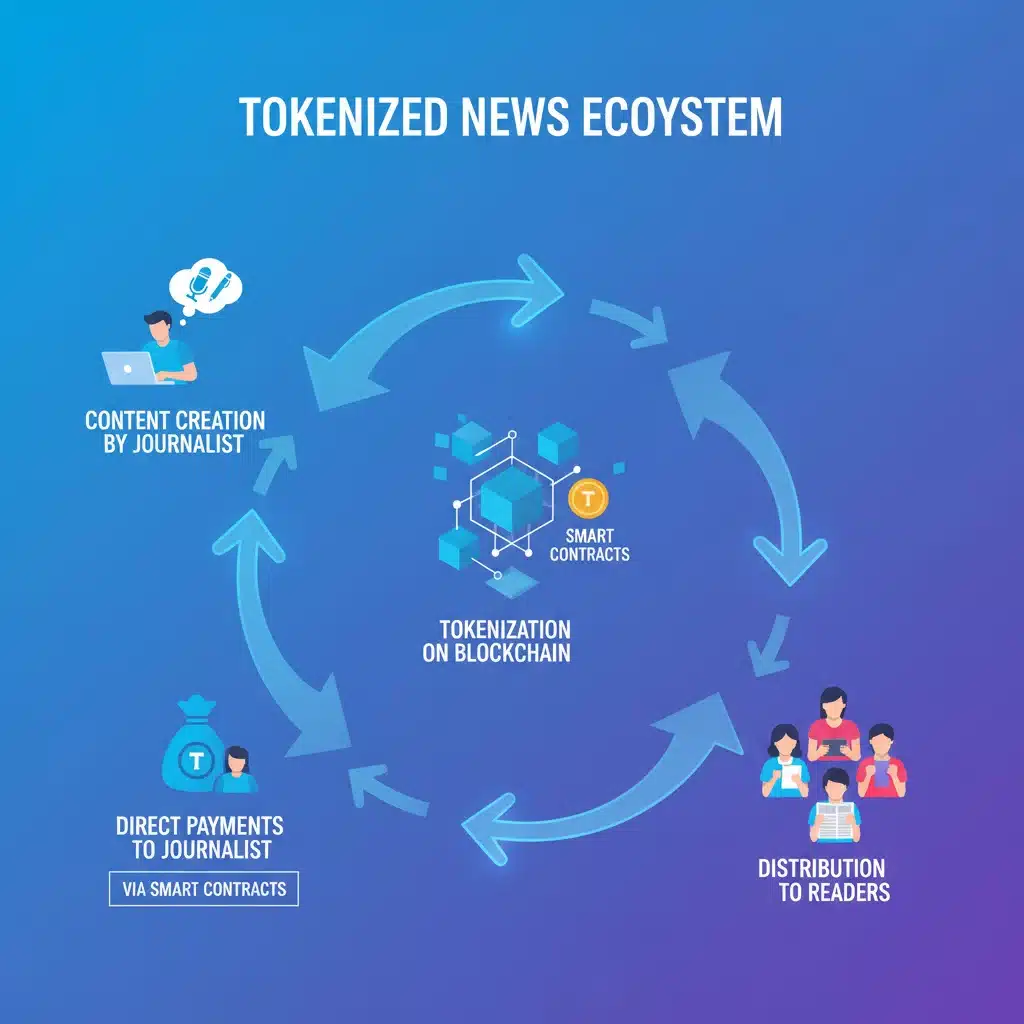
How Tokenized News Models Work in Practice: A Step-by-Step Look
To fully grasp the impact of tokenized news revenue, it’s essential to understand the practical steps involved:
1. Content Creation and Tokenization
An independent journalist writes an article, produces a video, or creates any form of journalistic content. Instead of submitting it to a traditional publisher, they upload it to a decentralized news platform built on a blockchain. This platform then ‘tokenizes’ the content, essentially creating a unique digital representation of it on the blockchain.
2. Defining Access and Monetization Rules with Smart Contracts
Using smart contracts – self-executing agreements stored on the blockchain – the journalist defines the rules for accessing and monetizing their content. This could include:
- "Pay-per-article" where a specific amount of a utility token is required for access.
- Subscription models where a certain number of tokens grants access for a period.
- "Freemium" models where basic content is free, and premium content requires tokens.
- Revenue-sharing mechanisms where a percentage of future revenue from the content is automatically distributed to token holders.
These smart contracts ensure that payments are automatically processed and distributed according to the predefined rules, eliminating the need for manual intervention or trusted third parties.
3. Distribution and Reader Interaction
The tokenized content is then available on the decentralized platform. Readers can discover the content, and if they wish to access premium material, they acquire the necessary tokens. This acquisition can happen through various means: buying them on a cryptocurrency exchange, earning them through platform engagement, or receiving them as rewards.
4. Direct and Transparent Payments
When a reader uses tokens to access content, the smart contract automatically transfers the corresponding value to the journalist’s digital wallet. This process is immediate, transparent, and recorded on the blockchain, providing an immutable ledger of all transactions. This transparency is a significant advantage, allowing journalists to see exactly how much they are earning and from whom, fostering trust and accountability.
Challenges and Considerations for Widespread Adoption
While the potential for increased tokenized news revenue is significant, several challenges need to be addressed for widespread adoption:
1. Technical Complexity and User Experience
For many independent journalists and readers, interacting with blockchain technology, cryptocurrencies, and digital wallets can be daunting. Platforms need to prioritize user-friendly interfaces and simplify the onboarding process to ensure accessibility for a non-technical audience. The current learning curve for Web3 technologies is a significant barrier to entry.
2. Volatility of Cryptocurrency Valuations
The value of cryptocurrencies can be highly volatile, which introduces an element of risk for journalists whose income is denominated in these digital assets. While stablecoins (cryptocurrencies pegged to fiat currencies) can mitigate this, managing price fluctuations remains a concern. Strategies for hedging against volatility or automatically converting crypto earnings to fiat will be crucial.
3. Regulatory Uncertainty
The regulatory landscape for cryptocurrencies and blockchain technology is still evolving, particularly in the US. Clarity on taxation, consumer protection, and securities laws will be vital for the long-term stability and growth of tokenized news models. Uncertainty can deter both creators and investors.
4. Scalability of Blockchain Networks
For mass adoption, the underlying blockchain networks need to be able to handle a high volume of transactions quickly and affordably. While advancements in scalability are being made (e.g., Layer 2 solutions), network congestion and high transaction fees (gas fees) can still be an issue, especially for micro-payments.
5. Content Quality Control and Moderation
Decentralized platforms can make content moderation more challenging. While freedom of expression is paramount, mechanisms to address misinformation, hate speech, and copyright infringement will be necessary to maintain credibility and trust in tokenized news ecosystems. Community-driven moderation or reputation systems could play a role here.
Pioneers and Promising Projects in Tokenized News
Despite the challenges, several projects are actively building and experimenting with tokenized news models, paving the way for a more equitable future for independent journalists:
- Decentralized Autonomous Organizations (DAOs) for Journalism: DAOs are emerging as a way for communities to collectively fund, govern, and publish journalistic content. Token holders can vote on proposals, allocate funds, and even directly commission journalists, creating a truly community-owned news outlet.
- NFTs for Articles and Media: Non-Fungible Tokens (NFTs) are being explored as a way to represent ownership of individual journalistic pieces or exclusive content. This allows journalists to monetize their archives or special reports as unique digital collectibles, creating new revenue streams from secondary markets.
- Web3 Publishing Platforms: Dedicated platforms are being developed that integrate tokenization directly into their publishing workflow, making it easier for journalists to create, distribute, and monetize their content using blockchain technology. These platforms often offer built-in wallet integration and simplified token management.
These early adopters are crucial in demonstrating the viability and potential of tokenized news models, helping to refine the technology and address the inherent challenges. Their success stories will serve as blueprints for future platforms and journalists looking to embrace this new paradigm.

The Future of Independent Journalism: A Vision of Empowerment and Prosperity
The projection of a 15% increase in independent journalist revenue by 2027 through tokenized news models is a conservative estimate, considering the rapid pace of innovation in the blockchain space. As the technology matures, user interfaces become more intuitive, and regulatory clarity emerges, the adoption rate is likely to accelerate, leading to even more significant financial gains for content creators.
Imagine a future where independent journalists are no longer beholden to the whims of advertisers or the restrictive policies of traditional media conglomerates. Instead, they operate as independent entrepreneurs, directly connected to their audience, with transparent and fair compensation for their invaluable work. This vision of empowered journalism is not just about financial gain; it’s about fostering a more diverse, independent, and high-quality media landscape.
Tokenized news models represent a powerful tool to restore trust in media by aligning the incentives of journalists and readers. When readers directly support the content they value, and journalists are directly rewarded for producing quality work, the entire ecosystem benefits. This direct financial relationship can also encourage more investigative journalism and in-depth reporting, as journalists are less pressured to chase clicks for advertising revenue and can instead focus on impactful storytelling.
Key Drivers for Future Growth
- Improved User Experience: As Web3 technologies become more integrated into everyday applications, the complexity for users will diminish, making tokenized news platforms as easy to use as traditional social media.
- Education and Awareness: Increased understanding among both journalists and readers about the benefits and mechanics of tokenized models will drive adoption.
- Interoperability: The ability for different tokenized news platforms to seamlessly interact and share content or user profiles will create a more unified and robust ecosystem.
- Innovative Business Models: Beyond simple pay-per-article, new and creative ways to leverage tokens for funding, community building, and content distribution will emerge, further enhancing revenue potential.
Conclusion: Embracing the Tokenized Future
The shift towards tokenized news models is more than just a technological upgrade; it’s a paradigm shift in how independent journalism can thrive. By offering direct monetization, enhanced transparency, and greater control to content creators, these models are poised to significantly boost independent journalist revenue in the US by 2027 and beyond. While challenges remain, the innovative spirit of the blockchain community and the growing demand for independent, high-quality news suggest a bright future.
For independent journalists, now is the time to explore these emerging platforms, understand the underlying technology, and consider how tokenization can empower their craft. For readers, embracing tokenized news means directly supporting the journalists they value, fostering a more robust and ethical media environment. The journey to a truly decentralized and journalist-centric news ecosystem has begun, and the potential rewards for those who embrace it are substantial.
The goal is not just to increase revenue, but to cultivate a resilient, independent, and diverse journalistic landscape that can better serve the public good. Tokenized news models offer a credible path towards achieving this ambitious, yet entirely attainable, vision.