Micro-payments in News: Boosting Reader Engagement on Crypto Platforms

The Rise of Micro-payments in Crypto Journalism: A Catalyst for Engagement
The digital media landscape is constantly evolving, and with it, the strategies publishers employ to monetize content and engage their audiences. For crypto journalism platforms, this evolution is particularly dynamic, driven by the very innovations they cover. One of the most promising trends emerging is the adoption of micro-payments news crypto. These small, often fractional, transactions are not just about generating revenue; they are fundamentally reshaping how readers interact with content, fostering a more engaged and sustainable ecosystem for independent journalism.
In an era dominated by ad blockers and subscription fatigue, finding effective monetization models that don’t alienate readers is critical. Crypto journalism, with its inherent connection to blockchain technology, is uniquely positioned to leverage micro-payments. This article will delve into the profound impact of micro-payments on reader engagement, explore the mechanisms driving their adoption, and project their future influence on the industry, with a particular focus on the US market and the ambitious goal of boosting reader engagement by 7% on US crypto journalism platforms by 2026.
Understanding Micro-payments in the Context of Digital News
Before we dive into the engagement aspect, it’s crucial to define what micro-payments entail within digital news. Traditionally, content monetization has relied on two primary models: advertising and subscriptions. Advertising, while pervasive, often detracts from the user experience and provides diminishing returns. Subscriptions, on the other hand, demand a significant upfront commitment, deterring casual readers or those interested only in specific articles.
Micro-payments offer a third path: paying a very small sum, often just a few cents, for a single piece of content, a limited-time access pass, or a specific feature. This ‘pay-as-you-go’ model aligns perfectly with the consumption habits of modern digital natives who are accustomed to granular transactions for digital goods and services. For crypto journalism, these payments are typically facilitated by cryptocurrencies, leveraging the speed, low transaction fees, and borderless nature of blockchain networks.
The concept isn’t entirely new; attempts at micro-payments have been made in the past with traditional payment rails, but high transaction fees and cumbersome user experiences often hindered widespread adoption. Blockchain technology, however, has breathed new life into this model. By drastically reducing transaction costs and simplifying the payment process, cryptocurrencies make genuine micro-payments news crypto viable and attractive.
The Challenge of Traditional Monetization in Crypto Journalism
Crypto journalism faces unique challenges. The audience is often tech-savvy, privacy-conscious, and inherently skeptical of traditional advertising models. They value independent, unbiased reporting and are often early adopters of new technologies. This demographic is also highly familiar with cryptocurrency transactions, making them ideal candidates for micro-payment systems.
Traditional advertising can be particularly problematic for crypto news sites. Advertisements for scam projects, unreliable exchanges, or low-quality products can undermine the credibility of a reputable news source. Furthermore, the volatile nature of the crypto market means that ad revenue can be unstable. Subscriptions, while offering a more stable income, can be a barrier for readers who only occasionally seek out crypto news or prefer a diverse range of sources without committing to multiple monthly fees.
This is where micro-payments news crypto steps in as a compelling alternative. It allows readers to directly support the content they value, fostering a more direct and transparent relationship between publishers and their audience. This direct support can lead to higher quality content, as creators are incentivized by direct financial contributions rather than indirect ad impressions.
The Direct Link: Micro-payments and Reader Engagement
The core hypothesis is that micro-payments can significantly boost reader engagement. But how exactly does paying a small fee lead to more engaged readers? The connection is multifaceted and rooted in psychological and economic principles.
Increased Perceived Value and Intentional Consumption
When a reader pays even a small amount for an article, they are making a conscious decision to value that content. This act of payment transforms passive consumption into intentional consumption. Readers are more likely to spend time reading, understanding, and reflecting on content they have paid for, however nominally. This increased investment of time and attention translates directly into higher engagement metrics, such as time spent on page, scroll depth, and completion rates.
For crypto journalism, where complex topics and in-depth analysis are common, this intentional consumption is particularly valuable. Readers are less likely to skim and more likely to absorb the nuances of an article on decentralized finance or a new blockchain protocol when they have made a deliberate choice to access it via a micro-payment. This psychological shift is a powerful driver for boosting reader engagement.
Reduced Distractions and Improved User Experience
One of the most significant benefits of a micro-payment model is the potential to eliminate or drastically reduce intrusive advertising. A cleaner, ad-free reading experience is inherently more enjoyable and less distracting. When readers aren’t bombarded with pop-ups, banner ads, or autoplay videos, they can focus entirely on the content. This improved user experience directly contributes to higher engagement levels.
Publishers adopting micro-payments news crypto can offer a premium, distraction-free environment, which is a powerful differentiator in a crowded digital media landscape. This caters to the preferences of a sophisticated audience that prioritizes quality and an uninterrupted flow of information.
Empowering Content Creators and Fostering Quality
A sustainable revenue model directly incentivizes content creators to produce higher-quality, more engaging material. When journalists know that their work is being directly supported by their readers through micro-payments news crypto, they are motivated to deliver exceptional value. This direct feedback loop, where good content translates into direct financial reward, can elevate the overall standard of crypto journalism.
Higher quality content, in turn, naturally leads to greater reader engagement. Readers are more likely to return to platforms that consistently offer well-researched, insightful, and unique perspectives. This virtuous cycle is crucial for the long-term health and growth of crypto journalism platforms.
Building a Community and Trust
Micro-payments can also foster a stronger sense of community and trust between readers and publishers. By directly supporting content, readers become active participants in the journalistic process, rather than mere consumers. This sense of ownership and contribution can deepen their connection to the platform and its mission.
Furthermore, blockchain-based micro-payment systems often offer a degree of transparency that traditional payment systems lack. This transparency can build trust, especially within the crypto community which values decentralization and verifiable transactions. A platform that transparently demonstrates how reader contributions support its operations is likely to earn greater loyalty and engagement.
The Mechanics of Micro-payments in Crypto Journalism
Implementing effective micro-payments news crypto systems requires thoughtful consideration of technology, user experience, and economic models. Several approaches are currently being explored and developed.
Wallet Integration and Seamless Transactions
The key to successful micro-payments is ease of use. Readers should be able to make payments with minimal friction. This often involves integrating cryptocurrency wallets directly into the publishing platform or utilizing browser extensions that facilitate instant, one-click payments. Solutions like the Lightning Network for Bitcoin or various Layer 2 solutions for Ethereum are crucial here, as they enable near-instant transactions with extremely low fees, making micro-payments practical.
Platforms are experimenting with different models, such as allowing readers to pre-load a small amount of crypto into a wallet linked to their account, which is then debited for each article consumed. This eliminates the need for repeated transaction confirmations and streamlines the reading experience.
Token-Gated Content and NFTs
Beyond direct payments, some crypto journalism platforms are exploring token-gated content, where holding a specific non-fungible token (NFT) or a certain amount of a platform’s native token grants access to exclusive articles, premium features, or even voting rights on editorial decisions. While not strictly a micro-payment in the traditional sense, this model utilizes blockchain assets to create tiered access and foster a deeper sense of community and ownership, directly enhancing engagement.
NFTs, in particular, could represent ‘digital passes’ for a certain number of articles or for access to a specific series. This adds a collectible and potentially tradable element to content access, further incentivizing engagement and participation within the platform’s ecosystem.

Micropayment Aggregators and Standards
For micro-payments to become truly widespread, there’s a need for interoperability and standardization. Micropayment aggregators could allow readers to fund a single wallet that can then be used across multiple participating news sites, regardless of the underlying cryptocurrency. This would simplify the user experience and reduce the barrier to entry for both readers and publishers.
Initiatives like the Interledger Protocol (ILP) aim to enable payments across different ledgers and payment networks, which could eventually facilitate seamless micro-payments news crypto across the entire web, making content monetization more fluid and accessible for everyone.
Projecting the Future: Boosting Reader Engagement by 7% by 2026
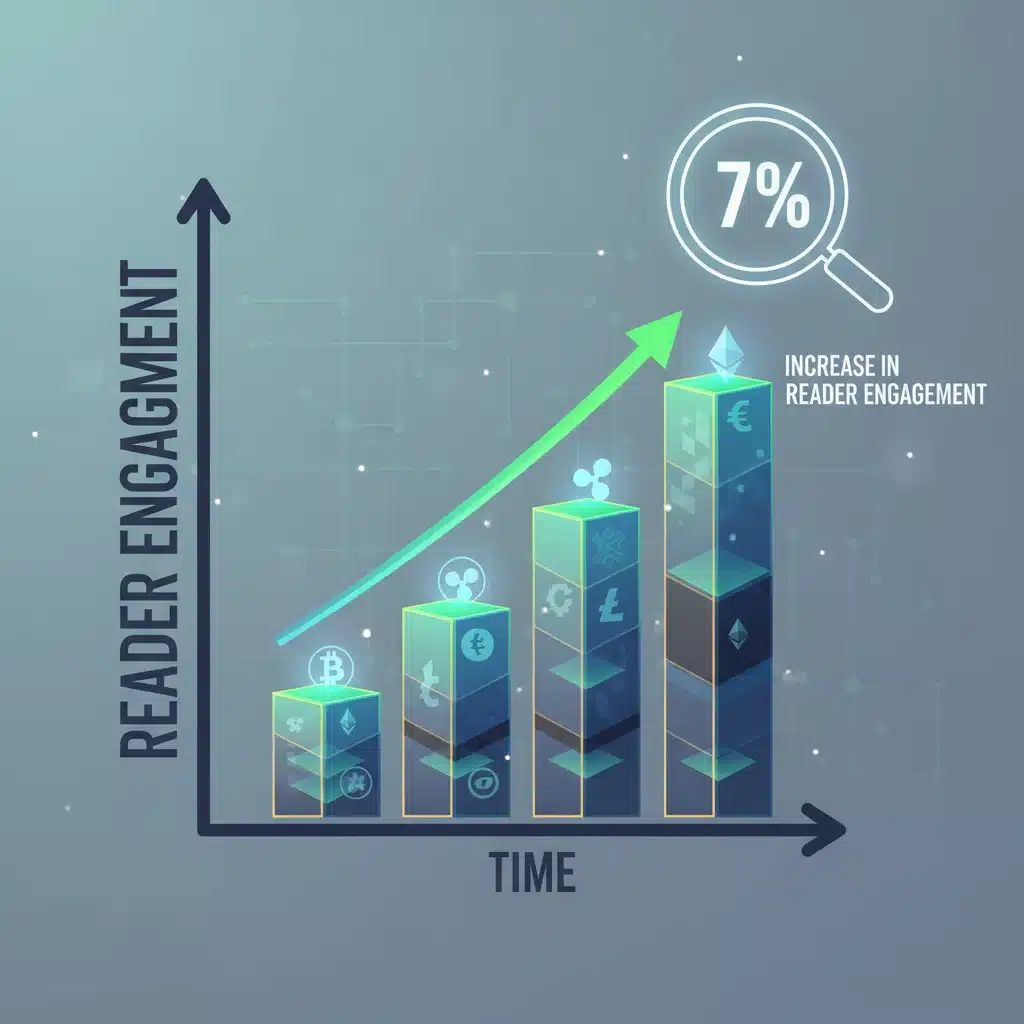
The ambitious target of boosting reader engagement by 7% on US crypto journalism platforms by 2026 is not merely aspirational; it’s a realistic goal underpinned by the growing maturity of micro-payment technologies and the increasing digital literacy of the target audience.
Factors Contributing to the 7% Growth
- Technological Advancements: Continued improvements in blockchain scalability, lower transaction fees, and more user-friendly wallet interfaces will make micro-payments even more seamless and accessible.
- Increased Crypto Adoption: As cryptocurrency adoption becomes more mainstream in the US, a larger segment of the population will be familiar with and comfortable using digital assets for transactions, including content consumption.
- Publisher Innovation: Crypto journalism platforms are continuously experimenting with new models. The early adopters who successfully implement intuitive micro-payment systems will set a benchmark for others, driving wider adoption and refinement.
- Reader Preference for Ad-Free Content: The persistent desire for an uncluttered, high-quality reading experience will naturally draw readers towards platforms offering micro-payment options over ad-supported alternatives.
- Value Alignment: The crypto community’s ethos of decentralization and direct support for creators aligns perfectly with the principles of micro-payments, fostering a strong sense of community and shared purpose.
Challenges and Considerations
While the outlook for micro-payments news crypto is promising, several challenges need to be addressed to achieve the 7% engagement boost:
- User Onboarding: Simplifying the process of acquiring and managing cryptocurrencies for new users remains crucial. Platforms need to design intuitive onboarding flows.
- Regulatory Clarity: The evolving regulatory landscape for cryptocurrencies in the US could impact the ease and legality of micro-payment systems. Clearer guidelines would foster greater confidence and adoption.
- Scalability: While Layer 2 solutions are improving, ensuring that micro-payment networks can handle a massive volume of transactions without congestion or increased fees is vital for widespread adoption.
- Psychological Friction: Overcoming the initial psychological barrier of paying for individual articles, even small amounts, will require effective communication of the value proposition to readers.
Addressing these challenges proactively will be key to unlocking the full potential of micro-payments and achieving the projected growth in reader engagement.
Case Studies and Early Adopters
Several platforms are already pioneering the use of micro-payments news crypto, offering valuable insights into their effectiveness. While specific engagement metrics are often proprietary, anecdotal evidence and early data suggest positive trends.
Brave Browser and Basic Attention Token (BAT)
Brave Browser, with its integrated Basic Attention Token (BAT), offers a form of micro-payment where users can earn tokens for viewing privacy-respecting ads and then tip publishers or content creators. While not exclusively for crypto journalism, it demonstrates a successful model of direct user-to-publisher value transfer, fostering a more equitable digital economy. Publishers who have integrated BAT tipping often report increased engagement from Brave users who appreciate the direct support model.
Mirror.xyz and Web3 Publishing
Mirror.xyz is a Web3 publishing platform that allows creators to monetize their content through NFTs, crowdfund projects, and receive direct crypto donations. While not strictly micro-payments for every article, it showcases how blockchain technology enables novel monetization strategies that empower creators and foster highly engaged communities around specific content. Readers on Mirror often participate in the ecosystem, not just consume content, blurring the lines between reader and patron.
Independent Crypto Journalists and Direct Donations
Many independent crypto journalists and analysts are leveraging direct crypto donations (effectively micro-payments) through their websites or social media channels. This direct support allows them to remain independent of traditional advertisers and produce unbiased, in-depth content. The act of donating, even a small amount, creates a stronger bond between the journalist and their audience, leading to more active participation in comment sections, social shares, and overall engagement.
These early examples illustrate the diverse ways in which micro-payments news crypto are already being implemented and are laying the groundwork for broader adoption and the anticipated surge in reader engagement across the US crypto journalism landscape.
The Broader Implications for Digital Publishing
The success of micro-payments in crypto journalism has significant implications for the broader digital publishing industry. As traditional revenue models continue to face headwinds, other niches and mainstream news outlets will likely look to the crypto space for innovative solutions.
A Path to Sustainable Journalism
Micro-payments offer a compelling path towards more sustainable journalism. By diversifying revenue streams beyond advertising and expensive subscriptions, publishers can become less reliant on external pressures and more accountable to their readers. This is particularly vital for investigative journalism and specialized reporting, which often struggle to find sustainable funding.
Empowering Niche Content
Niche publications, which often have highly dedicated but smaller audiences, can particularly benefit from micro-payments news crypto. These audiences are often willing to pay for highly specialized, high-quality content that caters to their specific interests. Micro-payments allow these publications to thrive without needing to attract a massive, general audience to satisfy advertisers.
Reshaping Content Consumption Habits
As micro-payments become more prevalent, they could gradually reshape how people consume digital content. Instead of expecting everything for free (and accepting the associated advertising), readers may become more accustomed to making small, friction-less payments for valuable content. This shift in consumer behavior would be transformative for the entire online media ecosystem.
Conclusion: The Engaged Future of Crypto Journalism
The trajectory for micro-payments news crypto is clear: it represents a powerful force for change in digital publishing, particularly within the dynamic world of crypto journalism. By offering a flexible, reader-centric monetization model, micro-payments are not just an alternative revenue stream; they are a direct pathway to enhanced reader engagement.
The projected 7% boost in reader engagement on US crypto journalism platforms by 2026 is an ambitious yet achievable goal, driven by technological innovation, increasing crypto adoption, and a fundamental shift in how readers value and interact with content. As blockchain technology continues to mature and user experiences become even more seamless, micro-payments will solidify their position as a cornerstone of sustainable, high-quality, and deeply engaging crypto journalism.
Publishers who embrace this paradigm shift and invest in robust, user-friendly micro-payment systems will be best positioned to thrive in the evolving digital landscape, fostering loyal communities and delivering the independent, insightful analysis that the crypto world demands. The future of news is not just about what you read, but how you value and support it, one micro-payment at a time.